







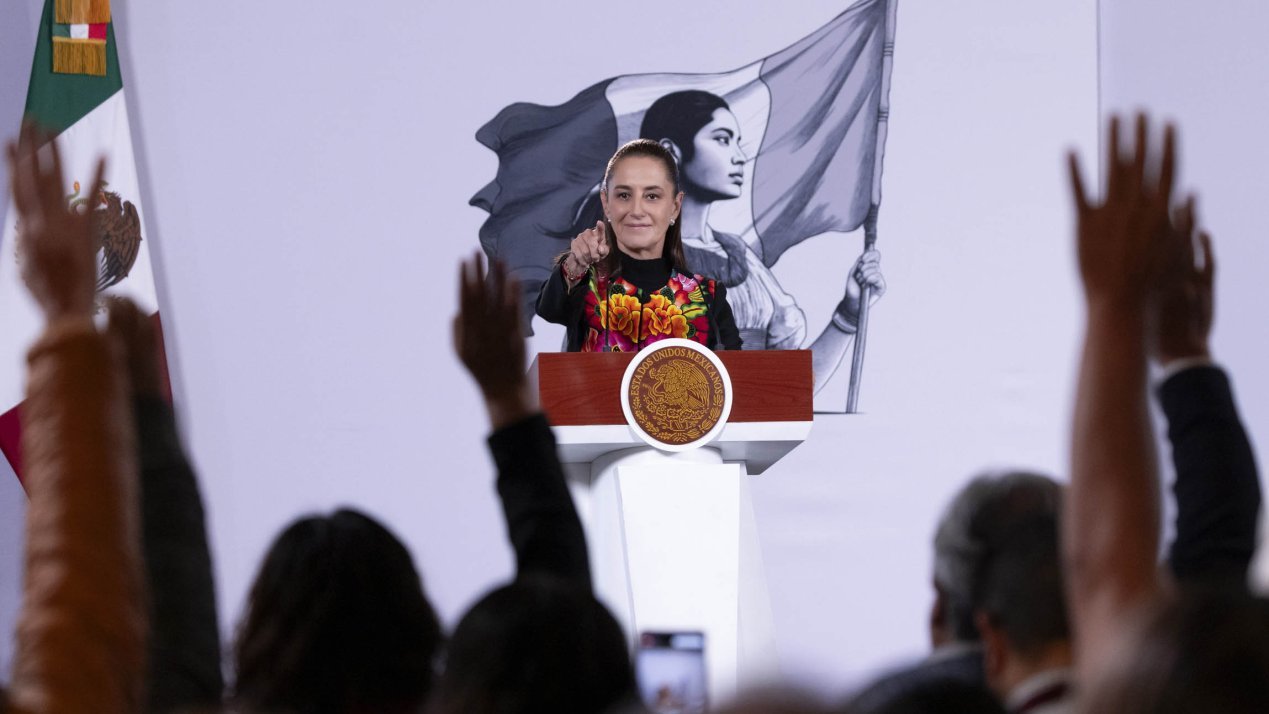
President Claudia Sheinbaum has announced a major push to overhaul the procurement of electoral materials in Mexico, calling for a rigorous audit of contracts awarded by the National Electoral Institute (INE). During a recent briefing, the President signaled that the federal government is intensifying its oversight of how taxpayer funds are utilized in the election process, specifically targeting the concentration of contracts among a small circle of private suppliers.
Government Seeks Transparency in Electoral Procurement
President Sheinbaum is seeking to expand the role of Talleres Gráficos de México, the state-owned printing facility, to handle a larger portion of the production of ballots and essential electoral materials. She argued that the current dependency on a limited group of private companies risks efficiency and fair pricing.
To address these concerns, the government intends to present a formal proposal next week designed to modernize the state-owned enterprise. The plan seeks to foster more competitive bidding processes while maintaining high standards of transparency and institutional oversight. While the administration is not looking to ban private sector participation, it is emphasizing the need for a more equitable distribution of contracts. Furthermore, the President has called upon the Federal Superior Audit Office (ASF) to conduct a comprehensive review of electoral contracts spanning both the current and previous administrations to identify and address any potential irregularities.
Honoring the Legacy of Cuauhtémoc Cárdenas
The administration also took a moment to pay tribute to the late Cuauhtémoc Cárdenas Solórzano, who passed away on October 28. A seminal figure in Mexican politics, Cárdenas was remembered by top officials—including Interior Minister Rosa Icela Rodríguez and Presidential Commission for Electoral Reform leader Pablo Gómez—as a transformative force in the country’s democratic evolution.
Cárdenas is credited with helping shape the modern Mexican left and advocating for the institutional safeguards that characterize the current electoral system. From his leadership of the Democratic Current to his historic run for the presidency in 1988 and his tenure as the first elected head of government for Mexico City, his career was defined by a commitment to political competition and national sovereignty. Sheinbaum noted that the government is currently coordinating with the Cárdenas family to organize a formal state-level tribute to commemorate his contributions to the nation.
Technological Resilience: New Hurricane Alert Systems
In addition to political reforms, the administration is leveraging communication technology to bolster disaster preparedness in remote areas. President Sheinbaum announced the upcoming launch of a mobile phone-based hurricane alert system, scheduled for rollout in November.
The system is specifically engineered to reach isolated and rural communities that lack access to traditional emergency broadcast channels. By delivering timely, location-specific warnings directly to mobile devices, the government hopes to minimize the impact of severe weather events. This initiative comes on the heels of assessments regarding Tropical Storm Rachel, which caused limited damage in Baja California, highlighting the importance of efficient, early-warning mechanisms in protecting vulnerable populations.
Infrastructure and Social Development Updates
The federal government’s agenda also focused on tangible infrastructure and social welfare improvements across regional states. In Michoacán, the government launched 102 housing allocation lotteries as part of the “Housing for Well-Being” program, aiming to provide stable living conditions for more families. Meanwhile, in Tlaxcala, officials inaugurated a new road interchange in Santa Ana Chiautempan. By optimizing traffic flow at the intersection of Federal Highway 121, the government expects to significantly reduce congestion along the busy transit corridor connecting Puebla and Apizaco, marking another step in the administration’s efforts to improve regional connectivity and public infrastructure.
Disclaimer: This content is auto-generated for informational purposes only.
Source: Read Original News