



Rajnath Singh Offers India’s Counter-Terrorism Expertise to ASEAN Partners
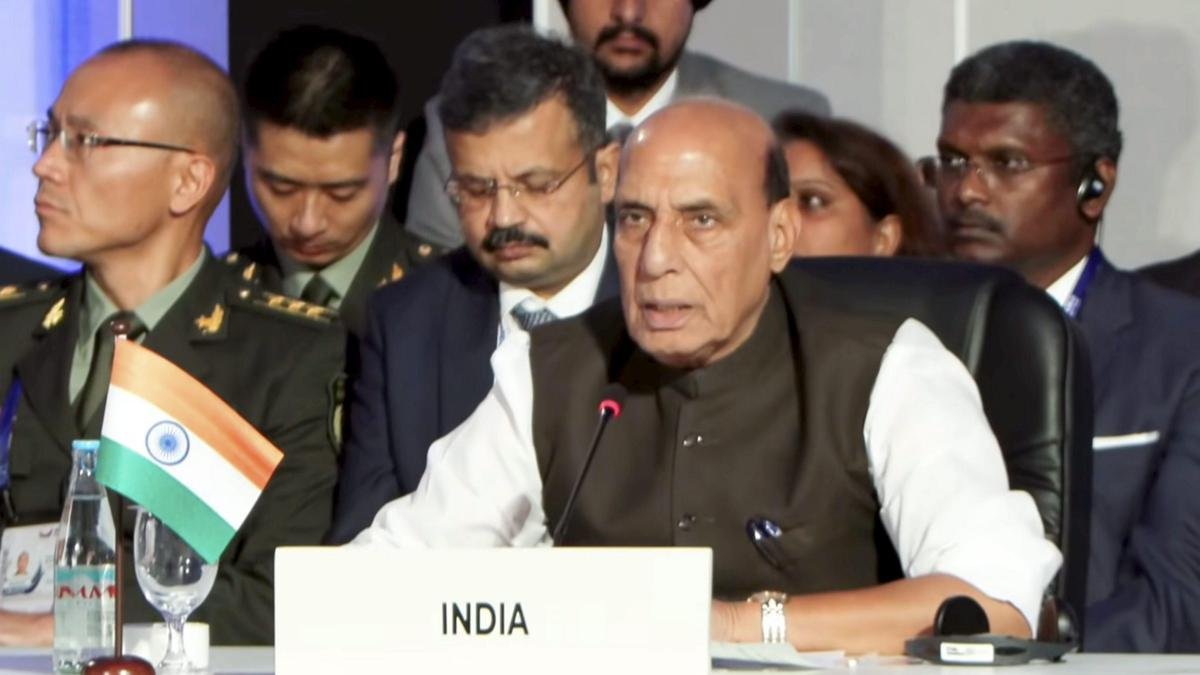
CEBU, Philippines – Emphasizing India’s resolve to foster regional stability, Union Defence Minister Rajnath Singh addressed the 13th Association of Southeast Asian Nations (ASEAN) Defence Ministers’ Meeting-Plus (ADMM-Plus) on Thursday, proposing a deepened security partnership centered on shared operational intelligence and collaborative counter-terrorism strategies.
Mr. Singh, who traveled to the Philippines for the high-level summit, underscored that India’s approach to security is rooted in decades of navigating multifaceted threats. He specifically pointed to the success of “Operation Sindoor,” describing it as a landmark in India’s proactive doctrine against state-sponsored extremism. By dismantling terror networks and maintaining firm strategic red lines, the Minister noted that India has gained invaluable “battle-tested” experience that it is now eager to extend to its Southeast Asian neighbors.
Strengthening Regional Counter-Terrorism Frameworks
A central pillar of the discussion was the necessity of a unified regional stance against global extremism. Mr. Singh advocated for a comprehensive security roadmap that includes rigorous joint exercises, intelligence sharing, and targeted capacity-building programs.
This commitment is reflected in the current administrative cycle, where India and Malaysia are co-chairing the Experts’ Working Group on Counter-Terrorism for the 2024-2027 term. During the session, the Minister reiterated that terrorism is a borderless scourge, requiring a cohesive and technology-driven response from the ASEAN-Plus nations.
A ‘Youth Bridge’ for Future Security
Beyond traditional military cooperation, Mr. Singh introduced an innovative initiative aimed at fostering long-term institutional bonds between India and ASEAN member states. His proposal for a dedicated defence “Youth Bridge” was met with widespread appreciation from the participating delegations.
The initiative is designed to harness the energy of the younger generation, providing a platform for digital innovation, cross-cultural exchange, and collaborative problem-solving regarding regional security challenges. By prioritizing people-to-people connectivity, the project seeks to ensure that the next generation of security leaders in the Indo-Pacific remains closely aligned in their pursuit of peace and regional prosperity.
Commitment to Maritime Security
Maritime stability also took center stage, with Mr. Singh highlighting India’s dedication to the 2026 ASEAN-India Year of Maritime Cooperation. He reaffirmed India’s stance as a “net security provider” in the Indian Ocean Region and the broader Indo-Pacific, stressing the necessity of adherence to international maritime laws and the protection of global sea lanes.
Citing the Indian Navy’s consistent presence in the Gulf of Aden since 2008, the Minister pointed out that Indian forces have successfully secured thousands of merchant vessels and neutralized numerous piracy threats. He emphasized that these operations are conducted impartially, protecting maritime traffic regardless of the nationality or flag of the vessel, thereby upholding the principles of a free and open Indo-Pacific.
As the ADMM-Plus meeting concluded, India’s strategic messaging remained clear: New Delhi views ASEAN as a pivotal partner in maintaining a rules-based order, and it stands ready to transition from a regional observer to a proactive, reliable security collaborator.
Disclaimer: This content is auto-generated for informational purposes only.
Source: Read Original News