





CHESS, a sport steeped in tradition and defined by the rhythmic ticking of clocks, finds itself at a crossroads as one of its most storied figures, Alexei Shirov, calls for a radical overhaul of the game’s most prestigious title. As the global chess community turns its eyes toward the intense battles unfolding at the Chess Olympiad in Samarkand, the Spanish grandmaster has ignited a provocative debate regarding the relevance and branding of the “World Champion” designation.
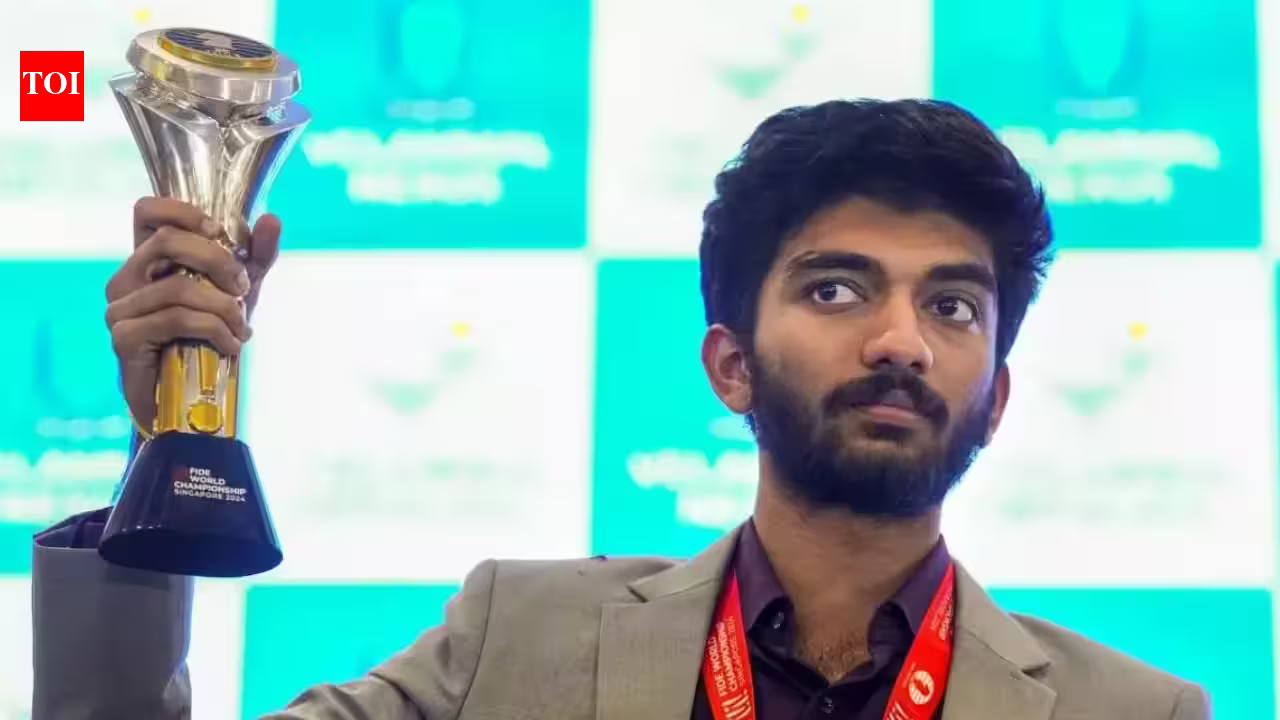
The controversy centers on India’s rising sensation, D Gukesh, who solidified his status as a historical titan by becoming the youngest undisputed world champion after his clinical victory over Ding Liren in the 2024 Singapore World Championship match. While Gukesh’s achievement is universally lauded for its technical brilliance and historical significance, Shirov suggests that the current FIDE-sanctioned title structure may be a relic of a bygone era, one that fails to capture the multi-faceted nature of modern professional chess.
The Tennis Model: A Paradigm Shift for the 64 Squares?
“Nothing against Gukesh, maybe we shouldn’t use words like World Champion. Chess should be like tennis,” Shirov remarked recently. The former world championship candidate argues that the existing system, which elevates a single individual as the “World Champion” through a specific, isolated cycle, creates an artificial hierarchy that ignores the grueling, year-round competitive landscape of elite chess.
In tennis, the hierarchy is defined by a cumulative legacy of Grand Slam victories and tournament dominance. A player may ascend to the top of the ATP rankings, but there is no singular entity crowned with an overarching, static title that persists for years regardless of tournament form. Shirov believes that by shifting toward a merit-based, tournament-driven branding system, the sport could better reflect the reality of elite competition, where a player’s performance across various formats—classical, rapid, and blitz—should carry equal weight in defining their status among the greats.
The debate strikes at the heart of the sport’s identity. The classical world title has long been the pinnacle of professional chess, tracing its lineage back through icons like Kasparov, Fischer, and Karpov. To dilute that title, as Shirov suggests, would be to abandon a century of history. However, as the competitive field grows more crowded and internationalized, the question remains: is the current FIDE cycle a sufficient reflection of the world’s best, or is it merely an artifact of an older, less connected world?
A History of What-Ifs
Shirov’s perspective is informed by a career defined by the very volatility he now critiques. In 1998, Shirov earned the right to challenge Garry Kasparov after defeating Vladimir Kramnik in a hard-fought qualification match. However, due to administrative hurdles and a lack of funding, the match—a clash that would have defined a generation—never took place.
His history with the title race makes his current stance particularly poignant. Having been a victim of the structural idiosyncrasies of the championship cycle, Shirov understands better than most that the title of “World Champion” has often been as much a product of politics and logistics as it has been a reflection of raw, over-the-board talent. His call for change is not an attack on the integrity of Gukesh’s win, but rather a critique of the system that places such immense, perhaps singular, weight on one match in an era that demands more.
The Samarkand Crucible: Olympiad Intensity
While the debate over titles simmers in the media, the reality of high-stakes play remains the focus for the players currently gathered in Samarkand. The ongoing Chess Olympiad has served as a stark reminder that even a reigning world champion is subject to the ruthless unpredictability of team play.
In a pivotal sixth-round clash that shook the standings, the defending champions, India, found themselves on the wrong side of a 1.5-2.5 defeat against the hosts, Uzbekistan. It was a match that highlighted the depth of the new generation. While the world’s eyes were locked on the top boards, the undercurrents of the sport were shifting.
Nihal Sarin’s loss to Nodirbek Yakubboev proved to be the decisive blow, while Gukesh—fresh off his world title success—was forced to navigate a gritty draw against Shamsiddin Vokhidov. Meanwhile, the celebrated R Praggnanandhaa and Arjun Erigaisi saw their respective games against Nodirbek Abdusattorov and Javokhir Sindarov end in draws, effectively stalling India’s momentum.
With this result, Uzbekistan has ascended to 12 match points, taking sole possession of the lead, while India holds firm at 10. The defeat serves as a humbling reminder that regardless of labels, rankings, or world championship status, every game in the modern era is a high-wire act.
What Lies Ahead for the World Title?
As the tournament in Samarkand progresses, the comments from Shirov will likely continue to spark debate in the corridors and cafes frequented by chess enthusiasts. Is the “World Champion” label an inspiring peak that pushes players to their absolute limits, or is it a restrictive mantle that prevents the sport from embracing a more modern, tournament-based competitive structure?
Whether or not FIDE moves to reform its title system, one thing is certain: players like Gukesh, Praggnanandhaa, and the young Uzbek stars are redefining the boundaries of what is possible on the board. The debate over the title may be philosophical, but the chess being played today is undoubtedly the most dynamic in history. For now, the world waits to see if the sport will listen to its legends and evolve, or if it will choose to defend the sanctity of the throne that has hosted the greatest minds of the last century.
Disclaimer: This content is auto-generated for informational purposes only.
Source: Read Original News