







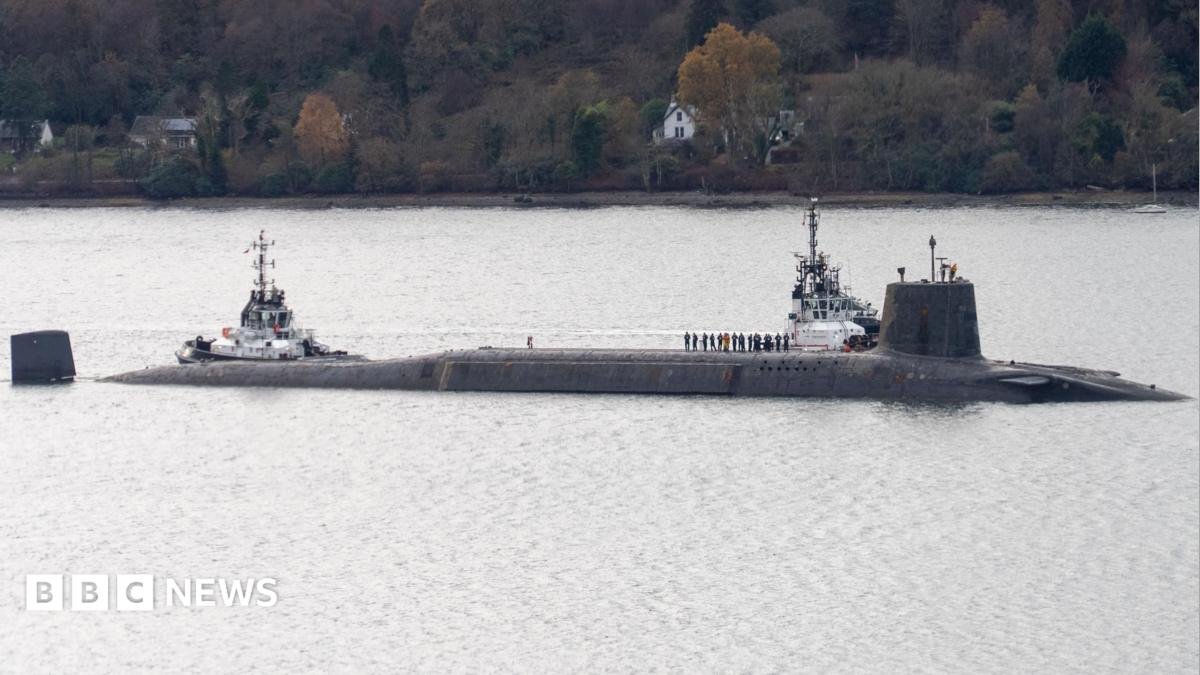
HMS Vengeance returns to Faslane after historic 217-day underwater patrol
The Royal Navy’s Vanguard-class submarine HMS Vengeance has returned to its Scottish base at Faslane, concluding a record-breaking 217-day deployment that marks the longest patrol in the history of the British submarine service. The vessel, which carries the UK’s Trident nuclear deterrent, arrived at HM Naval Base Clyde on Thursday, ending over seven months of near-total isolation for its 140-strong crew.
Defence Secretary Wes Streeting was present at the base in Argyll and Bute to personally greet the submariners as they navigated the Gare Loch. The submarine’s arrival was a striking sight; the vessel appeared heavily weathered, encrusted with marine growth and missing several of the signature sound-absorbing tiles essential for the stealth operations that define the submarine’s mission.
The historic mission, which began on 12 April, far exceeds the standard operational parameters for the UK’s nuclear deterrent fleet. While the “Continuous At-Sea Deterrent” typically relies on rotations of six-month patrols, the duration of these tours has more than doubled in recent years. This shift has been driven by a critical shortage of seaworthy vessels, forcing the current fleet to endure significantly longer deployments to maintain Britain’s strategic commitments.
The homecoming was initially slated for last weekend, but the mission was extended at the eleventh hour. Reports indicate that the submarine scheduled to relieve HMS Vengeance was forced to return to port following the discovery of a technical fault, necessitating that the crew of Vengeance remain on duty well beyond their expected return date.
The unprecedented length of the mission has drawn attention to the mounting pressures on the Royal Navy’s aging Vanguard-class fleet. Speaking at a conference in Oslo last week, the First Sea Lord, General Sir Gwyn Jenkins, acknowledged the exceptional dedication of the crews in maintaining global security and upholding NATO’s defensive posture. However, he offered a candid assessment of the current state of the Navy, stating that the UK must urgently improve the maintenance and availability of its fleet to ensure that such extreme deployments do not become the permanent norm.
The return of HMS Vengeance serves as both a testament to the endurance of its personnel and a signal of the logistical strain currently facing the Ministry of Defence. As the crew finally reunited with their families, the focus in Whitehall is expected to shift back to the urgent need for a more robust maintenance cycle for the UK’s underwater deterrent. For the 140 sailors of Vengeance, however, the mission is over, marking a triumphant—if exhausted—end to an extraordinary chapter in modern naval history.
Disclaimer: This content is auto-generated for informational purposes only.
Source: Read Original News