







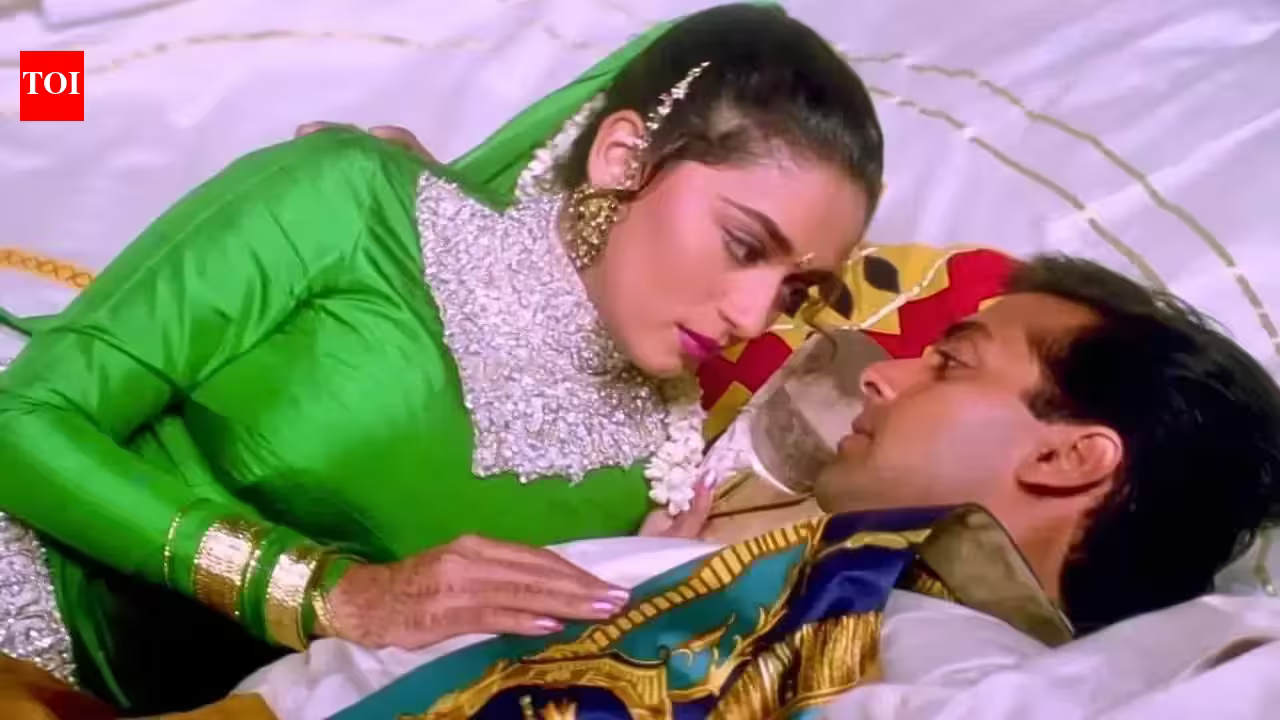
Three decades later, Hum Aapke Hain Koun..! remains more than just a film; it is a cultural monolith. It defined the 90s, set the gold standard for the “wedding film” genre, and cemented the chemistry between Salman Khan and Madhuri Dixit as the stuff of Bollywood legend. Yet, for all its grand musical numbers and heavy-handed sentimentality, the scene that perhaps sticks in the collective memory of every 90s kid is the most chaotic one: the moment a playful chase ends in a pile of splinters and a collapsed bed.
As it turns out, that slapstick moment of domestic destruction wasn’t just a product of a screenwriter’s imagination—it was a visceral, lived experience. In a rare and candid appearance on The Great Indian Kapil Show, director Sooraj Barjatya pulled back the curtain on the origins of the scene, proving that even the most “sanskari” of directors has a streak of childhood mischief hidden up his sleeve.
A Wedding, A Chase, and a Collapsed Frame
The revelation came during an engaging back-and-forth with Ayushmann Khurrana, who prodded the veteran filmmaker about the iconic bed-breaking scene. Barjatya, known for his soft-spoken demeanor and meticulously polite film sets, confessed that the sequence was lifted directly from his own adolescence.
“I was 13,” Barjatya recounted, his eyes lighting up at the memory. He described attending a wedding in Mumbai—the very environment that would later become his cinematic playground. In his retelling, the scene played out with the same lighthearted energy as the movie: a girl hit his cousin, a playful, hormone-fueled chase ensued, and, in a fit of clumsiness and momentum, they landed on a bed that simply couldn’t handle the impact.
It is a fascinating glimpse into the creative process of a man often criticized for being “too perfect” or “too traditional.” While the world sees the Rajshri Productions aesthetic as a sanitized version of Indian culture, Barjatya’s admission reminds us that his films are deeply rooted in the observational realities of the sprawling, chaotic Indian joint family experience. He didn’t just write the scene; he survived it.
The Man Behind the Gentle Lens
The Kapil Show episode didn’t just focus on nostalgia; it took a pointed turn toward the director’s own reputation. Sooraj Barjatya is widely perceived in the industry as the ultimate gentleman—a soft-spoken visionary who navigates the cutthroat world of Bollywood with a prayer in his heart and a smile on his face.
Archana Puran Singh, ever the sharp observer, pushed the panel to address the “angry man” myth. Is Sooraj Barjatya actually as unflappable as he appears? The guests on stage—most of whom have worked within the tight-knit orbit of the industry—were quick to defend his saintly reputation, insisting that his fuse is practically non-existent.
However, Barjatya offered a playful, self-deprecating rebuttal. He suggested that if you were to ask the likes of Abhishek Bachchan or Kareena Kapoor, you might get a slightly different version of the story. He hinted that his “calm” is a professional veneer, a necessary mask for someone tasked with managing the egos and energies of India’s biggest superstars.
When the ‘Superstar’ Gets Scolded
The highlight of the conversation came when the topic shifted to his most high-profile muse: Salman Khan. When pressed to reveal the harshest words he had ever spoken on set, Barjatya didn’t shy away. He turned the tables on the hosts with a glint in his eye, telling Archana Puran Singh to call up the Tiger star himself to find out exactly how many times he had been on the receiving end of a director’s rebuke.
This revelation serves as a rare, humanizing anecdote for Salman Khan. We often view the actor through the lens of his larger-than-life persona, but the idea of a young, early-90s Salman being scolded by his director on the set of Hum Aapke Hain Koun..! provides a fascinating window into the dynamic of their legendary collaboration. It suggests that behind the polished final product, there was a rigor, a discipline, and a mutual push for perfection that defined their work together.
The Enduring Legacy of ‘HAHK’
It is difficult to overstate the importance of Hum Aapke Hain Koun..! in the history of Indian cinema. Released in 1994, it didn’t just break box-office records; it changed the way films were marketed and consumed. It made “family values” a viable blockbuster commodity and transformed the humble wedding sequence into an essential Bollywood set-piece.
For many, the film is a time capsule of a simpler era. The chemistry between Salman and Madhuri was electric, not because of overt sensuality, but because of the playful, “will-they-won’t-they” innocence that the bed-breaking scene perfectly encapsulated. That scene represents the film in microcosm: it is fun, it is light, it is slightly mischievous, and it is firmly rooted in the shared, relatable experiences of the Indian middle class.
As the industry continues to evolve, moving toward gritty realism and global-scale action epics, Barjatya’s confession serves as a gentle reminder of why his work continues to resonate. His films succeed because they aren’t written in a boardroom or dreamt up in an isolation chamber. They are written in the memories of 13-year-olds at Mumbai weddings, in the friction between colleagues, and in the small, chaotic moments that define our lives.
So, the next time you watch that bed collapse on screen, don’t just see a piece of furniture breaking. See a 13-year-old Sooraj Barjatya, chasing a girl through a crowded wedding hall, blissfully unaware that he was participating in a moment that would eventually become an indelible part of Indian cinematic history. Sometimes, the most enduring art is born not from high-minded concepts, but from the simple, clumsy realities of growing up.
Disclaimer: This content is auto-generated for informational purposes only.
Source: Read Original News