









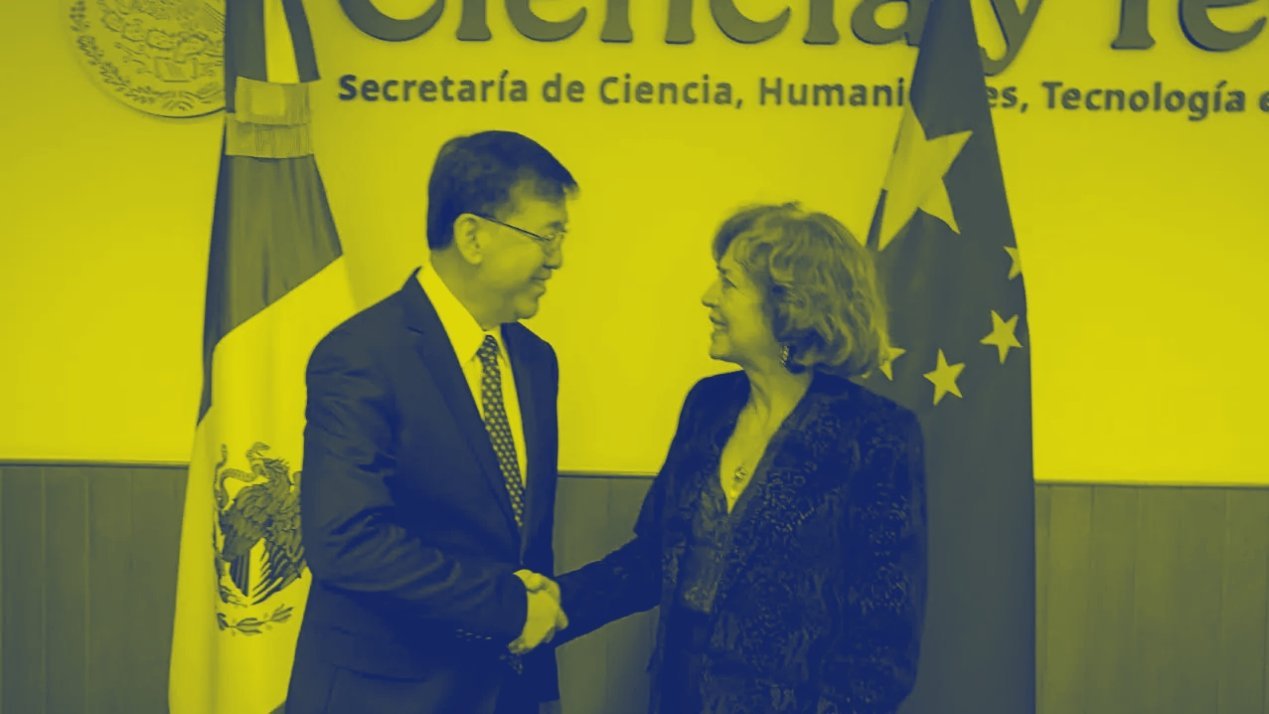
Mexico and China have officially entered a transformative era of bilateral cooperation, signing a new memorandum of understanding (MoU) that aims to integrate their scientific and technological ecosystems. The agreement, finalized during the ninth meeting of the Permanent Mexico-China Binational Commission, shifts the focus toward high-stakes sectors, specifically prioritizing artificial intelligence (AI), supercomputing, robotics, and electromobility.
This landmark meeting was co-chaired by Rosaura Ruiz, Mexico’s Minister of Science, Humanities, Technology, and Innovation, and Yin Hejun, China’s Minister of Science and Technology. The event marks a significant diplomatic milestone, as it serves as the first instance of a Chinese science minister participating in this specific binational mechanism since its inception in 2004.
Building Digital Infrastructure and AI Capacity
A cornerstone of this partnership is the mutual commitment to advancing high-performance computing and AI infrastructure. Mexico is currently aiming to leverage China’s deep expertise in algorithmic development, mathematical research, and the industrial application of digital systems to bolster its own internal capabilities.
During the discussions, the Mexican government highlighted several major strategic initiatives intended to serve as collaborative hubs for this new phase. Among these are the “Coatlicue” supercomputer—the largest of its kind in Latin America—and the National High-Performance Computing and AI Cluster. By aligning these projects with Chinese expertise, Mexico seeks to accelerate the deployment of complex AI models, large-scale data analysis, and advanced chip design, ultimately bridging the gap between theoretical research and tangible industrial output.
Expanding the Scope of Innovation
Beyond the immediate focus on AI and data, the agreement creates a comprehensive framework for knowledge exchange and professional development. The initiative is designed to foster deeper integration between the two nations’ academic and private sectors. Key provisions within the MoU include the establishment of joint research projects, the facilitation of student and researcher mobility programs, and the creation of forums for sharing best practices in public policy and regulatory frameworks.
This approach acknowledges that true technological advancement requires more than just hardware; it demands a robust pipeline of human talent and a supportive regulatory environment. Both nations aim to utilize this framework to tackle shared global challenges, including climate change, public health, and energy security, by pooling scientific resources and accelerating the process of technology transfer.
Deepening Diplomatic and Industrial Ties
The move toward technological synergy coincides with a broader expansion of Mexico’s institutional presence in China. Recently, the inauguration of a new Mexican consulate in Chongqing—an industrial powerhouse with over 32 million residents—signals a clear intent to move beyond Beijing-centric relations. This is the first time in two decades that Mexico has opened a new consular office in the country, providing a direct channel for engaging with regional tech hubs and local industry leaders.
The partnership also spans into the agricultural and environmental sectors, with recent discussions exploring the use of modern technology to improve logistics, sustainability, and export standards. Whether through the development of advanced meteoceanic monitoring systems in the Gulf of Mexico or collaborative efforts in agrotechnology, the overarching goal remains the same: transforming bilateral diplomatic ties into a pragmatic, project-based partnership.
“Our goal is for more Mexicans and more Chinese to work together,” noted Minister Ruiz, emphasizing that the success of this MoU will ultimately be measured by the ability of researchers, private enterprises, and government agencies to translate these high-level agreements into real-world technological infrastructure and long-term innovation.
Disclaimer: This content is auto-generated for informational purposes only.
Source: Read Original News