








The evolution of Artificial Intelligence has entered a transformative phase that challenges our fundamental understanding of labor, research, and education. Only four years ago, in 2022, the public perception of AI was one of skepticism; models were frequently mocked for basic factual errors regarding geography and logic. Today, that narrative has shifted from one of doubt to one of urgent adaptation. As we witness the rise of “Agentic AI,” the academic and professional landscapes are undergoing a radical metamorphosis.
The Shift from Generative to Agentic AI
To understand this shift, students and policymakers must distinguish between the tools of yesterday and the systems of today. Generative AI, while powerful, primarily operates within the confines of a screen. It acts as a passive assistant, waiting for human prompts to generate text, code, or imagery. It is a “brain” without limbs.
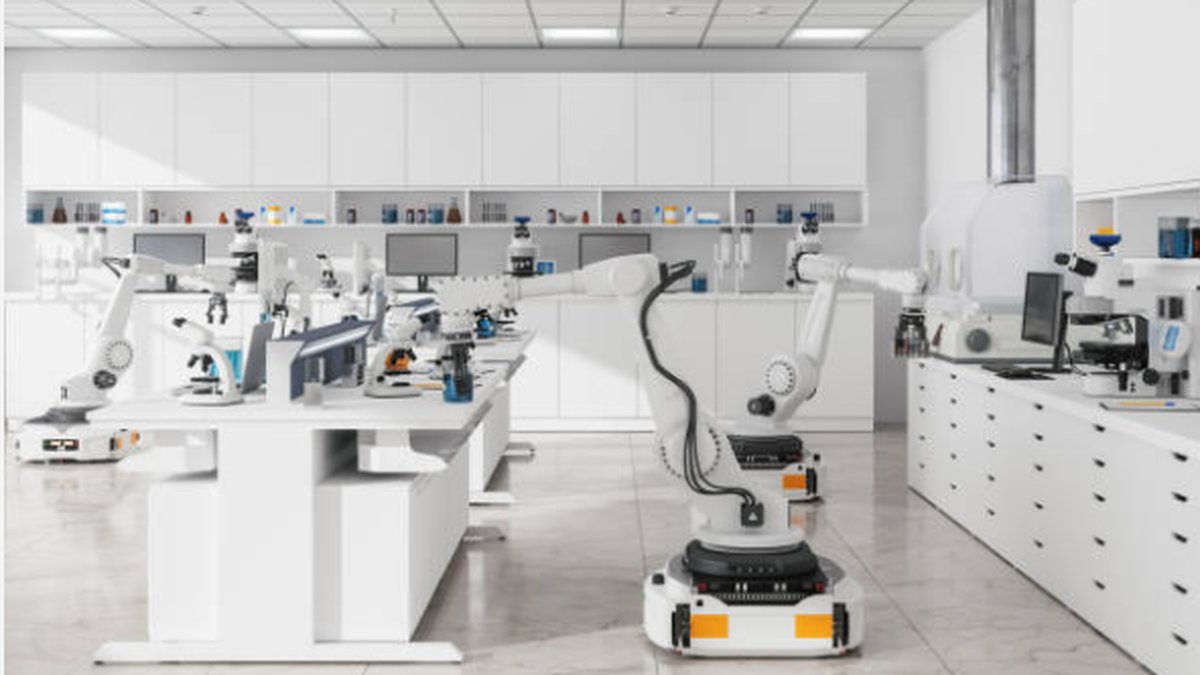
Agentic AI, however, represents the integration of cognitive processing with physical autonomy. In a laboratory setting, this technology does not merely suggest a chemical formula; it can command robotic arms to manipulate pipettes, control thermal cyclers, monitor real-time fluorescence data, and document findings—all without continuous human intervention. For institutions, this means the nature of scientific inquiry is shifting from “doing the experiment” to “overseeing the agent’s experimental design.”
Rethinking Educational Curricula
This technological leap places immense pressure on educational institutions to pivot. If AI can perform the mechanical and even the analytical aspects of laboratory research, the traditional model of teaching “bench skills” or rote laboratory procedures is becoming obsolete.
Curricula must evolve to focus on high-level systems architecture and critical oversight. Students need to transition from being manual operators to becoming “AI orchestrators.” This requires a stronger emphasis on:
- Systems Thinking: Understanding how to integrate hardware, software, and autonomous agents to solve complex problems.
- Data Integrity & Verification: As AI interprets its own results, the human researcher must possess the sophisticated statistical literacy to audit and validate those interpretations.
- Ethical AI Governance: Learning how to set the constraints within which an agent operates to ensure safety and reproducibility in research.
Policy and the Future of Assessment
For examination boards and policy-making bodies, the rise of Agentic AI creates a significant challenge for standardized testing. How do we assess “competence” in a field where the student is no longer the primary executor of the task?
Policy discussions in late 2026 are increasingly focusing on a shift in assessment design. Testing frameworks are moving away from measuring recall or manual technical execution—skills that agents now possess—toward evaluating a student’s ability to diagnose AI errors and design iterative experimental loops. The “tortoise vs. the rabbit” analogy is apt: while humans once thought themselves ahead of AI, the current pace of change demands that students learn at the speed of the machine, or risk being left behind in a research economy that favors automated efficiency.
The Institutional Challenge
Academic institutions face the challenge of access and equity. While elite laboratories are integrating agentic systems, mid-tier colleges and universities must determine how to provide students with the necessary exposure to these technologies. Failure to do so will create a bifurcated workforce: those who manage autonomous agents and those who lack the technical vocabulary to function in an AI-integrated laboratory.
As we look toward 2027 and beyond, the classroom must become a hub for human-AI collaboration. The goal is no longer to compete with the agent, but to master the art of directing it. In this new era, the most valuable skill a researcher can possess is the human capacity for creative strategy, empathy, and the ethical foresight that Agentic AI, despite its physical capabilities, currently lacks.
Disclaimer: This content is auto-generated for informational purposes only.
Source: Read Original News