








Anthropic, the high-profile AI startup behind the Claude model series, has officially filed its S-1 paperwork with the SEC, marking a major milestone in its path toward a public offering. While the 335-page document provides a deep dive into the company’s financial health and strategic risks—including the blunt admission that accidentally triggering catastrophic AI harm remains a genuine business concern—a more unusual question has captured the attention of tech analysts: Was this massive, legally binding document drafted by the very artificial intelligence Anthropic builds?
### Parsing the Prose of a Financial Disclosure
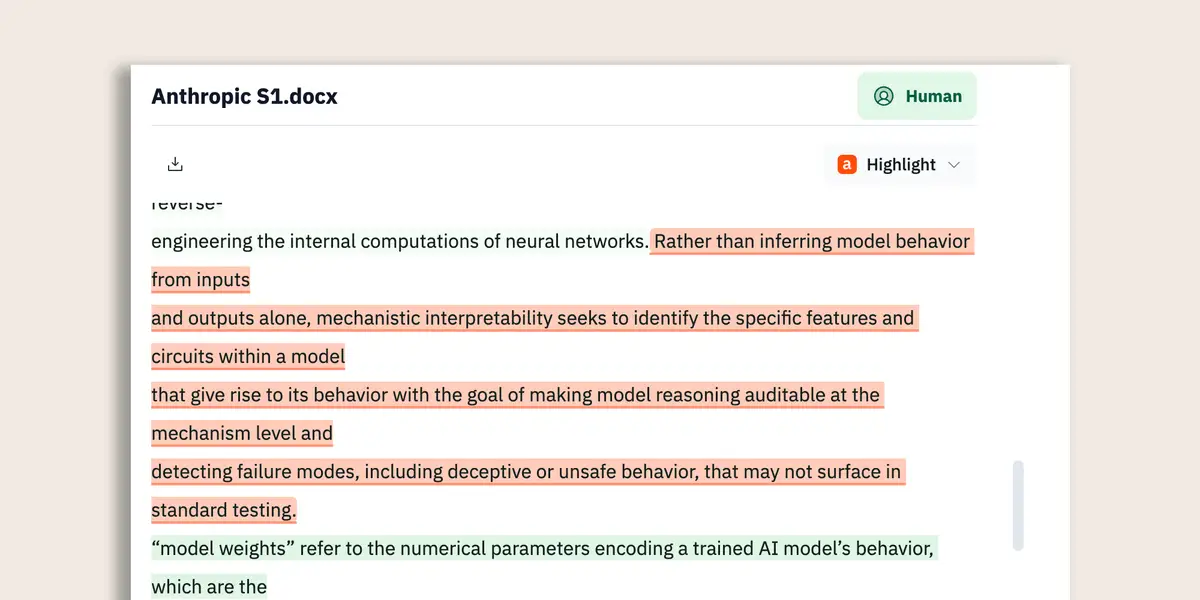
To determine whether Claude or other generative tools played a role in the IPO filing, the S-1 was put through Pangram, an AI-detection service. The results were clear: approximately 92% of the roughly 259,000-word document was determined to be written by humans.
Pangram’s analysis did flag a small fraction of the text as having a “high” probability of being AI-generated, specifically pointing to passages that described the rapid, compressed pace of modern AI innovation. According to Max Spero, CEO and co-founder of Pangram, these results suggest that the filing underwent light AI-assisted editing rather than full-scale automated composition. The industry consensus is that legal teams and corporate underwriters likely utilized AI tools for grammar and stylistic refinement, a common practice in modern enterprise workflows, but ensured that the bulk of the content remained human-authored to satisfy the stringent transparency requirements of the SEC.
### The Paradox of AI Dogfooding
The fact that Anthropic chose to keep its IPO filing overwhelmingly human-written presents a fascinating paradox for the AI industry. On one hand, there is the expectation of “eating your own dogfood”—the idea that a company specializing in advanced LLMs should rely on its own technology for such a massive, text-heavy task. An S-1 filing, characterized by repetitive, dense, and dry boilerplate language, seems like the perfect candidate for automation.
However, the reluctance to fully automate the process highlights the persistent “trust gap” in AI. An S-1 document is a legal contract with shareholders; if it contains hallucinations or errors, the liability is astronomical. By relying on “slow, expensive, fallible meatsacks,” Anthropic avoided the risks associated with AI-generated factual errors or hallucinations that could trigger intense scrutiny from federal regulators.
### Implications for the Future of Corporate Filings
The experiment underscores the current limitations and best practices of AI in professional environments. While tools like ChatGPT or Anthropic’s own Claude are increasingly used for rephrasing and editing, the “heavy lifting” of high-stakes corporate reporting remains firmly in human hands.
For the broader tech sector, this serves as a baseline for how AI will likely integrate into financial workflows in the near term. We are moving toward a hybrid future where AI acts as a sophisticated copy editor rather than the primary author. While the efficiency of these tools is undeniable, the legal and financial worlds remain cautious about the “black box” nature of generative models. For now, when it comes to telling investors why your company is worth billions, it appears the industry still prefers the accountability of a human signature.
Disclaimer: This content is auto-generated for informational purposes only.
Source: Read Original News