







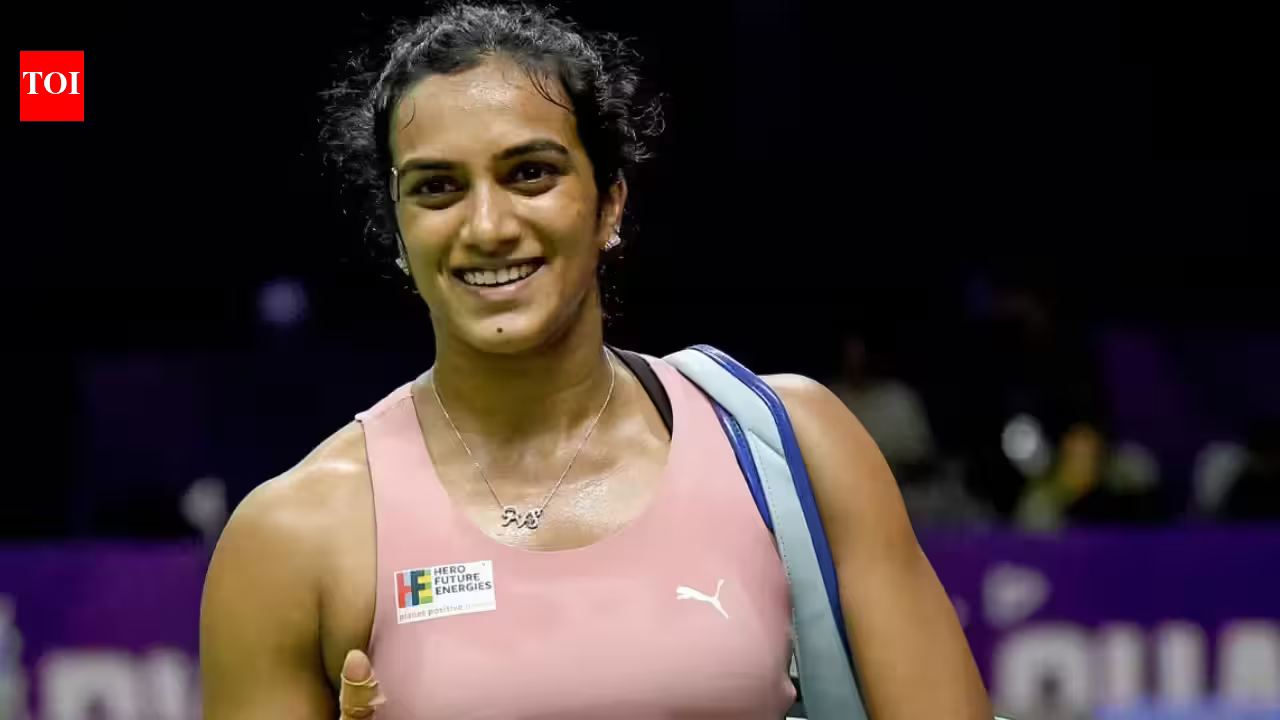
NEW DELHI — The landscape of world badminton is shifting, and India finds itself at the epicenter of this transformation. In a landmark announcement this week, the Badminton World Federation (BWF) confirmed that India has secured the hosting rights for the prestigious 2028 Thomas and Uber Cup Finals. For two-time Olympic medallist PV Sindhu, this news serves as a rallying cry, reigniting her ambition to claim a historic maiden Uber Cup title on home soil.
Returning to the nation’s capital 14 years after the city first hosted the team championships in 2014, the 2028 edition represents more than just a logistical milestone. It marks a moment of homecoming for a generation of players who have elevated Indian badminton to unprecedented heights.
The Quest for Gold: Sindhu’s Home Court Ambition
PV Sindhu, a linchpin of Indian badminton for over a decade, holds deep personal history with this tournament. She was a pivotal member of the Indian squad that captured the country’s first-ever Uber Cup medal—a bronze—in Delhi back in 2014. Now, with the tournament set to return in 2028, she is looking to upgrade that hardware to gold.
“I was proud of the bronze we won in Delhi in 2014,” Sindhu said in an official media release following the BWF announcement. “If I get another chance to play the Uber Cup at home, I want us to go all the way. I know what it meant to stand on that podium with my teammates. To lift the trophy together in front of an Indian crowd would be one of the proudest moments of my career.”
Her sentiment reflects the heightened expectations surrounding Indian badminton. Since that historic 2014 run, the sport has seen an explosion in popularity and a surge in world-class talent, setting the stage for an aggressive pursuit of the title when the global elite descends on India in 2028.
A New Format for a New Era
The 2028 tournament will be a litmus test for the sport, as the BWF prepares to implement a major structural shift. The upcoming Finals will be the first to feature an expanded 24-team format. Furthermore, the competition will move away from the traditional five-match tie structure, transitioning to a three-match format.
This change is designed to create more intensity and tactical variance, a challenge that veteran players like Sindhu and the emerging youth contingent are already preparing to navigate. Hosting during an Olympic year adds an extra layer of prestige and pressure, as the tournament will serve as a premier showcase for the world’s best athletes just ahead of their peak Olympic preparations.
India’s Growing Clout in International Badminton
The decision to award India the hosting rights is no coincidence; it is the direct result of a calculated, successful effort by the Badminton Association of India (BAI) to demonstrate operational excellence. India’s recent history of hosting world-class events—including the 2025 BWF World Junior Championships in Guwahati and the 2026 BWF World Championships in New Delhi—has clearly impressed the international governing body.
Sanjay Mishra, Secretary General of the BAI, believes this sequence of events proves that India has become a global hub for the sport. “Securing three of badminton’s biggest international championships for India in three years reflects the confidence the BWF has in our ability to deliver,” Mishra remarked. “It is a fitting way to close a year in which Indian shuttlers delivered strong results across formats, including a Thomas Cup bronze.”
The momentum is undeniable. Beyond the infrastructure and hosting capabilities, the performance on the court has been stellar. Indian shuttlers enjoyed a prolific 2026 season, securing a record nine BWF World Tour titles at the Super 300 level or higher on international soil. The men’s team, having clinched their maiden Thomas Cup title in 2022 and securing bronze in 2026, has proven that India is a genuine superpower in team badminton.
Inspiring the Next Generation
For Sindhu, the tournament is as much about the future as it is about the present. Reflecting on the electric atmosphere during the recent World Championships in Delhi, she noted how visiting players were struck by the passion of the local fans. She intends to use the 2028 platform to foster that same passion in the next generation of Indian shuttlers.
“At the World Championships in Delhi, players from other countries told me how much they enjoyed walking out to that crowd,” Sindhu shared. “I felt proud that my generation got to play a World Championships at home. In 2028, an Olympic year, young shuttlers will get to see Team India take on the world’s best. I hope they leave the stands determined to earn their place on that court and play for India one day.”
As the clock ticks toward 2028, the focus will now turn to preparation. With the BWF’s seal of approval, India is not just preparing to be a gracious host; they are preparing to defend their house and chase the ultimate prize in team badminton. For players like Sindhu, the dream of hoisting the Uber Cup trophy before a roaring home crowd is no longer just an aspiration—it is the ultimate objective.
Disclaimer: This content is auto-generated for informational purposes only.
Source: Read Original News