






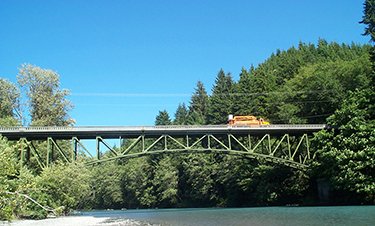
Travelers navigating the Olympic Peninsula should prepare for significant delays as emergency repairs commence on the Hoh River bridge, a critical piece of infrastructure on U.S. 101 that is approaching its centennial year. The 495-foot-long span, which has served the region for 95 years, is currently undergoing intensive structural rehabilitation to address severe corrosion and cracking discovered during recent safety inspections.
The project, which officially began this week, is expected to span approximately three weeks, creating a bottleneck for tourists and residents alike. While the physical repairs are being managed by civil engineers on-site, the logistical challenge of managing traffic flow during such a high-profile closure highlights a growing intersection between legacy infrastructure maintenance and modern digital navigation technology.
## The Role of AI in Real-Time Traffic Management
As road crews descend upon the Hoh River bridge, millions of motorists are relying on platforms like Google Maps and Waze to navigate the resulting congestion. These platforms are no longer just static digital atlases; they utilize sophisticated artificial intelligence and machine learning models to process real-time data from thousands of nearby devices.
By analyzing anonymized speed data, GPS pings, and user-reported incidents, Google’s traffic algorithms can predict congestion before it fully forms. As the Hoh River bridge is reduced to single-lane operations, Google Maps will automatically adjust estimated arrival times and suggest alternative routes, even if those routes are hundreds of miles long. This digital infrastructure has become as vital as the bridge itself, ensuring that the impact of the 95-year-old span’s failure is mitigated by the predictive power of 21st-century software.
## Tech-Driven Predictive Maintenance
The cracks and corrosion discovered under the Hoh River bridge serve as a stark reminder of the limitations of physical infrastructure. However, the civil engineering industry is increasingly turning to “Digital Twin” technology and AI-powered predictive maintenance to avoid such emergency disruptions.
By integrating IoT (Internet of Things) sensors into aging bridges, engineering departments can now monitor stress, vibration, and thermal expansion in real-time. This data is fed into AI models that can forecast when a component will reach its breaking point, allowing maintenance crews to perform proactive fixes rather than reacting to catastrophic failures. While the Hoh River bridge is an older structure, its current situation underscores the industry-wide push toward integrating cloud computing and AI analytics into transportation departments to ensure long-term stability and safer commutes.
## Connectivity Challenges in Remote Locations
The remote nature of the Hoh River area presents a unique challenge for the tech industry: connectivity. Maintaining reliable navigation and communication tools in rural, mountainous terrain requires a robust network of cell towers and satellite connectivity. During this three-week construction period, tech giants are focusing on ensuring their map-caching features—which allow users to navigate offline—remain accurate and up to date for those entering the peninsula’s dead zones.
As repairs proceed, Google is likely to update its data sets to reflect the lane closures, ensuring that the “Estimated Time of Arrival” reflects the reality of the construction site. For those traveling through the area, the transition from historical bridge design to high-tech digital guidance represents the broader reality of modern travel: infrastructure may be old and crumbling, but the digital layer sitting atop it is working in real-time to keep the flow of information—and traffic—moving forward.
Motorists are encouraged to check for live updates via their navigation apps before departing, as traffic patterns are expected to fluctuate significantly throughout the duration of the three-week repair phase.
Disclaimer: This content is auto-generated for informational purposes only.
Source: Read Original News