







India Bolsters Space Sovereignty with Upcoming NVS-03 Navigation Satellite Launch
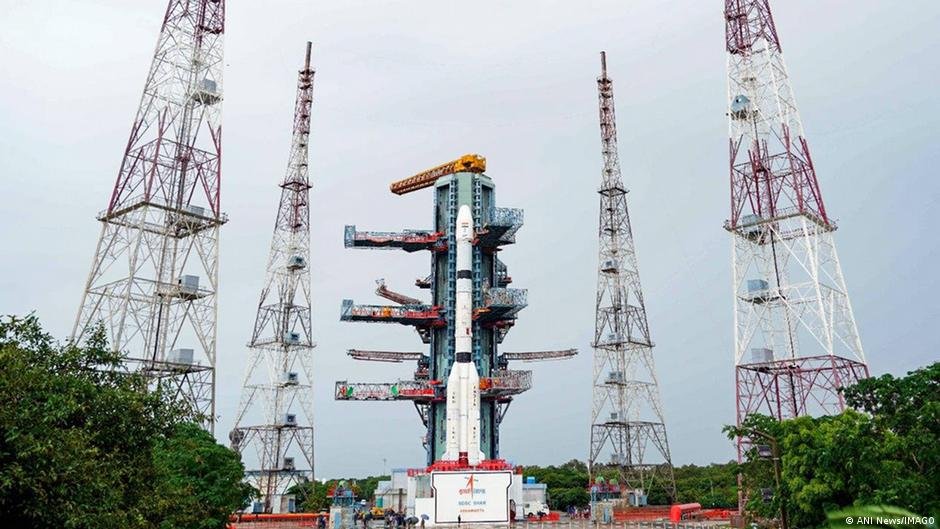
In a significant stride toward technological self-reliance, the Indian Space Research Organisation (ISRO) is finalizing preparations for the launch of a new navigation satellite. Scheduled to blast off from the Satish Dhawan Space Centre in Sriharikota on Friday night, the mission aims to fortify NavIC, India’s indigenous alternative to the United States-controlled Global Positioning System (GPS).
The launch, set for 11:51 p.m. local time, will utilize the GSLV-F18 rocket to carry the NVS-03 satellite into orbit. As the third installment in ISRO’s next-generation navigation series, the spacecraft is tasked with ensuring the continuity and expansion of high-precision location services across the Indian subcontinent and reaching up to 1,500 kilometers beyond the nation’s borders.
Enhancing Capabilities and Overcoming Challenges
The NVS-03 represents a notable upgrade in India’s regional navigation capabilities. Among its standout features is the inclusion of an indigenous atomic clock, a crucial component for the precision required in satellite navigation. This move signals a deliberate effort by ISRO to decrease dependency on imported hardware, following past technical hurdles that plagued earlier segments of the program.
Historically, the NavIC initiative has navigated a complex path. The project has endured various setbacks, ranging from deployment malfunctions to the premature failure of critical atomic clocks. By integrating both local technology and reliable international components, the NVS-03 is engineered to provide a more robust signal architecture. The satellite introduces the L1 signal, which will function alongside the existing L5 and S-band signals to offer enhanced signal availability and improved accuracy for both civilian and strategic applications.
A Strategic Shift Toward Independence
The development of NavIC is rooted in India’s long-term goal of achieving “Aatmanirbharta,” or self-reliance, in critical space-based infrastructure. By operating its own constellation, India mitigates the risks associated with relying on foreign-owned systems, which could theoretically be restricted or degraded during times of geopolitical instability.
This launch follows a busy period for the Indian space sector. Only last month, ISRO successfully deployed its first-ever imaging satellite into geosynchronous orbit, the EOS-05, highlighting the country’s growing proficiency in complex orbital maneuvers.
As the countdown begins for the GSLV-F18 mission, the scientific community remains optimistic that the successful deployment of NVS-03 will stabilize the NavIC network. With this launch, New Delhi is reinforcing its position as a major space power, signaling to the global community that it possesses the technical capacity to maintain its own vital navigation grid, independent of external influence. Should the mission proceed as planned, it will mark another milestone in India’s ongoing quest to dominate its regional aerospace landscape and ensure the security of its vital digital infrastructure.
Disclaimer: This content is auto-generated for informational purposes only.
Source: Read Original News