









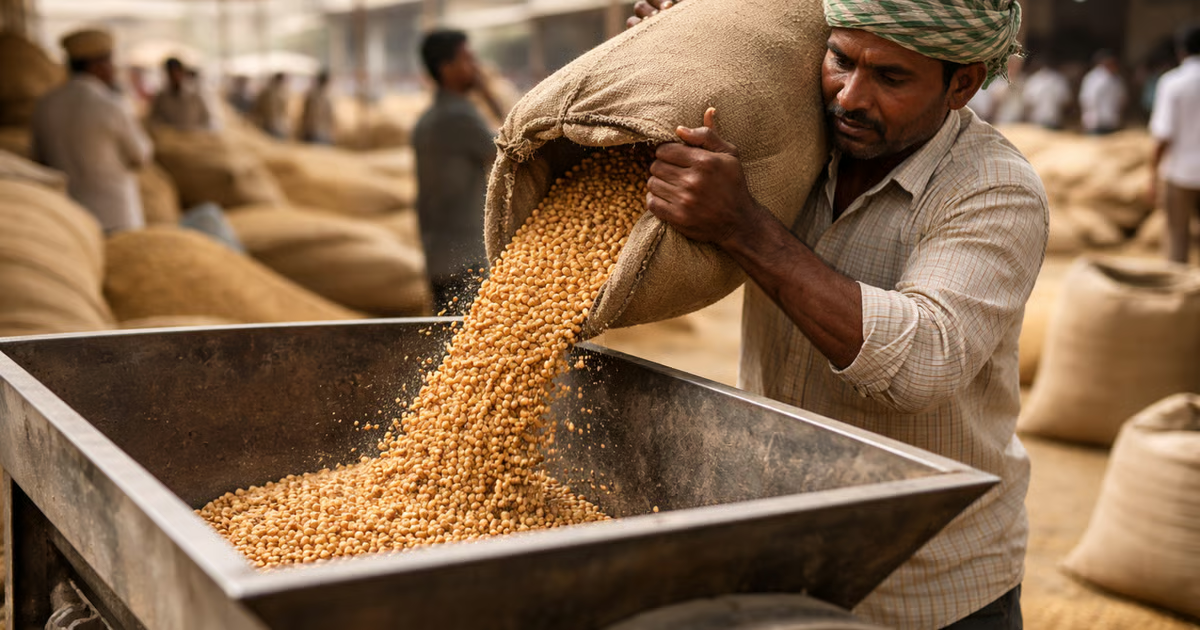
Indian Chickpea Prices Edge Upward Amid Drought Concerns and Delayed Sowing
Indian chickpea export prices have seen a steady climb as the market grapples with the dual pressures of seasonal inventory tightness and a challenging outlook for the upcoming rabi crop. As of mid-November 2026, Free-on-Board (FOB) prices from New Delhi for kabuli chana have trended higher across all size grades, mirroring firm conditions in domestic wholesale markets.
Market Sentiment and Price Trends
The recent price adjustments reflect a market reacting to restricted supplies. Larger-sized kabuli chickpeas—specifically the 42–44 and 44–46 counts—have seen notable upticks. Currently, the 42–44 count is trading at EUR 1.15/kg, while the 44–46 grade has moved to EUR 1.12/kg. Smaller grades, including the 10 mm, 9 mm, and 8 mm varieties, have also recorded similar gains.
These figures are largely driven by domestic mandi levels, which have reached their seasonal high, consistently hovering between ₹8,600 and ₹8,900 per quintal. Traders note that while domestic demand remains steady, it is the combination of thin arrivals and the uncertain start to the rabi planting season that is providing a firm floor for prices.
The Impact of Drought and Sowing Delays
A primary concern for market analysts is the sluggish pace of rabi sowing across major producing states. The national agricultural data indicates that planting for chickpeas and mustard is lagging significantly behind the typical schedule.
Maharashtra, a critical hub for chickpea production, is currently facing acute stress. Ongoing drought conditions and inadequate soil moisture have resulted in a nearly 38% reduction in total rabi sowing compared to the previous year. While farmers are prioritizing chickpeas over more water-intensive crops, the lack of moisture is casting a shadow over yield potential, keeping the market jittery.
Global Competitive Landscape
India’s export pricing remains competitive when viewed against international benchmarks. Mexican chickpea offers, which serve as a key reference for global trade, have also firmed up. Currently, large 42–44 count Mexican chickpeas are priced at EUR 1.23/kg. This maintains a clear premium over Indian origins, ensuring that Indian kabuli chana remains an attractive option for buyers in the Middle East and South Asian markets. Export demand remains resilient, reinforcing the FOB prices despite the broader inflationary pressures.
Weather Outlook and Future Prospects
The India Meteorological Department (IMD) has forecast below-normal rainfall for November across much of the country. While the dry, cool weather expected in northwest India is generally beneficial for field operations and crop health, it provides little to no relief for the drought-stricken regions of central and western India.
For the immediate future, the market is expected to remain stable with a slight upward bias. The lack of significant rainfall in central India suggests that any hope for a rapid recovery in sowing acreage is unlikely to materialize in the short term.
Strategic Outlook for Stakeholders
For exporters, the current discount of Indian material against Mexican grades suggests that demand for 42–44 and 44–46 count kabuli will likely persist. However, traders are advised to remain cautious, as buyer resistance could cap further rallies.
Importers and domestic buyers are encouraged to adopt a staggered approach to coverage. Given the risks associated with delayed planting and ongoing moisture deficits, delaying procurement in anticipation of significantly lower prices may prove risky. As the market enters the latter half of November, the balance between current availability and long-term supply concerns will remain the defining factor for price volatility.
Disclaimer: This content is auto-generated for informational purposes only.
Source: Read Original News