







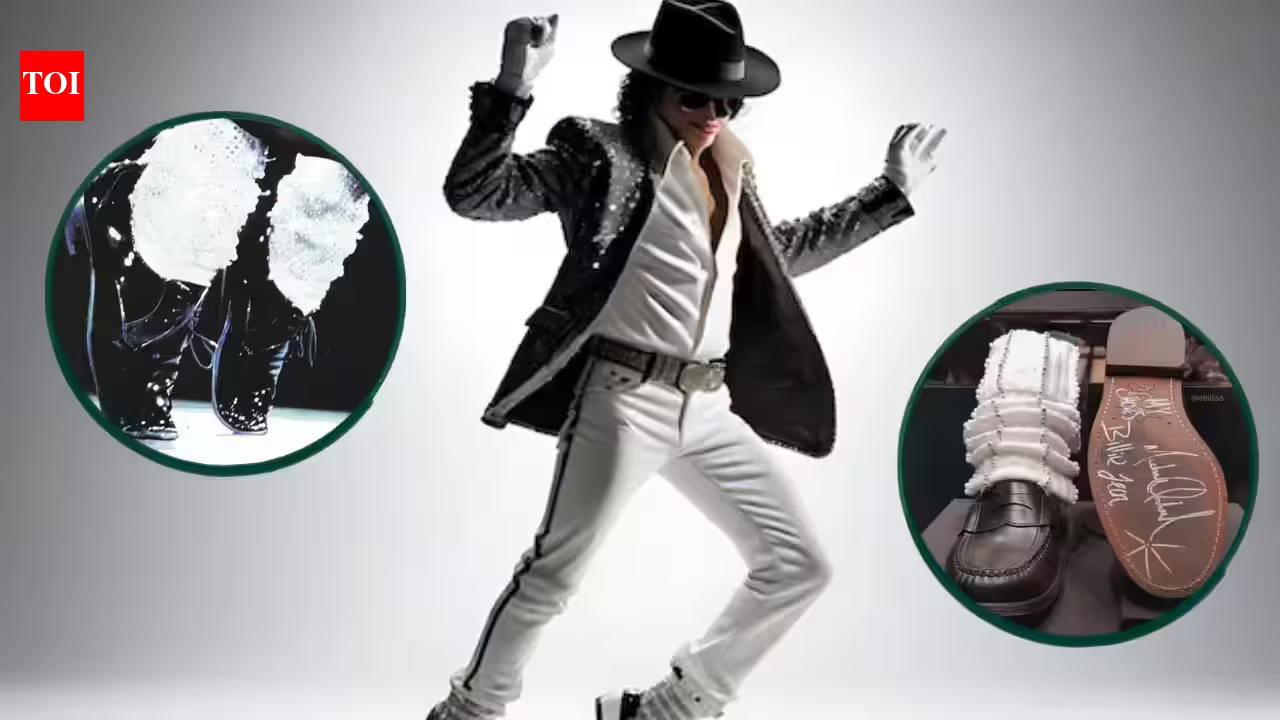
For decades, Michael Jackson’s “Smooth Criminal” lean stood as the ultimate litmus test for human capability. Watching the King of Pop pivot at a 45-degree angle, his body rigid as a board while defying the basic laws of physics, audiences were left in a state of collective disbelief. Was he a master of core strength? Was it wires? Was it supernatural? As it turns out, the answer was far more grounded in mechanical genius than in mystical ability.
In 1993, the veil was lifted—at least on paper. Jackson, alongside his longtime costume designers Michael L. Bush and Dennis Tompkins, secured U.S. Patent No. 5,255,452. Titled “Method and Means for Creating Anti-Gravity Illusion,” the document served as the blueprint for one of the most iconic stage tricks in the history of live performance.
The Patent Behind Michael Jackson’s Gravity-Defying Move
While the name of the patent sounds like the preamble to a science fiction novel, the application itself was purely grounded in practical engineering. The goal was never to actually negate gravity; it was to create a visual spectacle that looked impossible to the naked eye. The patent describes a specialized system—a marriage between custom-fitted footwear and a retractable hitch integrated into the stage floor.
By the time the patent was filed in 1992, Jackson had already mastered the lean for his Moonwalker film, where he utilized wires and harnesses. However, as the patent points out, harnesses are cumbersome, restrict movement, and are difficult to hide in a high-energy live show. The patented “anti-gravity” system offered a seamless alternative. It allowed Jackson to move freely across the stage, engage the mechanism at a precise moment, execute the lean, and then move on as if nothing had happened. It wasn’t about magic; it was about precision engineering.
What Was Hidden Underneath the Heels?
The genius of the design lay in its simplicity and its ability to hide in plain sight. The shoes themselves featured a specially designed heel with a unique V-shaped recess. When Jackson reached the designated spot on the stage, a hitch—a small metal post—would rise from the floor through a small opening.
Once the hitch was engaged, the performer would slide their heel backward until the shoe locked onto the post. This created a solid anchor point that held the dancer’s body weight, effectively shifting their center of gravity beyond the edge of their feet. To the audience, it appeared as though he were merely balancing on his toes; in reality, he was effectively strapped into the stage floor.
Design-wise, the shoes were masterpieces of camouflage. They were crafted to look like high-end footwear, often obscured by spats, socks, or the drape of his trousers. The mechanism was so well-concealed that even from the front row, the secret remained invisible. The hitch itself was retractable, disappearing back into the floor when not in use, which kept the stage looking like an ordinary dance floor.
Why Couldn’t Ordinary Shoes Do the Same Thing?
If you try to lean forward at a 45-degree angle in your sneakers, you’ll find yourself hitting the floor face-first within a second. That is because the human body’s center of gravity is located near the pelvis. To keep from falling, that center must stay aligned over your base of support—your feet.
For the average person, leaning past a certain point means gravity takes over. Jackson’s shoes effectively extended that base of support. By anchoring the heel to a fixed point on the stage, the shoes acted as a fulcrum. The patent also addressed the flexibility of the design, noting that the system allowed for far more fluidity than the cable-and-harness rigs previously used. It was an iterative improvement on stage technology that allowed the performance to feel more like a dance move and less like a stunt.
Was the ‘Smooth Criminal’ Lean Originally Performed With These Shoes?
There is a common misconception that the patent was the origin of the move. In reality, the patent was the refinement. When Jackson filmed the “Smooth Criminal” video for the Moonwalker film in 1987, the technology did not yet exist in this form. In that iconic video, Jackson used cables and a harness system attached to his waist to achieve the tilt.
The patent, granted years later, was a solution for bringing that specific, high-production-value moment to the stage for the Bad and Dangerous world tours. It allowed him to bring the impossible to a live arena, night after night, without the need for cumbersome overhead rigging. Calling them “anti-gravity shoes” is a brilliant piece of marketing, but the patent documents themselves are quite modest, referring to the system as a means of “creating an illusion.”
The Legacy of a Mechanical Illusion
Today, U.S. Patent No. 5,255,452 is listed as expired due to fee-related status. Yet, its legacy is cemented in the annals of pop culture history. It stands as a testament to Michael Jackson’s obsessive commitment to the “show” in “show business.”
He understood that entertainment is an art form that thrives on the boundary between what is real and what is perceived. By enlisting the help of engineers and designers to turn a visual trick into a patented piece of technology, Jackson didn’t just perform a move; he redefined the possibilities of what a pop star could do on stage. The shoes may be long since retired, and the patent may have lapsed, but the memory of the King of Pop tilting into the impossible remains one of the most enduring images in the history of modern music. It wasn’t just a dance—it was a lesson in how to captivate a world by simply changing the angle at which you stand.
Disclaimer: This content is auto-generated for informational purposes only.
Source: Read Original News