







Barefoot and Determined: One Mother’s Sprint for Her Daughters’ Future
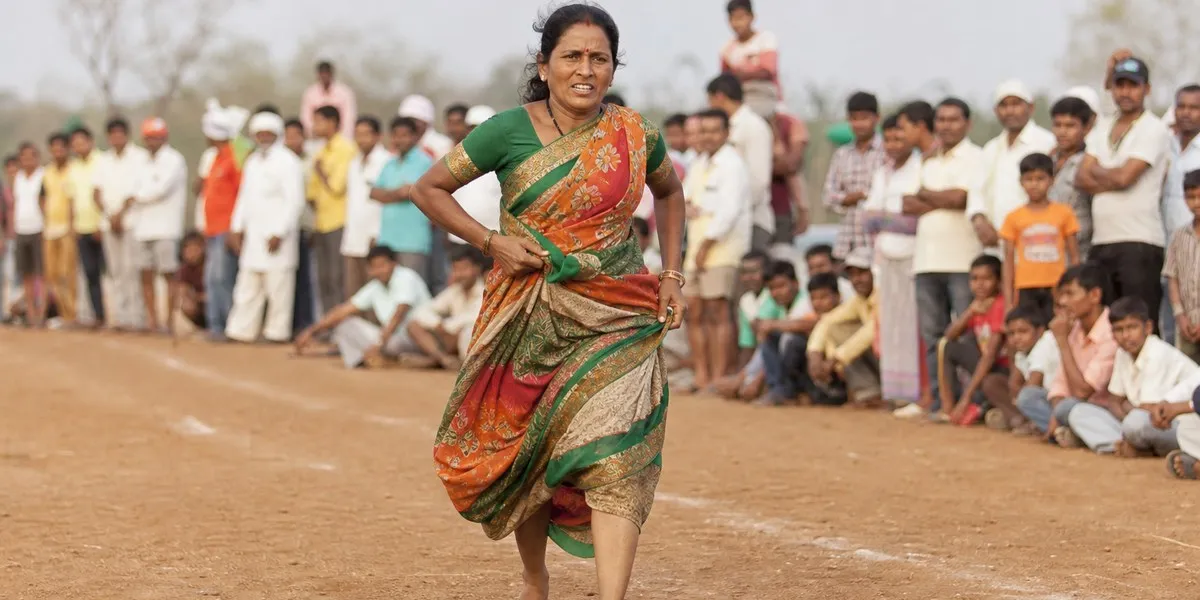
In a remarkable display of maternal resolve, 47-year-old Ramabai Ranveer recently became the talk of Maharashtra after winning a 3km community race. Racing without professional training or even basic running shoes, the widow from the Beed district sprinted to victory in her traditional sari, her eyes fixed on a single objective: the 3,000-rupee ($31) prize money intended to fund her daughters’ education.
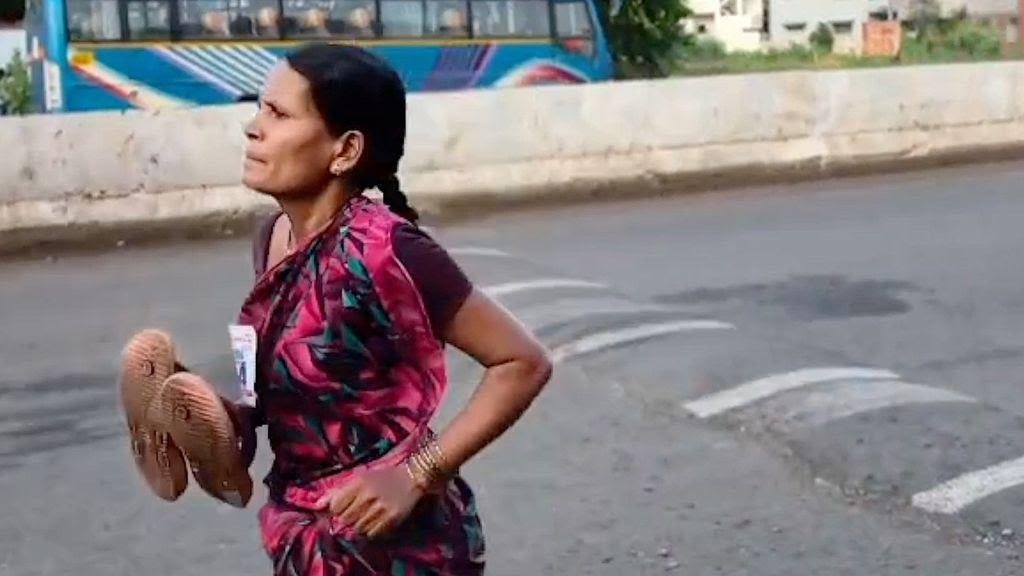
For Ramabai, this was not a sporting pursuit, but an act of economic necessity. Since the death of her husband in 2012, she has worked tirelessly as the family’s sole breadwinner, taking up roles ranging from field laborer to cook. When her daughters expressed a need for books and study materials to prepare for competitive government entrance exams, Ramabai did not hesitate to register for the local “Amrit Daud” fun run. When her slippers proved an obstacle on the track, she simply cast them aside, gathered her garments, and ran the distance barefoot to claim the top prize in the women’s 30-60 age bracket.
A Symbol of India’s Education Crisis
While the prize money was modest—hardly enough to cover the mounting costs of higher education or specialized coaching centers—the image of Ramabai running with grit and grace went viral. The footage resonated deeply with a public currently grappling with the fragility of the nation’s education system.
In India, securing a government job is often seen as the ultimate pathway to middle-class stability. Millions of young people pour years of their lives and significant family savings into preparing for these recruitment exams. However, this dream has been shadowed by systemic issues, including widespread allegations of paper leaks and administrative irregularities. As the middle class becomes increasingly disillusioned, Ramabai’s story has transformed from a local human interest piece into a national conversation about the sacrifices made by marginalized families.
The Structural Reality of Rural Struggles
The attention garnered by her race reached as far as the judiciary. Following the widespread circulation of her story, Chief Justice of India Surya Kant intervened, directing local authorities to grant the family 50,000 rupees in financial aid.
However, experts caution that such interventions, while welcome, mask deeper systemic failures. Sukhadeo Thorat, a former chairman of the University Grants Commission, notes that stories like Ramabai’s highlight a breakdown in the reach of government welfare schemes. “If a woman is compelled to struggle so hard for her daughters’ education, it shows that government education schemes are not reaching people adequately,” Thorat observed. “The problem is that implementation remains weak.”
Breaking the Cycle of Hardship
Despite the national debate, Ramabai remains focused on the tangible goal of her daughters’ futures. She works as a cook at the very coaching center where her eldest daughter, Pooja, trains for police recruitment. Her second daughter, Arati, is simultaneously striving for a career in civil services.
For Ramabai, the motivation is simple: she wants to spare her children the cycle of poverty and labor she has endured. “I don’t want them to go through the hardships I have faced,” she said. “I don’t want them to struggle through mud or travel under the scorching sun and rain.” By stepping onto the track in her sari, Ramabai Ranveer did more than win a race; she became a powerful symbol of the lengths to which a parent will go to ensure their children have a path that leads away from struggle and toward a better life.
Disclaimer: This content is auto-generated for informational purposes only.
Source: Read Original News