








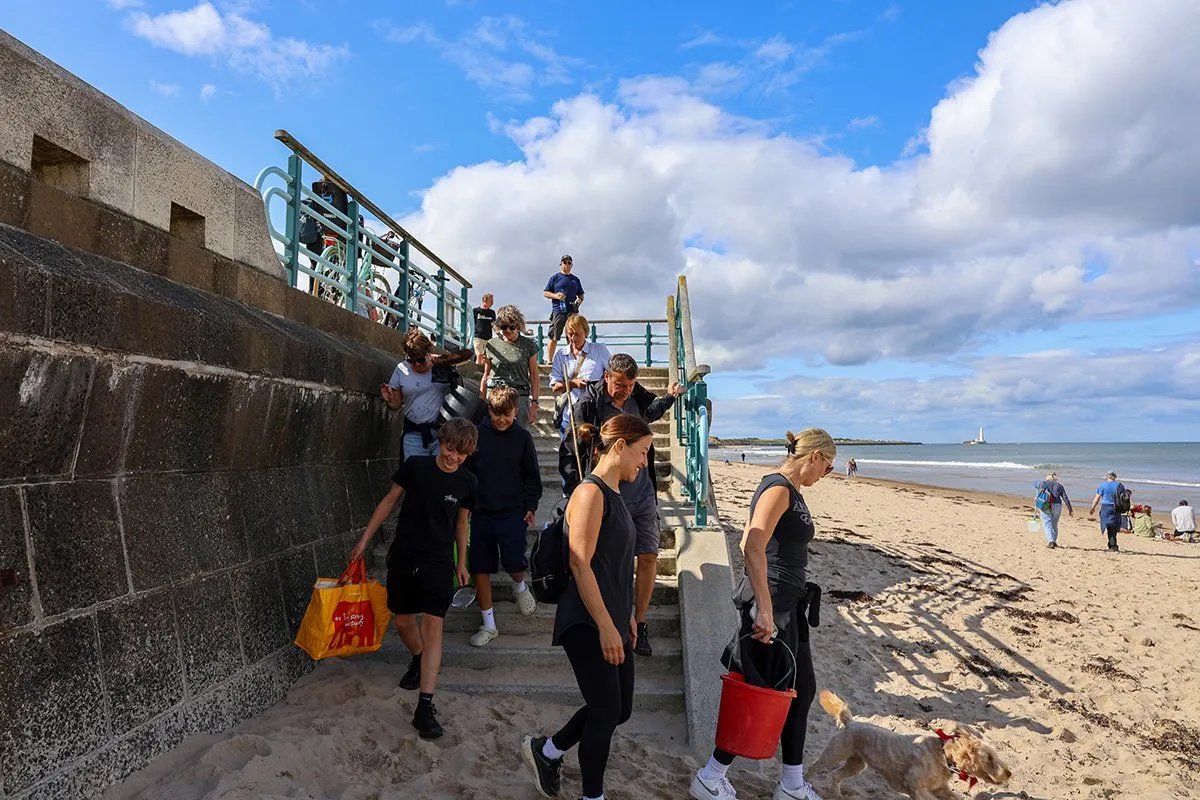
Tyne, UK – Three weeks following the significant nurdle spill in the River Tyne, a community-led clean-up operation continues with undiminished resolve, highlighting both impressive grassroots mobilisation and lingering questions regarding official response and accountability. The incident, stemming from an accidental collision between the Wind Orca and the berthed BG Orange on July 19th, saw an estimated 17 tonnes of plastic nurdles released into the river. Volunteers have since dedicated over 5,300 hours to the effort, recovering approximately half a tonne of the plastic pellets.
Of the total volunteer hours, nearly 4,900 have been spent on hands-on beach clean-ups across 2,336 sessions, complemented by more than 400 hours dedicated to crucial behind-the-scenes coordination and manufacturing. This monumental community effort underscores the environmental concern gripping the region.
Campaigners are sounding the alarm as a spring tide approaches, warning that the increased swell could churn buried nurdles back to the surface, reintroducing them into the river and potentially carrying them out to sea. “The swell could churn up the sand, bringing buried nurdles back to the surface and into the river,” stated Sally McGee, a local surf instructor and campaign spokesperson. “This is an important window in which we have to act. Every volunteer, professional and government resource needs to be focused on recovering as many pellets as possible before the tide carries them out to sea.”

Official Support Hailed, But Port of Tyne Urged to Elevate Response
The involvement of the North Eastern Inshore Fisheries and Conservation Authority (NIFCA) on the water this week was welcomed by the community. However, an offer of only a two-hour window for volunteer river access on Tuesday morning (8-10 am) left campaigners calling for a more substantial commitment from the Port of Tyne. McGee expressed satisfaction with NIFCA’s presence, stating, “Their presence is a clear indication that collective pressure can lead to meaningful action. This is an important boost for everyone who has been working tirelessly to respond to the spill.”
Yet, she pressed the Port to leverage its extensive maritime connections: “What we are asking is for the Port of Tyne to use its extensive connections within the maritime community to mobilise trained volunteers and appropriate vessels. It should not be the responsibility of the community to identify, recruit and coordinate boats with the specific skills and equipment that the Port itself has said are required. If the Port recognises that more vessels and trained personnel are needed on the river, then it is the Port’s responsibility to put out that call and use its own networks to bring them in.”
Community Presses for Transparency and Accountability
A pivotal “listening session” was held on Friday, August 7th, where community representatives met with the North East Combined Authority (Mayor Kim McGuinness’s office) and the Northumbria Local Resilience Forum. This meeting preceded a government briefing with Defra (Department for Environment, Food and Rural Affairs). The Mayor’s office confirmed it had raised concerns directly with Defra, advocating for regulatory changes to prevent future incidents and publicly acknowledging the thousands of volunteers, who were offered a formal route into recovery planning via the Local Resilience Forum.
Community representatives challenged the “rapid” response narrative from government agencies and the Port of Tyne, arguing that such overstatements risk eroding public trust. They also demanded clarity on the division of responsibility for the recovery effort among the Environment Agency, Maritime and Coastguard Agency, Port of Tyne, local authorities, and volunteers. Volunteers reiterated their call for professional, experienced vessels, not untrained individuals, suggesting that readily available resources like marina safety boats and marine police have been under-utilised. Officials agreed to facilitate direct contact with the Environment Agency following reports of volunteers being repeatedly redirected.
Defra Minister Visits Amidst Calls for Enhanced Resources
MP Stephen Morgan from Defra visited the North East on Monday, meeting with local officials and affected communities. He pledged to ensure the clean-up is as rapid and effective as possible. The volunteer “nurdlers,” who feel they are still bearing the brunt of the clean-up, hope Morgan’s visit will translate into improved resources, increased personnel, and greater transparency from the Environment Agency.
Wildlife Continues to Suffer from Indigestible Plastic
The ecological impact of the spill remains a grave concern. Nurdles, while not inherently toxic, readily absorb pollutants from seawater and are frequently mistaken for food by marine life. North Tyneside and South Tyneside councils have highlighted video evidence showing gulls, ducks, swans, and cygnets in the River Tyne and on local beaches appearing to consume the plastic pellets.
“Nurdles are scattered among seaweed, rocks and sand, with seagulls, black-headed gulls and crows pecking at them along the shoreline where they usually feed on small worms, fish eggs and larvae,” explained Leo Hargreaves, a Nextdoor Nature Officer at Northumberland Wildlife Trust. He added, “Birds, fish and marine mammals frequently mistake them for food, filling their stomachs with indigestible plastic that can cause starvation or internal injury.”
Campaign Calls for New Pellet-Loss Legislation
Campaigners are advocating for the adoption of a new EU law, Regulation (EU) 2025/2365, which mandates risk management plans and independent audits for large handlers of plastic pellets. “Such a change in law would be a vital step towards preventing this from happening in the future,” stated Hargreaves. “Each year an estimated 445,970 tonnes of nurdles enter the environment. The scale is hard to imagine.” The campaign is actively supporting a UK Parliament petition for the government to mandate this EU law. The “zero plastic pellet loss” petition requires 10,000 signatures for a government response and closes on September 13th.
Grassroots Support Flourishes Amidst Ongoing Challenges
The grassroots infrastructure supporting the clean-up continues to expand. Volunteer seamstresses have produced over 500 reusable mesh collection bags, and a network of community equipment hubs (NESTs) allows volunteers to easily access clean-up kits. The Port of Blyth has demonstrated exemplary cooperation, with approximately 40 employees joining beach cleans at Blyth and Cambois last week.
Organisers remain clear on their priorities: authorities must match the community’s pace, provide transparent accounting of achievements, clarify how many nurdles remain unrecovered, and identify who is ultimately responsible for their retrieval.

Friends of Bylines Network
There has never been a greater need for grassroots journalism that investigates the stories that really matter, holds power to account and champions the voices of everyday citizens. We are proudly powered by volunteers but what we do isn’t free.
STAND WITH US for independent, citizen-led journalism that makes democracy stronger, and you will even get some exclusive benefits.