








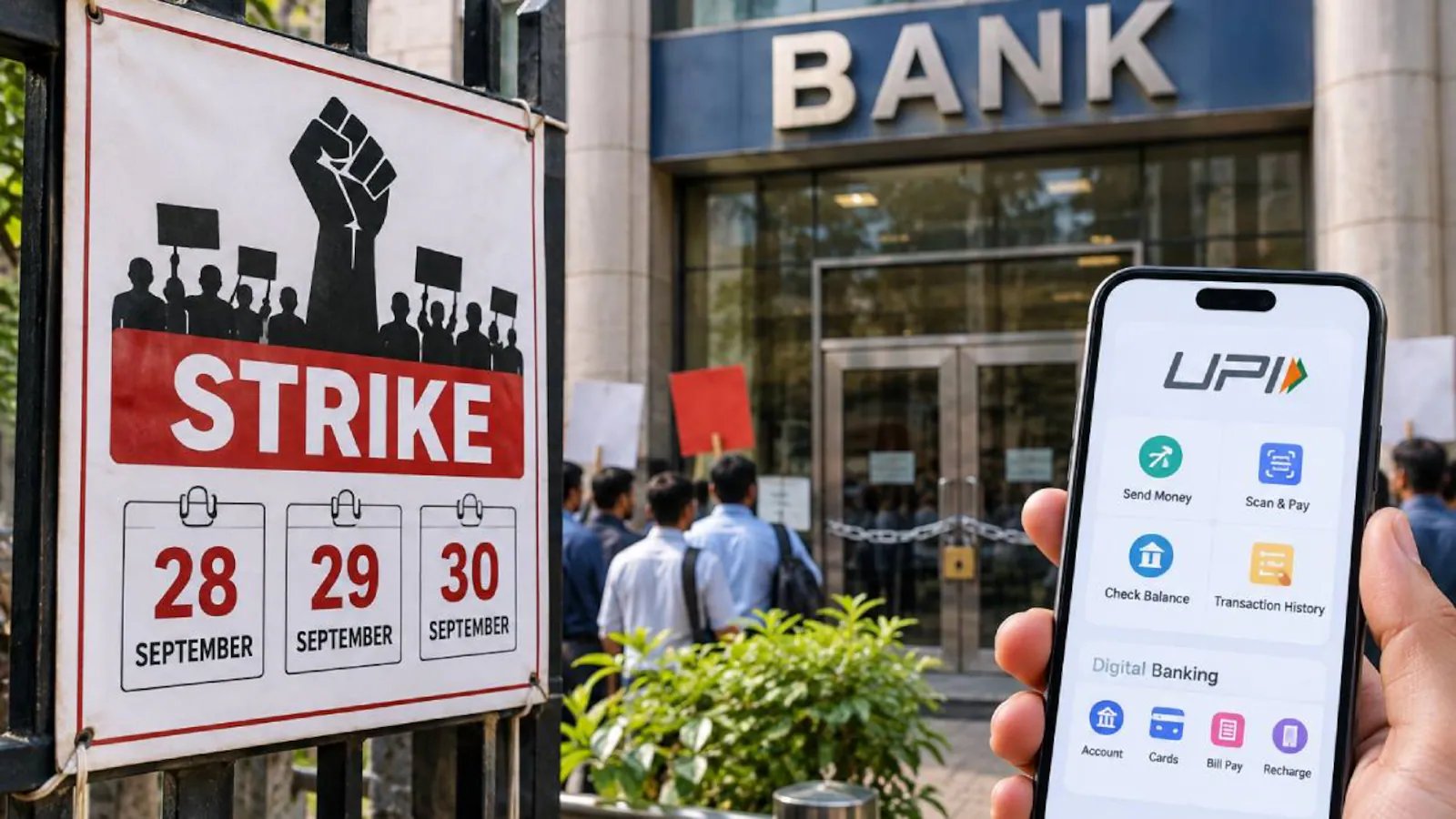
Banking customers across India are bracing for a potential period of service disruption as a major nationwide strike is scheduled to take place from September 28 to September 30. Organized by the United Forum of Bank Unions (UFBU), which represents approximately 90% of the country’s banking workforce, the three-day walkout is centered on critical labor demands. These include the implementation of a five-day work week and the standardization of pension provisions across the banking sector.
To mitigate the impact on the public—particularly as the strike overlaps with the end-of-month half-yearly financial closing—the government and regulatory bodies have initiated proactive measures to ensure financial continuity.
## Government Expedites Salary and Pension Disbursals
The Ministry of Finance has taken swift action to protect central government employees from the inconvenience of the strike. In an official memorandum released by the Controller General of Accounts, the government announced that salaries, wages, and pensions for September will be paid in advance.
Government employees, including those in the defense, postal, and telecommunications sectors, are set to receive their earnings on Friday, September 25, rather than the standard end-of-month schedule. The ministry has also encouraged various departments to fast-track other essential financial transactions before the strike commences. Any necessary fiscal adjustments resulting from this early payment will be settled against the October payroll, ensuring that the short-term liquidity of employees remains unaffected.
## Strategic Operational Shift: Sunday Banking
Recognizing the potential for widespread confusion, the Reserve Bank of India (RBI) has issued a directive requiring all banks—including Regional Rural Banks—to maintain operations on Sunday, September 27. This move is specifically designed to provide customers with an additional window to conduct essential, branch-based financial transactions before the three-day shutdown begins.
The RBI has authorized the full operation of currency chests, ATM-linked branches, and corporate offices throughout that Sunday. This extension acts as a buffer, preventing a bottleneck of traffic on the final working day of the week and allowing citizens to secure their financial needs before the labor protest stalls in-person services.
## Digital Banking and the Shift Toward AI-Driven Solutions
While branch services face a temporary halt, the banking sector has heavily emphasized the necessity of shifting toward digital infrastructure. As the industry undergoes a broader technological transformation—much like the rapid shifts seen in the global tech sector—banks are steering customers toward robust digital channels.
Financial institutions are increasingly leveraging AI-powered platforms and digital ecosystems, including UPI, mobile banking applications, and secure internet banking portals, to keep services running regardless of physical branch availability. These digital tools have become the backbone of modern financial operations, offering 24/7 access to account management, fund transfers, and bill payments.
In preparation for the strike, banks have been instructed to optimize their ATM networks and ensure sufficient cash reserves are maintained throughout the affected days. Despite these efforts, officials suggest that customers who rely on non-digital services should prioritize their branch visits on the designated Sunday. For the majority of users, however, the current situation serves as a stark reminder of the importance of adopting digital-first banking habits, an area where AI-driven security and personalized financial insights continue to play a pivotal role in maintaining stability in the modern economic landscape.
As the industry faces these labor challenges, the move toward automated and contactless banking ensures that the broader economy remains shielded from the most disruptive effects of the impending strike.
Disclaimer: This content is auto-generated for informational purposes only.
Source: Read Original News