









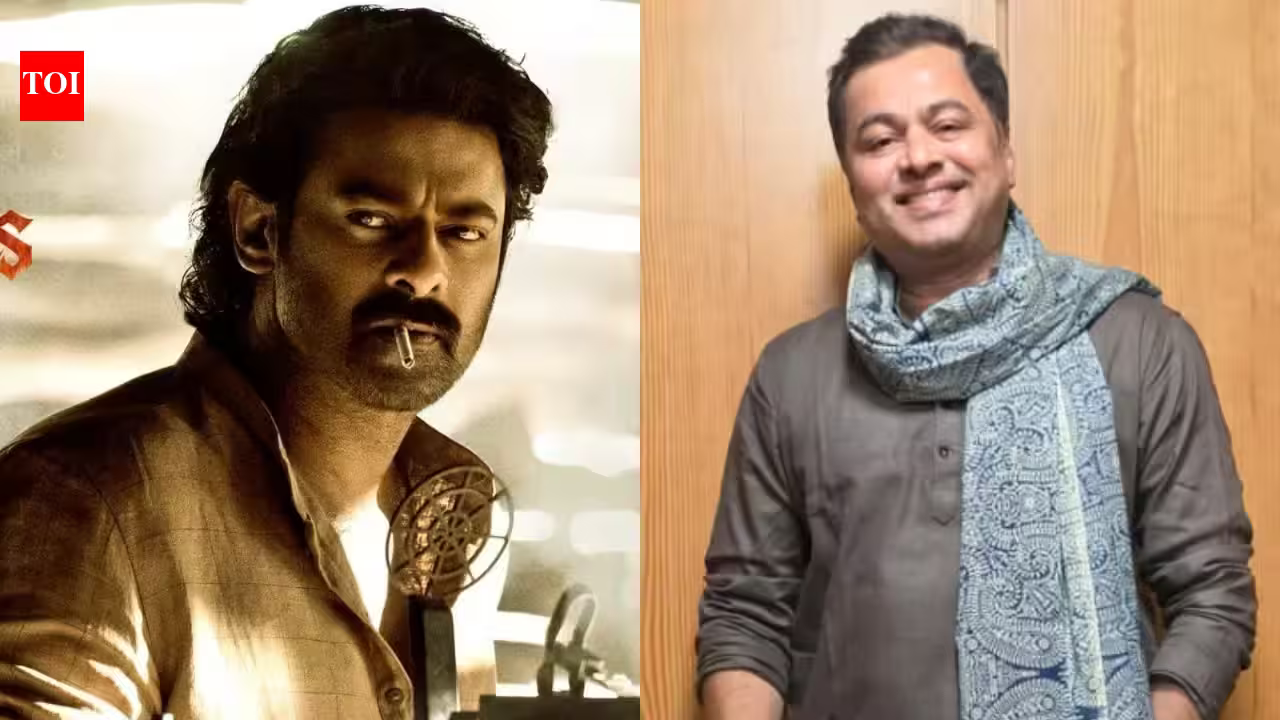
The landscape of Indian cinema is currently witnessing a fascinating convergence of regional giants. As the boundaries between Marathi, Telugu, and Hindi industries continue to blur, casting choices have become more ambitious, often aiming to bridge historical gravitas with massive commercial star power. None exemplify this trend better than the upcoming period war drama Fauzi, which marks the Telugu debut of veteran Marathi actor Subodh Bhave. Tasked with portraying one of India’s most revered figures, Netaji Subhas Chandra Bose, Bhave finds himself at the heart of both a cinematic milestone and a simmering national debate.
A Legacy of Excellence Meets a Modern Superstar
Subodh Bhave is no stranger to the weight of historical portrayals. Having built a career on nuanced performances—most notably in his turn as Lokmanya Tilak—his casting as Netaji Subhas Chandra Bose was met with widespread approval from critics and audiences alike. However, the true intrigue lies in his off-screen dynamic with the film’s lead, the pan-Indian titan Prabhas.
Their professional paths first crossed on the sets of Om Raut’s Adipurush. It was there, through the mediation of a mutual acquaintance in the industry, that the two first shook hands. Years later, that brief professional introduction has blossomed into a collaboration on Fauzi. Bhave, known for his grounded nature and intellectual approach to his craft, was quick to contrast the gargantuan off-screen celebrity status of Prabhas with the man he encountered behind the camera.
Beyond the Stardom: The Human Side of Prabhas
In an industry where the aura of a “Superstar” can often create an impenetrable wall of entourage and ego, Bhave’s observations regarding Prabhas provide a refreshing counter-narrative. Despite the overwhelming fame that follows the Baahubali actor, Bhave describes a colleague who is startlingly devoid of airs.
“He doesn’t bring his stature or status to the set,” Bhave noted in a recent interview. For a veteran like Bhave, who has spent decades navigating the professional theaters and film sets of Maharashtra, this level of humility is the hallmark of a true professional. The experience of sharing a frame with both Prabhas and veteran powerhouse Anupam Kher was, by Bhave’s account, a career highlight. The ease with which Prabhas navigated the set—prioritizing the comfort of his co-stars over the convenience of his own rank—highlights the camaraderie required to pull off a project as technically and emotionally demanding as Fauzi.
The Creative Vision of Hanu Raghavapudi
The film is being steered by Hanu Raghavapudi, a director who proved his mettle for period romances and war-torn narratives with the critical and commercial success of Sita Ramam. Raghavapudi’s aesthetic choice to cast Subodh Bhave as Netaji suggests a film that intends to lean heavily into historical authenticity—or, at the very least, a stylized version of it.
The ensemble cast, which includes the likes of Mithun Chakraborty, Jaya Prada, and newcomer Imanvi, signals a production designed for scale. However, the inclusion of such a diverse array of talent, spanning multiple generations and industries, places a significant burden on the production to maintain thematic consistency. For Subodh Bhave, the role is more than just a paycheck; it is an immersion into the psyche of a revolutionary leader, a challenge that requires him to balance the director’s fictionalized narrative with the public’s immense reverence for the historical icon.
The Weight of History: Navigating the ‘Fauzi’ Controversy
Great historical dramas rarely arrive without friction, and Fauzi has already found itself caught in a tempest of criticism. The controversy centers on a specific, fictionalized sequence in the film’s teaser, which portrays Netaji Subhas Chandra Bose in Berlin, circa 1942, in conversation with Adolf Hitler regarding a fictional Indian spy played by Prabhas.
The depiction has drawn sharp ire from historical purists and family members of the freedom fighter, most notably Netaji’s grandnephew, Chandra Kumar Bose. His public condemnation of the scene as a “crime” against history and his demand for an unconditional apology have put the film’s creative liberties under a microscope. While filmmakers often argue that cinema is a medium of imagination—especially in the war-action genre—the figure of Netaji remains a deeply sensitive subject in India. The production team’s silence on the matter thus far has only intensified the spotlight on how they plan to reconcile these creative departures with historical reality.
Looking Toward the Future
As the release date for Fauzi has shifted to March 19, 2027, the extra time provides a buffer for the production to address the brewing discourse. For Subodh Bhave, the journey from Marathi cinema to the grand sets of a high-budget Telugu war epic is a testament to the evolving nature of the Indian film industry.
While the controversy over the portrayal of Netaji is sure to haunt the film’s marketing campaign in the coming months, the core of the story remains a high-stakes action drama driven by one of the biggest stars in the country. Whether the film will be remembered for its historical inaccuracies or its grand narrative sweep remains to be seen. However, one thing is certain: Subodh Bhave’s commitment to his craft and his positive experience with his co-stars ensure that behind the scenes of the chaos, a genuine appreciation for the art of filmmaking persists. As the industry watches and waits, Fauzi stands as a reminder of the complexities of balancing the demands of commercial spectacle with the weight of national history.
Disclaimer: This content is auto-generated for informational purposes only.
Source: Read Original News