








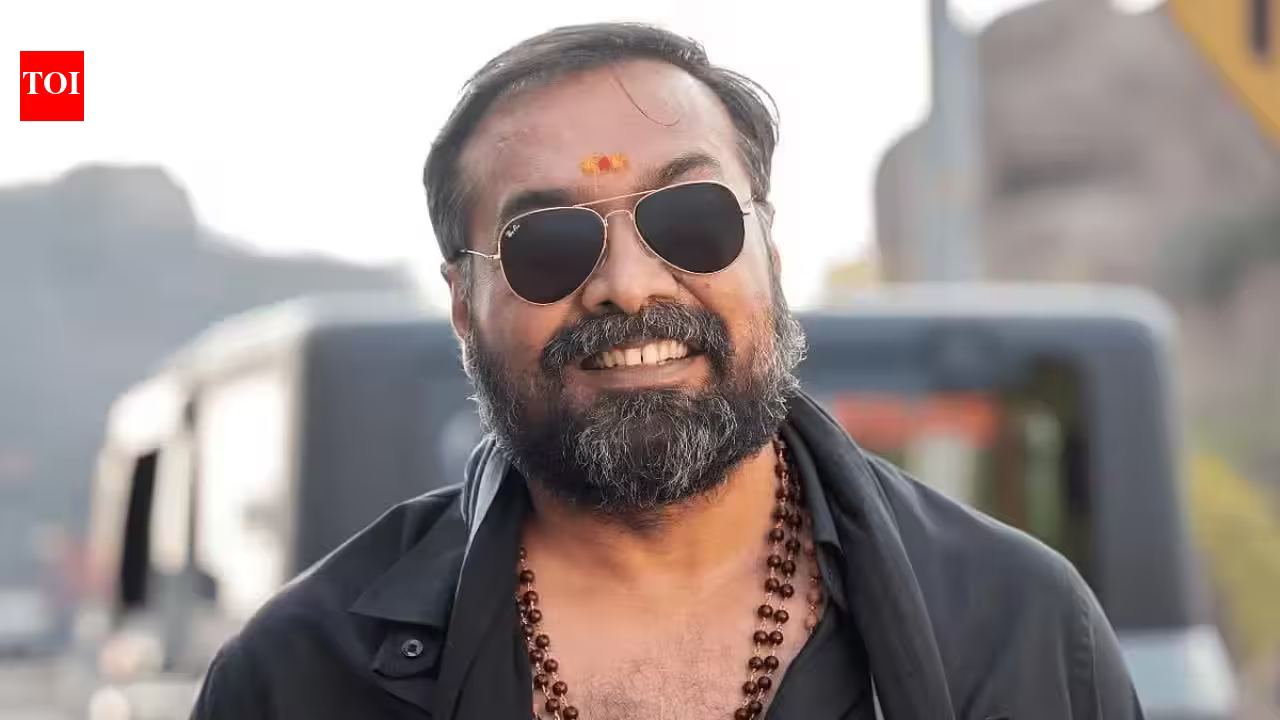
The legal horizon has darkened for one of Indian cinema’s most polarizing figures. Anurag Kashyap, the maverick director behind gritty modern classics like Gangs of Wasseypur and Black Friday, now finds himself entangled in a legal standoff that has spilled from the vitriolic arena of social media into the solemnity of a Surat courtroom. On Monday, Additional Chief Judicial Magistrate JV Chauhan issued a bailable warrant against the filmmaker, marking a significant escalation in a controversy that has simmered for months.
The warrant comes as a direct consequence of Kashyap’s persistent absence during court proceedings. Despite being served with multiple summons—including a public notice published in a newspaper to ensure he could not claim ignorance—the 54-year-old director has failed to appear before the bench. As the calendar edges toward the year’s end, the legal pressure is mounting, with the court setting the next hearing for December 24.
The Genesis of a Legal Firestorm
To understand how a filmmaker known for his unflinching gaze on society ended up in a Surat court, one must look back to April 2025. The controversy was ignited by a social media post on X (formerly Twitter) that quickly spiraled out of control. Kashyap, often known for his combative online presence, found himself embroiled in a debate surrounding the trailer of the film Phule.
When members of the Akhil Bharatiya Brahmin Samaj and Vipra Sena raised objections to the content of the film, the digital temperature rose sharply. The breaking point arrived when an individual named Aaditya challenged Kashyap’s stance. In a heated exchange that followed, Kashyap purportedly shot back with the question, “What have you achieved by being a Brahmin?”
This singular inquiry, perceived by many as a calculated jab at an entire community, became the foundation for a legal complaint filed by Kamlesh Raval, a lawyer and advisor to Hindutva organizations like Bajrang Dal and the Vishwa Hindu Parishad. The petitioner argues that the comment was not merely a personal insult but a broadside against the Brahmin community at large, designed to incite animosity and threaten public harmony.
Examining the Charges Under the BNS
The case against Kashyap is being pursued under the Bharatiya Nyaya Sanhita (BNS), with charges centered on promoting enmity between different groups, intentional insults intended to provoke a breach of peace, and the circulation of false rumors.
Raval’s legal strategy is clear: he aims to frame Kashyap not just as an individual expressing an opinion, but as a public figure whose words carry significant weight. “Kashyap is an actor, director, and producer whose films influence people of all age groups,” Raval stated following the court’s decision. The prosecution argues that his reach, combined with the inflammatory nature of his remarks, constitutes a genuine threat to national unity and social stability. By failing to appear in court, Kashyap’s legal team is now dealing with the procedural reality of a bailable warrant, which necessitates the filmmaker providing a security bond to avoid more coercive legal measures.
A Public Apology, But Not a Resolution
Perhaps the most complex layer of this narrative is that Kashyap had already attempted to put the genie back in the bottle. Shortly after the controversy erupted in April 2025, the filmmaker issued a formal apology via Instagram.
“I sincerely apologize to this community to whom I did not want to say this, but wrote it in anger while responding to someone’s cheap comment,” Kashyap wrote at the time. “I apologize to all my friends, my family, and the (Brahmin) society for my way of speaking and for the abusive language.”
For many of his supporters, this was an acknowledgment of a lapse in judgment—a moment of “Twitter-rage” common in the modern era of instant, impulsive discourse. However, for the complainants in Surat, an Instagram apology is insufficient. In the eyes of the law, the initial act—the post itself—has already crossed the threshold of the BNS, and the process of judicial accountability must run its course regardless of an online mea culpa.
The Stakes for Creative Expression
This case serves as a stark reminder of the narrowing gap between artistic persona and legal liability in India’s current cultural climate. Filmmakers have long been the target of public interest litigation, but the intersection of social media conduct and criminal law creates a particularly volatile mix.
For Kashyap, whose career has been defined by pushing boundaries and courting controversy, this court battle represents a new kind of “Gangs of Wasseypur” scenario—one where the drama is no longer scripted, and the consequences are far more tangible than a film’s box office performance.
As we head into the December 24 hearing, the entertainment industry will be watching closely. Will the filmmaker appear to face his accusers, or will this case continue to escalate, serving as a cautionary tale for public figures who believe that online discourse exists in a vacuum?
For now, the courtroom in Surat remains the stage. Whether this will result in a negotiated settlement or a protracted legal fight remains to be seen. But one thing is certain: for Anurag Kashyap, the director who has never shied away from conflict, the coming month will require a very different kind of performance—one that takes place in a courtroom, under the scrutiny of a magistrate, and governed by the laws of the land.
Disclaimer: This content is auto-generated for informational purposes only.
Source: Read Original News