





Suresh Oberoi Reflects on Brief Political Stint, Admiration for RSS, and Caution Against Uninformed Activism
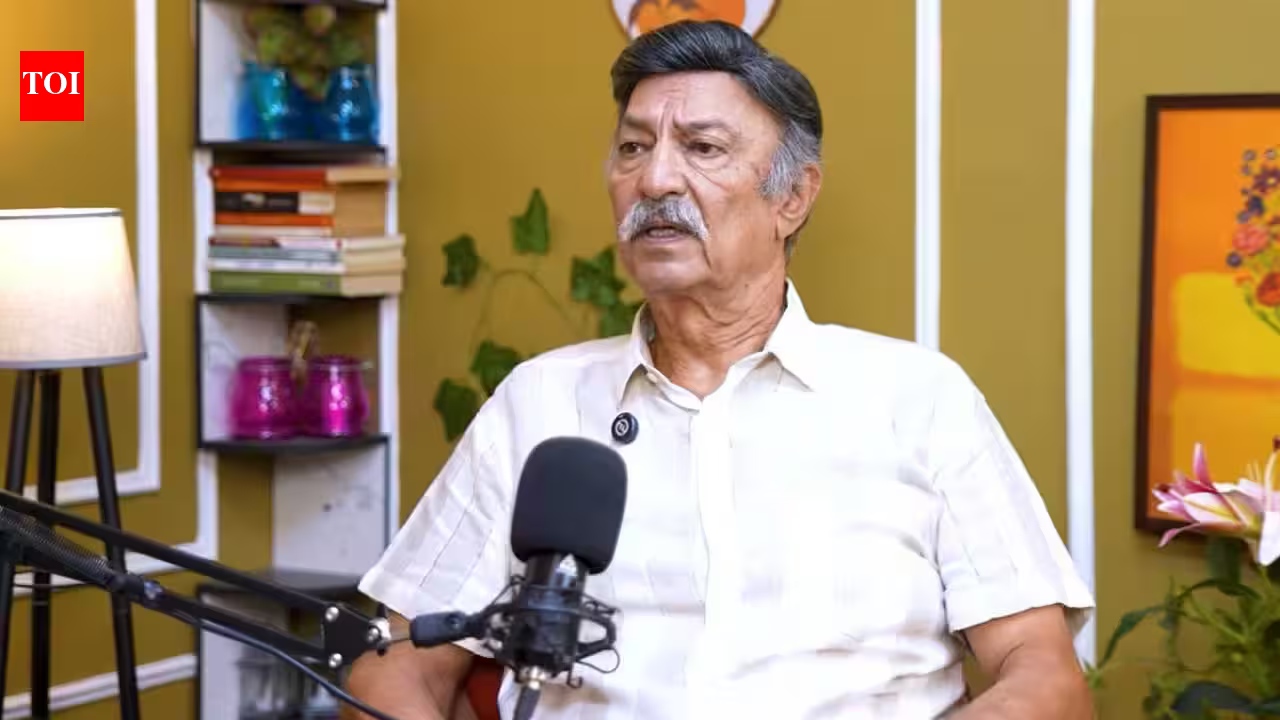
Veteran actor Suresh Oberoi recently offered a candid glimpse into his short-lived foray into politics, his deep respect for RSS Chief Mohan Bhagwat, and his discerning views on public protests and activism. In a revealing conversation on Nidhi Vasandani’s YouTube channel, Oberoi recounted his introduction to the Bharatiya Janata Party (BJP) in 2004, his encounters with senior political figures, and the reasons behind his eventual disillusionment with active politics.
A Brief Brush with Politics: The 2004 BJP Stint
Oberoi shared that his initial venture into politics was prompted by a college friend from Hyderabad, who suggested he join the BJP in 2004. He recalled accompanying his friend to meet prominent BJP leaders of the time, including L.K. Advani and Atal Bihari Vajpayee. However, his political aspirations were swiftly curtailed by a stern warning from his spiritual guru. "He gave me such a strong scolding," Oberoi stated, "He told me, ‘Be careful. Don’t ever go into politics and don’t even maintain contact with these people.’"
Despite the initial admonition, Oberoi continued his association for a period, but an underlying discomfort soon set in. He described a feeling of unease and a lack of genuine connection with the political environment. "I didn’t feel happy from within. My heart wasn’t in it. The vibrations didn’t feel right to me, and I didn’t feel good energy," he explained.
A Critical Eye on Political Motivations
Oberoi clarified that his discomfort was not universally directed at all political leaders. He expressed admiration for certain top figures, specifically naming Prime Minister Narendra Modi, Home Minister Amit Shah, and Uttar Pradesh Chief Minister Yogi Adityanath, deeming them "fine." However, he expressed skepticism about many individuals surrounding them, noting, "with many of the people around them, I felt something was strange. It didn’t feel genuine to me."
His decision to step away from active politics stemmed from a fundamental disconnect between his initial ideals and the reality he observed. "I thought politics meant doing something for your country," Oberoi remarked, adding a critical observation, "Later, I realised that most people were simply interested in making money." He emphasized that this was not a blanket accusation but a significant factor in his withdrawal.
An Unwavering Admiration for RSS and Mohan Bhagwat
While stepping back from party politics, Oberoi openly declared his deep admiration for the Rashtriya Swayamsevak Sangh (RSS) and its chief. "I have always been a fan of the RSS from within. I’m a fan of Mohan Bhagwat ji," he asserted. He shared a personal anecdote about inviting Bhagwat to his home, where the RSS chief enjoyed a breakfast prepared by Oberoi’s wife, including her special halwa. Oberoi confirmed he maintains contact with Bhagwat, having spoken to him just days before the interview.
However, he was keen to clarify that his admiration does not translate to formal membership or active participation in RSS routines. "I haven’t formally joined. I don’t attend the morning gatherings or participate in the parades carrying a stick," he stated, distinguishing his personal reverence from organizational affiliation.
Caution and Context: Oberoi’s Stance on Protests and Activism
The conversation also delved into contemporary issues of protests and activism, prompted by queries regarding incidents like the "Cockroach Janta Party (CJP)" protests and the reactions of film fraternity members like Naseeruddin Shah and Shabana Azmi. Oberoi stressed the importance of caution and thorough investigation for public figures before taking strong stances. "We are responsible people. The world listens to us and watches us. We have to think before speaking. We should research what is behind something, what the motive is and whose hand is involved," he advised.
Referencing the NEET controversy, Oberoi questioned the genuine involvement of all participants in protests, asking, "Are all of them NEET students? Are there politicians involved? Are there people throwing stones or creating chaos? We don’t know. Until you know the facts, how can you be so vocal about something?" He maintained that he would prefer to admit ignorance rather than comment without full comprehension.
Regarding social activist Sonam Wangchuk and similar movements, Oberoi expressed skepticism about their ultimate impact. "I have seen all these people doing such things several times. Then everyone sits down peacefully. So what is all this? It is pointless," he remarked. He unequivocally stated that he would never personally participate in a protest, believing his contribution should come through his profession. "My work is acting. I will act. If someone says, ‘Suresh, let’s make a film, a video or a serial,’ yes, I can do that. But why should I become an activist?"
Oberoi underscored the existence of established institutions, such as the Supreme Court and ministerial bodies, as appropriate channels for addressing grievances. He also strongly condemned violence during protests, particularly attacks on police, questioning the true motives of those involved when masked individuals are seen engaging in such acts.
In conclusion, Oberoi reiterated his guiding principle: "You should never give a strong opinion until you know the complete story." He humorously illustrated this with a film analogy, emphasizing that appearances can be deceiving without full context. For Suresh Oberoi, informed consent and thorough understanding remain paramount before publicly voicing an opinion, a principle he applies to both politics and public discourse.