








Educational Tug-of-War: NEP 2020 Sparking Heated Debate Over Federal Autonomy and Language Policy in Tamil Nadu
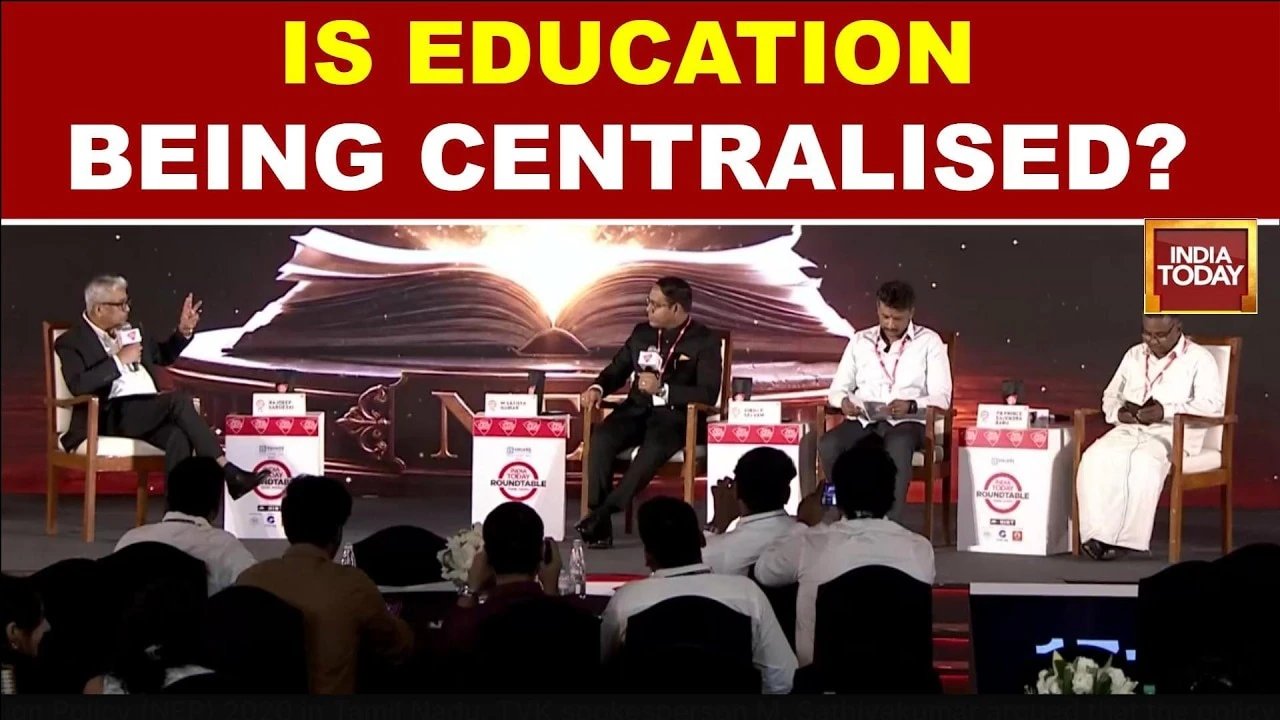
CHENNAI – The implementation of the National Education Policy (NEP) 2020 has become a central fault line in Tamil Nadu’s political and educational discourse, as stakeholders remain sharply divided over the future of the state’s academic landscape. During the recent India Today Tamil Nadu Roundtable, panel members clashed over the merits and risks of the policy, highlighting a deepening rift between state autonomy and central directives.
Representing the Tamilaga Vettri Kazhagam (TVK), spokesperson M. Sathiyakumar leveled strong criticism against the policy, framing it as an encroachment on federal principles. Sathiyakumar argued that the NEP 2020 serves to consolidate educational authority in New Delhi, effectively sidelining the state’s historical commitment to its unique two-language formula. He further alleged that the Centre is using financial leverage as a pressure tactic, specifically citing the withholding of funds under the Samagra Shiksha scheme as an attempt to force the state’s compliance with the policy.
"The policy is a backdoor approach to Hindi imposition," Sathiyakumar asserted, emphasizing that the erosion of state-level oversight poses a direct threat to the regional identity and educational governance of Tamil Nadu.
In contrast, BJP State Secretary Vinod Selvam defended the NEP, characterizing it as a progressive framework essential for global competitiveness. Selvam argued that the policy is fundamentally about modernizing the curriculum by integrating vocational training, critical thinking, and artificial intelligence into the classroom. Addressing concerns regarding language, he maintained that the policy does not mandate Hindi, adding that the political resistance to the reforms disproportionately harms students in government-run institutions.
"While private schools are already equipping their students with modern, multi-language curricula, this opposition prevents government school students from accessing the same advantages," Selvam stated during the debate.
However, the academic perspective offered by educationist P.V. Prince Gajendra Babu shifted the focus toward constitutional mandates. Gajendra Babu expressed deep skepticism regarding the policy’s emphasis on vocational skilling, which he believes often comes at the expense of fundamental educational rights guaranteed by the Constitution. He argued that the current trajectory prioritizes industry-readiness over foundational learning, creating a systemic imbalance.
Furthermore, Gajendra Babu criticized the structural inequities embedded in schemes like PM SHRI (Prime Minister Schools for Rising India). He contended that such programs foster disparity by privileging select schools, thereby abandoning the constitutional goal of ensuring equitable, high-quality education for all, regardless of socio-economic standing.
As the debate over the NEP 2020 continues to evolve, the discourse remains a litmus test for the tension between central modernization goals and the safeguarding of regional autonomy—a challenge that shows no sign of resolution as both sides remain firmly entrenched in their positions.