








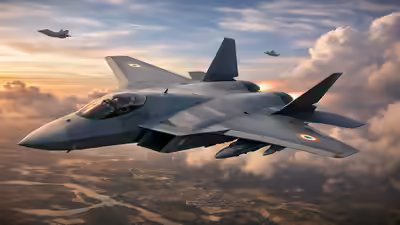
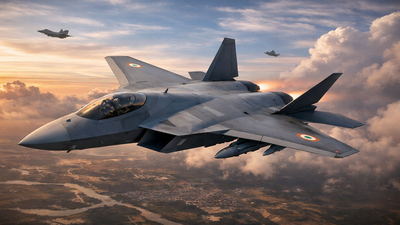
NEW DELHI: India’s indigenous fifth-generation fighter aircraft programme entered a crucial new phase on Wednesday after the defence ministry issued the Request for Proposal (RFP) for the Advanced Medium Combat Aircraft (AMCA) project to three shortlisted private sector-led consortia, defence officials told ANI. The bidders include the Larsen & Toubro-Bharat Electronics Limited combine, Tata Advanced Systems, and Bharat Forge in partnership with BEML.
The Execution Model approach provided equal opportunities to both private and public sectors on a competitive basis.The AMCA programme is regarded as India’s most ambitious fighter aircraft project and is expected to form the backbone of the Indian Air Force’s combat capability from the mid-2030s. Designed as a twin-engine stealth fighter, the aircraft will feature advanced sensor fusion, internal weapons bays, artificial intelligence-enabled systems and network-centric warfare capability.
On May 15, defence minister Rajnath Singh and Andhra Pradesh chief minister N. Chandrababu Naidu laid the foundation stone for a Rs 16,000-crore Advanced Medium Combat Aircraft (AMCA) infrastructure project in Sri Sathya Sai district. Calling it a “historic chapter in India’s defence history”, Rajnath Singh said the initiative would usher in “a new era” for Andhra Pradesh. He also announced that eight drone companies would help establish a drone city in Kurnool.The development marks a major shift in India’s defence manufacturing ecosystem, with private firms now competing for a project that has long symbolised the dominance of state-run Hindustan Aeronautics Limited in fighter aircraft production.The AMCA is envisioned as India’s answer to the rapid evolution of air combat in the region. The stealth fighter is expected to feature low observable shaping, internal weapons bays, advanced sensor fusion, AI-enabled decision support systems and full network-centric warfare capability. It is designed to penetrate contested airspace while surviving against advanced enemy air defence systems.
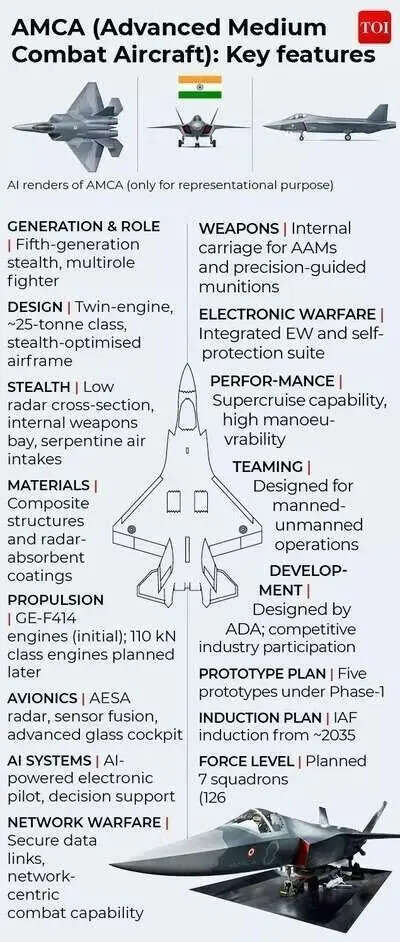
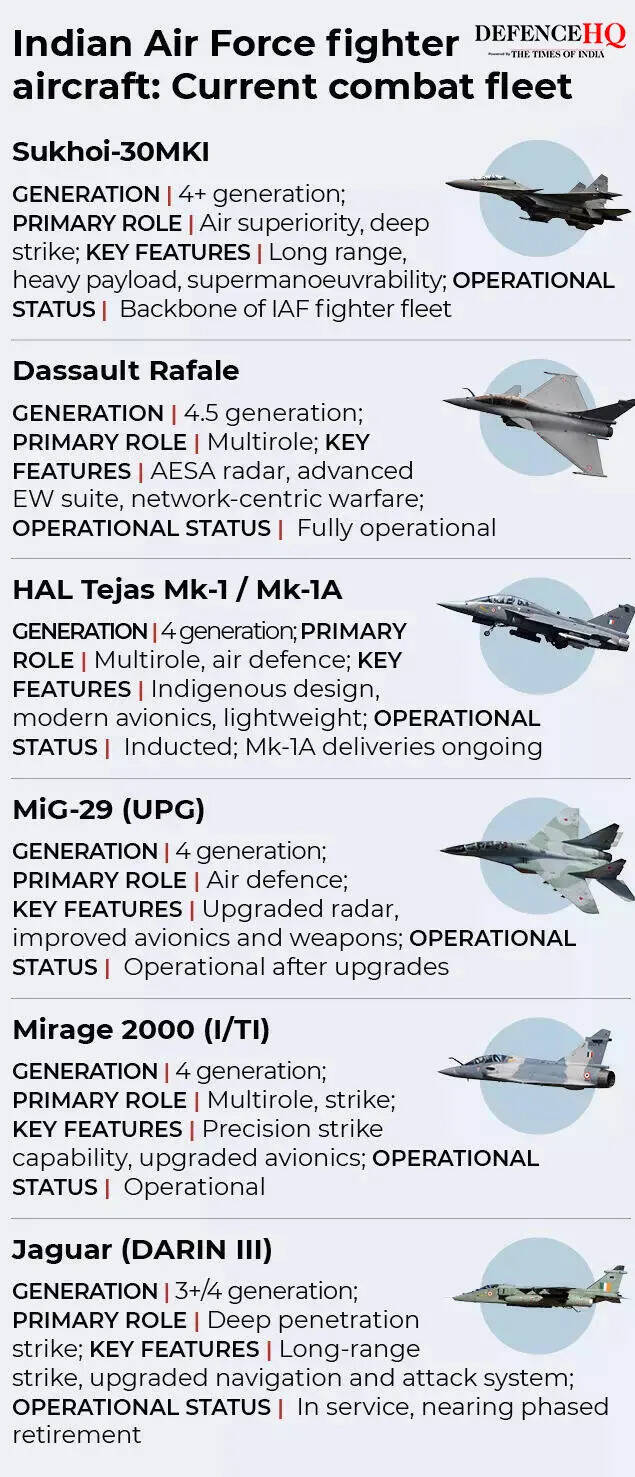
The programme is also being driven by the Indian Air Force’s shrinking squadron strength and the rapid advancement of fifth-generation combat aircraft in neighbouring countries. China already operates advanced stealth fighters and has showcased sixth-generation prototypes such as the Chengdu J-36 and Shenyang J-50, while Pakistan is expected to induct Chinese J-35A stealth fighters in the coming years.India currently does not operate any fifth-generation fighter aircraft. Its air combat fleet largely depends on 4th- and 4.5-generation platforms including the Sukhoi-30MKI, Dassault Rafale, HAL Tejas, MiG-29, Mirage 2000 and Jaguar aircraft. The AMCA is expected to become the backbone of India’s future air dominance capability from the mid-2030s onward.
HAL’s role and the debate over private players
Questions over HAL’s role in the AMCA programme intensified earlier this year after reports suggested the state-run aerospace giant may not be part of the initial development phase of the stealth fighter project.
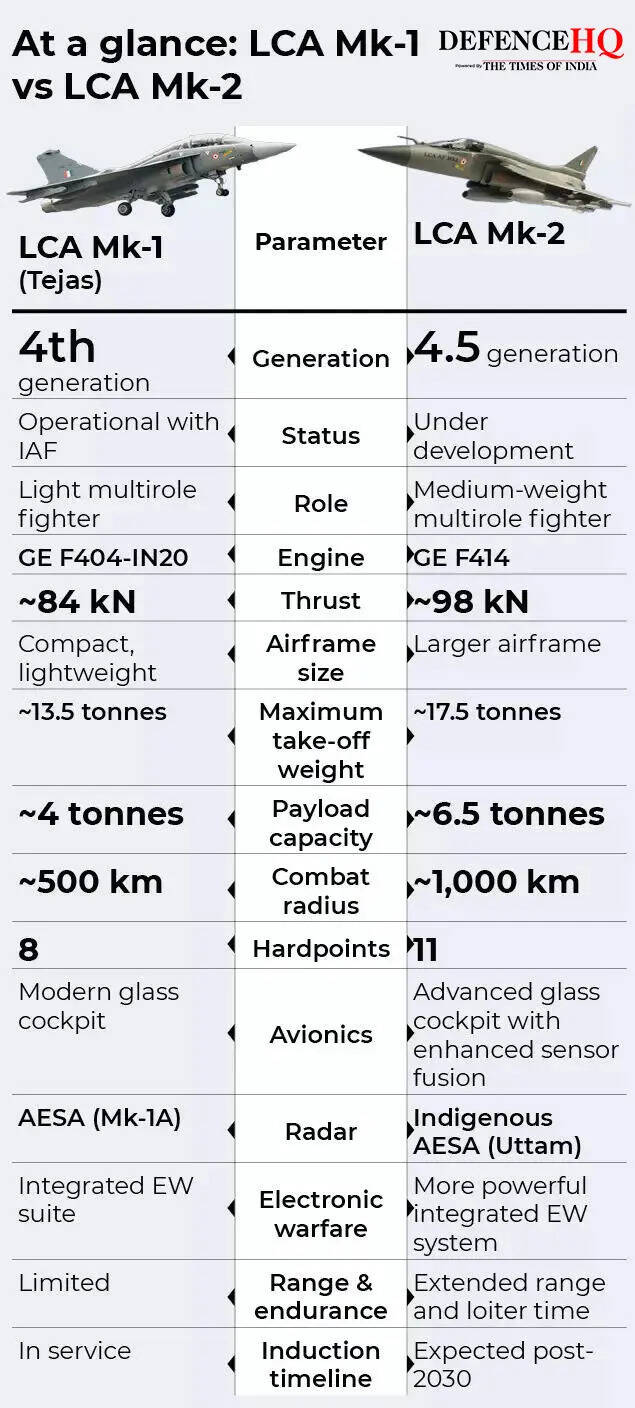
HAL’s share price had fallen sharply following reports that the company was not shortlisted for the next-generation fighter development programme. However, the company later clarified that it had not received any official communication regarding exclusion from the project.On February 4, HAL issued a statement saying: “Various media reports regarding the Advanced Medium Combat Aircraft (AMCA) programme have come to HAL’s attention. HAL has not received any official communication in this regard and, therefore, is not in a position to comment on these reports at this stage. HAL is committed to keeping all stakeholders fully informed of all developments.”HAL also highlighted its existing production commitments and strong order pipeline.“HAL would like to reiterate that it has a robust confirmed order book, providing strong revenue visibility, and a healthy production and execution pipeline extending up to 2032,” the statement said.The company underlined that it continues to work on several major defence programmes including the Indian Multi Role Helicopter (IMRH), Light Combat Aircraft Mk2 and Combat Air Teaming System (CATS).“HAL is simultaneously advancing multiple strategic programmes, including the Indian Multi Role Helicopter (IMRH), LCA Mk2, and Combat Air Teaming System (CATS), which will further strengthen its technological capabilities and long-term growth prospects. These programmes are expected to enter production post-2032,” it added.The PSU also pointed to diversification into the civil aviation sector.“HAL is also diversifying its portfolio in the civil aviation segment with platforms such as the Dhruv NG, Hindustan 228 and the SJ 100, which will enhance revenue and provide sustainable growth in the future. HAL has strong fundamentals and is committed to delivering sustained year-on-year growth through consistent performance,” the statement added.Despite uncertainty over its immediate role in AMCA development, HAL remains deeply engaged in multiple aircraft and helicopter production lines, including 180 Tejas Mk-1A fighters, 108 Tejas Mk-2 aircraft, Light Combat Helicopters and the Indian Multi Role Helicopter programme.Then HAL CMD DK Sunil had earlier acknowledged delays in the Tejas Mk-1A programme due to engine supply constraints from General Electric but maintained that the company expects future deliveries to stabilise.“This is the most important contract we have signed. Engines have the most lead time. Unlike the previous time when we first ordered 40 and then the remaining in 2021, in between which the firm had stopped production, and there was also Covid…” he said.“…Keeping that in mind, we started negotiations even before we inked the 97 aircraft with IAF, and were able to close this deal so early. The supply under the new contract for 113 engines is expected to begin by 2027 and end by 2032. We don’t anticipate many delays,” he added.Under current timelines, the first AMCA squadrons are expected to use American GE-F414 engines, while later variants may feature more powerful engines from either GE, France’s Safran or the UK’s Rolls-Royce.The selected development partner is expected to work closely with the Aeronautical Development Agency to build five AMCA prototypes by 2031 under an initial government allocation exceeding Rs 15,000 crore.