







The Nexus of Artificial Intelligence and Market Volatility
The global financial landscape is currently grappling with a confluence of factors that have transformed the recent bull market into a period of profound uncertainty. At the center of this turbulence is the artificial intelligence (AI) sector, which has long served as the primary engine for equity growth. However, the narrative is shifting from unbridled enthusiasm to rigorous skepticism. The recent turmoil surrounding Nvidia, a bellwether for the semiconductor and AI industry, exemplifies how concentrated risks can cascade through global portfolios.
Investors are no longer solely focused on the innovation potential of AI; they are now questioning the structural sustainability of the massive capital expenditure (capex) programs required to build out data centers. This skepticism is compounded by financial irregularities at the leadership level, such as those recently involving Nvidia’s CEO, Jensen Huang. While his reinstatement provides a degree of organizational stability, it does little to address the underlying macroeconomic concerns. Analysts are increasingly scrutinizing the “circular financing” models prevalent in the tech sector, where capital flows between technology providers and the companies that purchase their infrastructure. As credit ratings, such as the recent S&P Global “CreditWatch Negative” on Nvidia, begin to reflect these systemic risks, the market is witnessing a repricing of assets that were previously considered untouchable.
Monetary Policy and the Fed’s Balancing Act
As Wall Street navigates these structural concerns, the Federal Reserve remains the dominant influence on market direction. The upcoming December policy meeting is positioned as a critical juncture for both equity and debt markets. For months, the central bank has struggled to anchor inflation near its 2% target, and recent signals from Fed officials, including Governor Christopher Waller, suggest a potential shift toward a more aggressive monetary stance. The possibility of a 50-basis-point hike or an accelerated tightening cycle in the coming years has sent ripples of anxiety through the investor community.
Higher interest rates act as a dual-edged sword for corporations. They increase the cost of debt servicing—a significant concern for AI companies reliant on cheap capital to fund infrastructure—and simultaneously compress valuation multiples for growth stocks. When the discount rate used to calculate the present value of future earnings rises, long-duration assets like tech shares often face the sharpest declines. Market participants are now obsessively analyzing every piece of economic data, hoping for signs of cooling that might permit the Fed to pause or moderate its hawkish trajectory.
Employment Data as a Macroeconomic Compass
The November employment report, scheduled for release next Friday, has taken on outsized importance in the current climate. In the United States, labor market strength has been the primary reason the economy has avoided a recession despite restrictive interest rates. Economists are projecting an addition of 90,000 jobs, a figure that, if realized, would suggest a deceleration from the previous month’s 165,000 payroll additions.
This data is vital because the Federal Reserve requires a nuanced balance: a labor market that is strong enough to support consumer spending but weak enough to prevent inflationary wage spirals. A report that reveals significant weakness could trigger panic regarding an impending recession, while a report that shows unexpected strength could solidify the case for the Fed to maintain high rates for longer. This binary outcome has led to an elevated Cboe Volatility Index (VIX), which, at levels near 24, signals that investors are proactively hedging against sharp, immediate market shifts.
Implications for Indian Equity Markets and Investors
The volatility emanating from Wall Street does not occur in a vacuum; it has direct implications for emerging markets like India. Indian equity indices have historically maintained a degree of correlation with US technology trends, largely because foreign institutional investors (FIIs) often treat Indian tech and IT services stocks as proxies for global digital transformation spending. When US tech stocks face a correction, Indian IT firms, which rely on North American clients for a substantial portion of their revenue, often feel the secondary impact of tighter client budgets and deferred digital infrastructure spending.
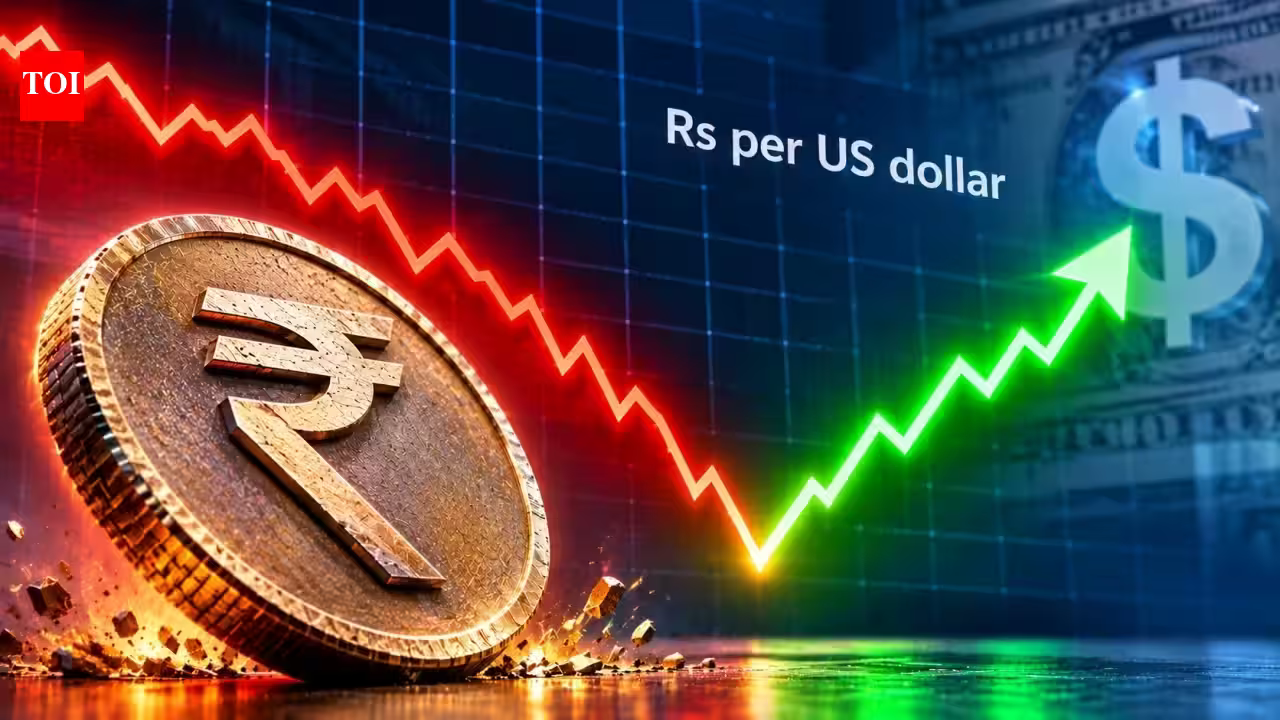
Furthermore, when global markets experience “risk-off” events, FIIs often reallocate capital from emerging markets back into the safety of US Treasuries or the dollar. This rotation can lead to increased volatility in the Indian rupee and put pressure on the domestic equity market. Indian investors must, therefore, be cognizant that their portfolios are increasingly sensitive to US macro data, Fed rate cycles, and the capital expenditure habits of Silicon Valley giants. The shift from growth-at-any-cost to a focus on operational efficiency and sustainable margins, currently being demanded of US firms, is likely to become the new benchmark for domestic Indian companies as well.
Navigating the Path to Market Stabilization
For the market to regain a sense of equilibrium, a few fundamental shifts are required. First, there must be a transition from speculative AI excitement to measurable, recurring revenue generation from AI infrastructure. Corporations that can demonstrate that their data center investments are translating into bottom-line improvements will likely decouple from the broader market selloff. Second, the Federal Reserve must provide clearer, more consistent guidance. Market participants thrive on predictability; the current state of uncertainty regarding the pace of rate hikes is arguably as damaging to market sentiment as the hikes themselves.
Finally, the focus of institutional investors is shifting toward companies with strong balance sheets and low leverage. As the cost of capital remains elevated, firms that do not require external financing to maintain operations are emerging as the defensive leaders of the market. The upcoming quarterly earnings from bellwethers like Salesforce and Marvell Technology will serve as a litmus test. If these companies offer guidance that suggests resilience in the face of macro headwinds, it may provide the necessary stability to bridge the gap between current market anxiety and a potential year-end recovery. Investors should prepare for a period of ongoing oscillation, where news flow—rather than technical trends—dictates the movement of major indices. Understanding the intersection of AI capex sustainability and central bank policy will be the defining skill for those navigating the remainder of the fiscal cycle.
Disclaimer: This content is auto-generated for informational purposes only.
Source: Read Original News