








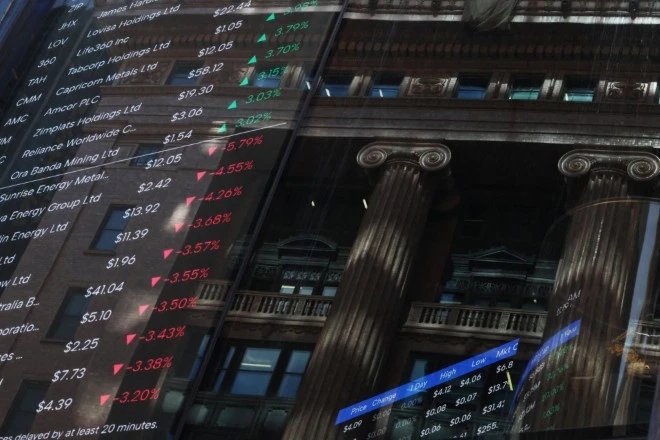
SYDNEY — Asian markets experienced a volatile session on Thursday as investors grappled with a divergence in artificial intelligence-related earnings, setting a high-stakes tone for the impending results from U.S. tech giants Amazon and Intel.
The tech sector was roiled overnight by contrasting fortunes at the industry’s heavyweights. Alphabet saw its shares plummet 10% in after-hours trading as investors balked at significant cash burn, wiping nearly $400 billion off the company’s market valuation. The news sent Nasdaq futures sliding 0.9%. Conversely, Microsoft shares climbed 3% after the company topped quarterly forecasts with robust cash flows, reinforcing confidence in the cloud computing and AI services sector.
“The reason why Alphabet is down is because their traditional revenue service of ad generation has been impacted by the very thing which is the AI boom,” said Jamie Hannah, deputy head of investments at VanEck. “However, both Alphabet and Microsoft confirmed that the AI revenue generation is still solid.”
In Asia, the picture was similarly mixed. Samsung Electronics reported record earnings fueled by surging memory chip demand, but the company’s silence regarding plans to boost shareholder returns triggered a 4% decline in its stock. This weighed on the broader KOSPI index, which slipped 1.2% despite a continued rally in SK Hynix, which climbed 4.6% following a massive 11% surge the previous day.
MSCI’s broadest index of Asia-Pacific shares outside Japan dropped 0.7%, while Japan’s Nikkei navigated a turbulent session to close up 1%.
The market volatility follows a pivotal Federal Reserve meeting where the central bank opted to hold interest rates steady, as expected. While Chair Kevin Warsh signaled a more confident outlook on inflation, the decision was not unanimous, with two committee members voting for an immediate hike. Markets currently maintain an 80% probability of a rate increase in December, according to analyst estimates.
“The dissenting votes to hike rates at today’s meeting could be interpreted as being not about whether the Fed hikes again, but when,” said Kerry Craig, global market strategist at J.P. Morgan Asset Management.
Amidst the monetary policy focus, currency markets remained relatively stable, with the dollar holding at 102.23 against a basket of peers. The New Zealand dollar continued its slide, dropping 0.2% after the central bank surprised investors by leaving rates unchanged.
On the commodities front, oil prices retreated as diplomatic efforts to ease tensions in the Middle East gathered pace. Brent crude futures fell 1.2% to $113.91 a barrel following reports that the U.S. is pushing to revive peace negotiations with Iran.
As investors look toward the European market open, futures suggest a calmer start for regional bourses, though attention remains fixed on the upcoming U.S. GDP data and personal consumption expenditure figures, which are expected to provide further clarity on the trajectory of inflation and future Fed policy.
Disclaimer: This content is auto-generated for informational purposes only.
Source: Read Original News