








To pre-empt self-fulfilling liberal alibis tending toward epitaphs of Indian democracy, let me begin this column with a caveat that paraphrases Carl von Clausewitz’s famous quote on war: Institutions are a continuation of politics by other means. More on this later. But let us now look at the state election results and their characteristic features one by one.
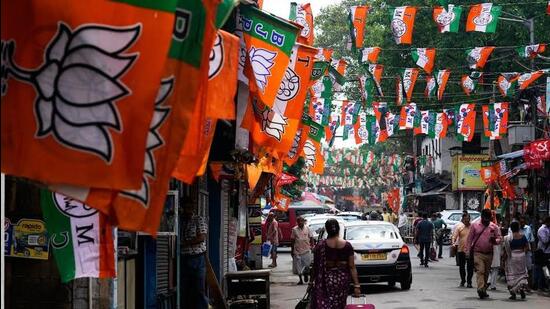
In Assam, the BJP secured a third consecutive win. The Congress needs to look at only one statistic to understand its overall predicament: It scored a hat-trick of having more Muslims than Hindus among its MLAs even though the former account for just one-third of the state’s population.
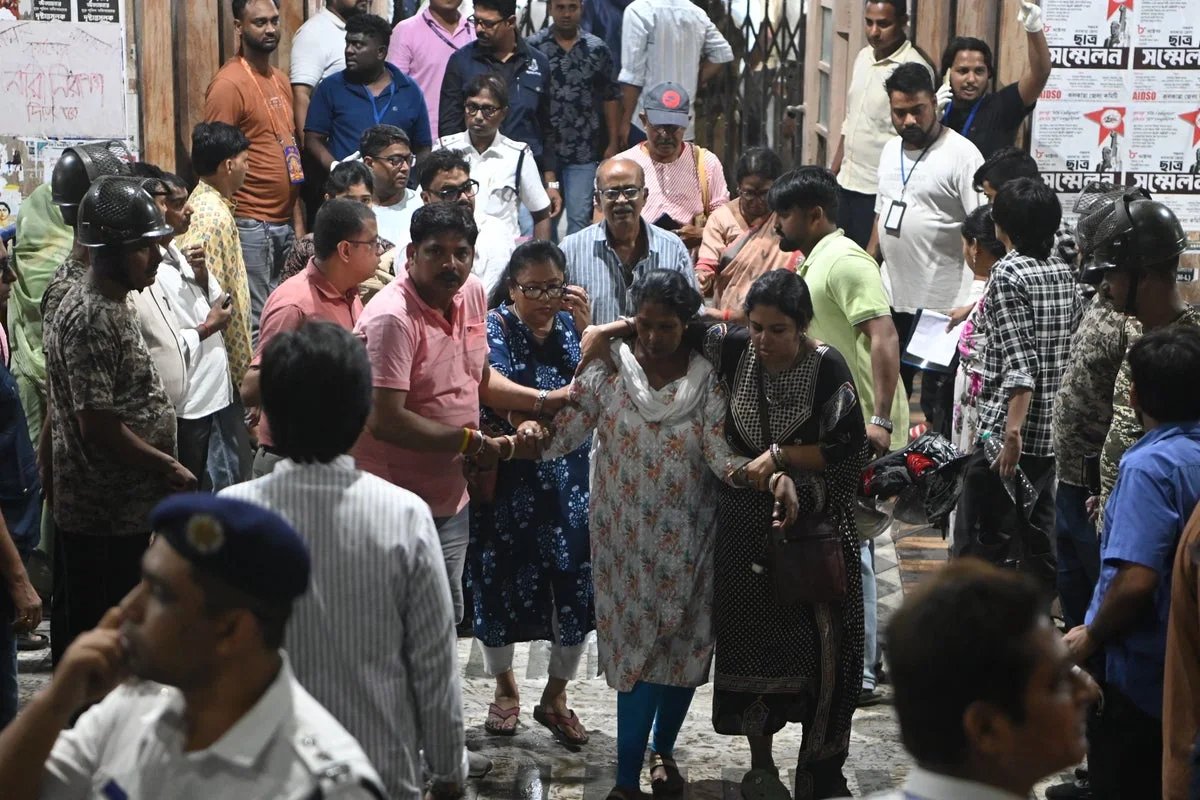
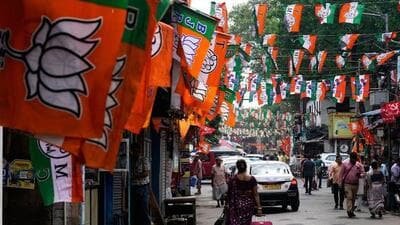
In West Bengal, the BJP finally managed to unseat the TMC. The BJP’s 45% vote share, assuming only Hindus voted for it, suggests a consolidation of about two-thirds of the Hindu voters. This is more than what it has achieved even in its strongest bastion of Gujarat in any state election.
In Kerala, the Congress managed to unseat the CPI(M), thereby correcting the once-in-a-four-decade aberration to the norm of power changing hands every election that happened in 2021. But what is truly pathbreaking in the state’s politics is the BJP polling close to 15% of the popular vote for the first time. If Axis My India’s exit poll numbers are to be believed – they got BJP’s vote share right – the BJP has about one-fourth of the Hindu vote in the state, including the Ezhava and Nair communities. These two social groups have tended to rally behind the CPI (M) and Congress historically. BJP’s inroads among them represents a major rupture in political behaviour of the Hindus in the state.
In Tamil Nadu, the biggest story of this election in the state is the rise of what can only be called an apolitical second order MGR in the form of Vijay’s TVK. MG Ramachandran’s rise to stardom in both politics and cinema was organic. His split with the DMK came at the peak of the Dravidian movement’s political prowess which made it impossible to reconcile personal ambitions of comrades Karunanidhi and MGR . Vijay, however, has stormed the gates of the state’s now entrenched Dravidian duopoly – the combined vote share of DMK and AIADMK (minus their allies) has fallen below the 50% mark in 2026, the lowest it has ever been – at a time when the DMK is seen as mired in corruption and nepotism and the AIADMK has been politically orphaned after the demise of its leader Jayalalitha and is now increasingly seen as a lackey of the BJP. Vijay’s politics, by all indications, is more rhetorical than substantive and seems to have gained from disillusionment vis-à-vis governance rather than an ideological coup d’état.
Is there a common thread among these seemingly disparate state-wise observations? Three things can be cited.
West Bengal has now joined Assam in the club of extremely communally polarised states. The BJP has been able to breach the 45%-50% vote share mark by consolidating just about 70% of the Hindu electorate in both these states. It has done so by acing competing linguistic and cultural nationalism narratives. In Assam, it was able to reconcile the differences between Assamese- and Bengali-speaking Hindus despite the former holding a historical grudge against the latter. In West Bengal, it managed to overcome the tag of being an outsider (read non-Bengali) party, which was pretty much the mainstay of the TMC’s regional exceptionalism campaign this time. Even in Kerala, the BJP can claim to have consolidated more than one-fourth of the Hindus, and even some Christians, behind it. Assam, West Bengal and Kerala are the top three states by share of Muslims in India. BJP is significantly more popular in these states today than it was before 2014. Anti-Muslim rhetoric – Bangladeshis in Assam and West Bengal and “Muslim league Congress” type jibes in Kerala – in these states has been an integral part of the BJP’s campaign.
This is the first key takeaway: Politics based on communal dog-whistling is yet to peak in this country.
Unlike the TMC in West Bengal, which has been ideology-lite and historically opportunist – it used to ally with the BJP until 2004 – the CPI(M) in Kerala and DMK in Tamil Nadu were thought of as ideological political beasts. That both lost rather than gained in these elections – the losses can be attributed to them becoming cult-based corrupt platforms rather than politically vibrant organisations – should trigger serious introspection. Did their ideologically self-righteous, and convenient, rhetoric against the BJP blind them to the basic rules of propriety and probity in political life? More importantly, what have these parties done to renew the corpus of their political hegemony from the days of self-respect movement and class struggle? What do these politically loaded and virtuous terms mean in day-to-day politics for the next generation of leaders and workers in these parties? The Congress and the Mandal parties (going by the situation of the RJD and JD(U) in Bihar) are already in ideological disarray. A weakening of the Communists – they will not be running a state government for the first time in 50 years – and the Dravidian stream underlines a serious political-ideological crisis in the non-right spectrum of Indian politics.
This is the second key takeaway. Unless this ideological atrophying is arrested and reversed, the anti-BJP political ideological camp faces an Agatha Christie (anti) climax of “and then there were none”.
Also Read:Terms of Trade: The 2026 battle for West Bengal, seen historically
It is on this dire note that one needs to revisit the Opposition’s “the institutional dice is rolled against us” charge. Did the Election Commission of India (ECI), the guardian angel of free and fair polls in the country act in a manner unbecoming of its mandate in these elections? Yes, it did. De facto targeted and disproportionate deletions of Muslim electors in West Bengal violation of principles of natural justice – many deleted during the adjudication part of SIR could potentially come back on the rolls – is the biggest proof. Have investigative agencies controlled by the Centre been used to intimidate and disrupt the opposition’s campaign across states? The practice has become so blatant that it’s a cliché now. Is the BJP outspending its opponents by a distance in political spending with funds that increasingly flow from big business in the country? This is more a problem of magnitude than direction – the Congress outspent opponents too when it was dominant – but extremely germane to the state of political competition.
However, it is important to underline here that the only tangible political fallout of these institutional excesses by the BJP has been a consolidation of Muslim votes behind major opposition parties in states, which has actually helped the BJP counter-polarise even more. What about the non-Muslim electorate? Answering this requires engaging with a different question: Does the institutional bias mean that democratic competition is a completely stage-managed exercise in the country? Far from it.
The BJP, apart from the core Hindutva ingredient of its political strategy – which caters to an overwhelming majority in this country and thereby enjoys political insurance – has made drastic changes to its political economy approach in dealing with elections over the last 12 years since it first captured power. It has realised that first-generation asset transfer-based programmes are not enough to find the material bread on which to serve the Hindutva marmalade to voters. Cash-transfers, the much-maligned freebie by none other than the Prime Minister, have been wholly embraced by the BJP to preserve and expand its political footprint.
Economically speaking, there is next to no difference between the governance programmes of any political party in this country. All seek to perpetuate an economic order which has generated high, but not high enough growth amidst large inequality by pushing the paddle on economic palliatives. Unfortunately, the opposition’s marmalade equivalents such as backward caste politics, regional exceptionalism etc., do not seem to be able to hold the material bread to make an election victory sandwich.
So, what is to be done, apart from liquidationist rants? The latter is exactly what the endless harping on institutional capture entails because it amounts to admitting that the BJP cannot be defeated as long as the BJP is in power.
It is useful to go back to West Bengal’s history to answer this question. The seed capital for the BJP’s recent rise in the state came from what used to be the CPI(M)’s Hindu voters in the state. If they did not have any qualms doing business with the BJP now, why did this cohort support the Left at all when the Hindu Mahasabha had enough of a footprint at the time of independence in West Bengal, which was also a communal tinderbox after partition and large influx of Bengal Hindu migrants?
The uprooted, dispossessed Hindu Bengali became a communist not to shed his regional, religious and cultural sensibilities to embrace some euro-centric Marxism. He did so to wage a class struggle for a dignified life in the cities and end blatant exploitation of an impoverished peasantry in the villages. The Left lost its voters not because of a weakening of its cultural credentials but because it made a hash of its economic programme. Fighting the BJP today requires reinventing a theory and praxis of weaponising and not demobilsing (via palliatives) a politics against economic inequality and precarity rather than fantasizing about social or culture-based silver bullet equivalents which can stop the saffron juggernaut, and then crying wolf after the event.
(Roshan Kishore, HT’s Data and Political Economy Editor, writes a weekly column on the state of the country’s economy and its political fall out, and vice-versa)