









Humanity has crossed a critical threshold, having officially exited the “safe operating space” for Earth’s cryosphere—the vast network of frozen water systems including glaciers, snowpack, and permafrost that sustains life on the planet.
A landmark study, The Cryosphere Beyond a Planetary Safe Operating Space, published in the journal Science on November 12, warns that the global decline of frozen water is no longer a future threat but a present reality. The study, which featured contributions from 31 international experts, arrives as the world grapples with the fallout of the COP 31 climate summit in Turkey, where significant policy movement remained elusive.
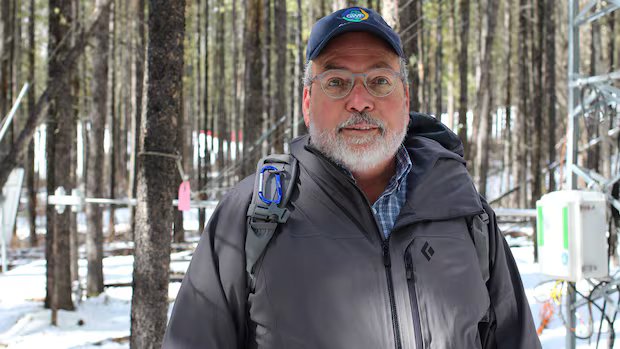
“The frozen parts of water around the world are really the basis for our life,” said John Pomeroy, a University of Saskatchewan professor and chair of the strategic management committee for the UN Decade of Action for Cryospheric Sciences. According to Pomeroy, the rapid warming of the planet—approximately 1.5 C since the 1800s—is triggering a cascade of environmental degradation. As permafrost thaws and snowpacks dwindle, the stability that has defined the last 10,000 years of human civilization is rapidly fracturing.
The impact of this shift is already being felt in Canada and beyond. Pomeroy highlighted that diminishing snowpacks have a direct correlation to more frequent and severe prairie droughts, as well as an increased vulnerability to wildfires in the north. The study’s authors conclude that the current trajectory of the cryosphere locks in long-term, irreversible risks for both global ecosystems and human societal stability.
The scientific consensus stands in sharp contrast to the recent political outcomes at COP 31. Pomeroy described the summit as an “utter debacle,” accusing fossil fuel interests of successfully lobbying to strip the meeting’s final documents of any meaningful language regarding the root causes of climate change. “They were overwhelming in ensuring that any wording of substance… was removed,” he noted.
Despite international stagnation, some localized legislative efforts are gaining traction. In Canada, Bill C-241 is currently working its way through the Senate. The bill aims to establish a national strategy for flood and drought forecasting, a move that would make Canada a rare outlier in the G7. Senator Tracy Muggli, who is sponsoring the bill, argues that such infrastructure is essential to help communities adapt to a volatile climate. “Had we had better forecasting [in the past], maybe different choices would’ve been made about what were the right crops to plant,” Muggli said, reflecting on the economic instability caused by unpredictable weather.
While Bill C-241 offers a framework for better data collection and modeling, experts warn that legislative adaptation cannot replace the urgent need for global emission reductions. As the cryosphere continues its decline, the window to return to a “safe operating space” is narrowing, leaving the global community facing a future defined by environmental uncertainty.
Disclaimer: This content is auto-generated for informational purposes only.
Source: Read Original News