







Government Pushes to Expand Legislative Seats: UP’s Dominance at the Core of Delimitation Plans
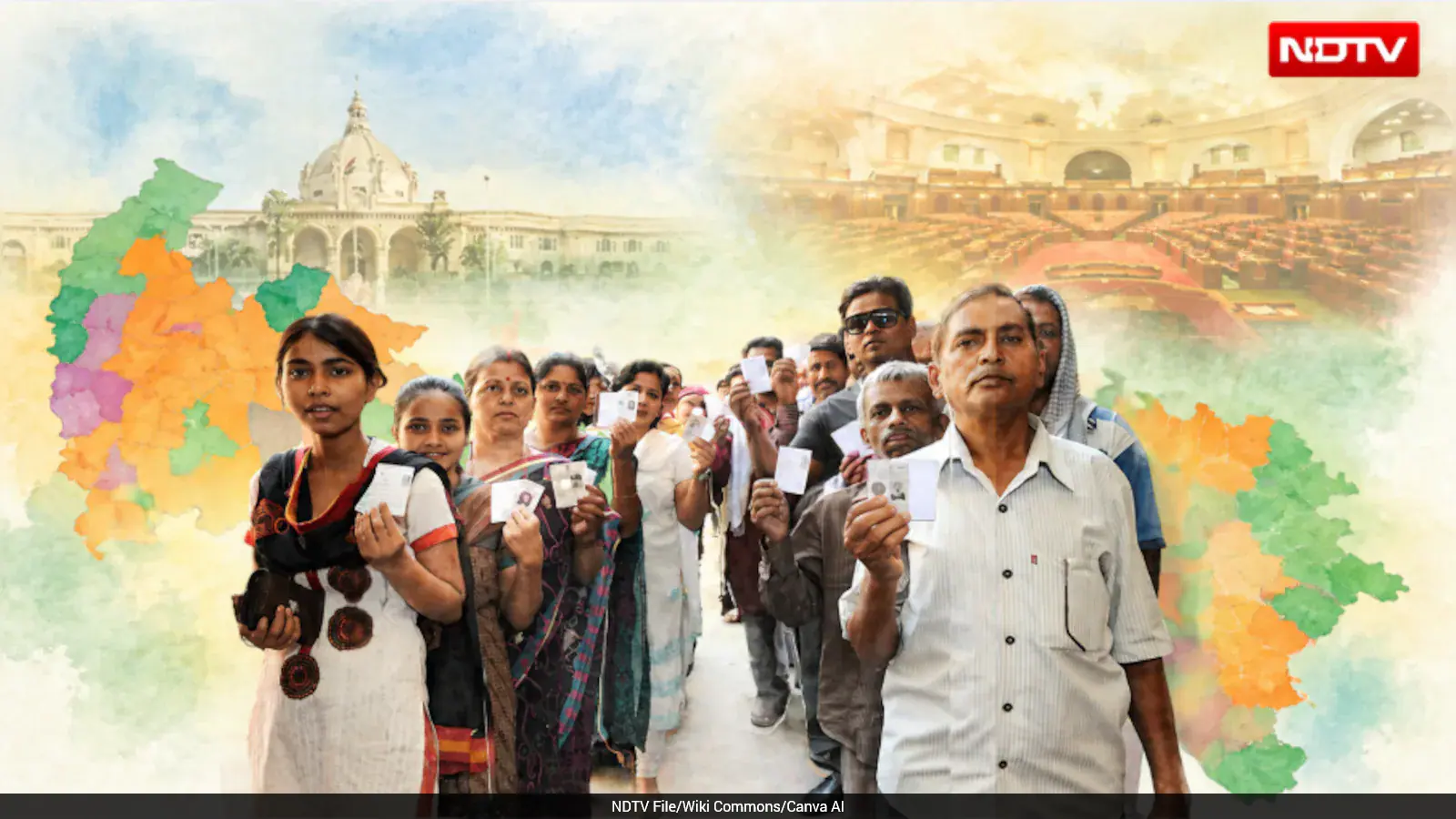
The landscape of Indian democracy is set for a significant transformation as the central government prepares to introduce a comprehensive delimitation bill in the upcoming Parliament session. At the heart of this legislative shift is a proposal to raise the maximum constitutional limit for state legislative assemblies from 500 to 650 members, a move primarily driven by the demographic reality of Uttar Pradesh.
Addressing the UP Imbalance
Under Article 170 of the Constitution, state assemblies are currently capped at 500 members. Uttar Pradesh, which accounts for a massive share of India’s population, currently holds 403 seats in its Vidhan Sabha. With the Centre’s new plan to enact a 50 per cent increase in both Lok Sabha and state assembly seats, UP’s legislative body would balloon to approximately 605 seats.
If the current 500-seat ceiling remained in place, the government would have been forced to either reorganize or partition India’s most populous state to accommodate its representative needs. By elevating the cap to 650, the BJP-led NDA government has provided a path to increase representation without the political volatility of carving up the state. This formula similarly scales up other large states, with West Bengal’s assembly potentially growing to 441 seats and Maharashtra’s to 432, ensuring the proportional share of each state remains largely intact.
The Question of Partition
The specter of splitting Uttar Pradesh has been a recurring theme in national discourse. While proponents of smaller states—including some current NDA allies—argue that administrative efficiency and better governance would result from such divisions, the central government appears to be opting for seat expansion over administrative fragmentation.
This debate has a long history. In 1955, B.R. Ambedkar famously suggested dividing Uttar Pradesh into three units for more manageable governance. Decades later, in 2011, the then-Mayawati government passed a formal resolution to split the state into four smaller regions. However, subsequent governments shelved the plan, and the issue has remained largely dormant until recent political speculation reignited it. By choosing a uniform expansion across all states, the Centre is signaling a preference for maintaining the status quo regarding state borders while acknowledging the need for more granular parliamentary representation.
New Boundaries and Representation
The proposed legislation, including the 132nd Constitutional Amendment Bill, aims to achieve several objectives. Beyond the increase in numbers, the government maintains that these changes are vital for the effective implementation of the 33 per cent women’s reservation quota passed in 2023. By reducing the number of citizens represented by a single lawmaker, the government hopes to create a more direct link between the electorate and their representatives.
Crucially, the plan seeks to extend the freeze on the redistribution of seats based on population until 2051. Rather than recalibrating seat shares according to the most recent census, the government intends to apply a flat 50 per cent increase to existing seat counts based on the 1971 Census. While this prevents a shift in political power dynamics between states, the actual drawing of constituency boundaries will rely on the 2011 Census data.
With the government now eyeing a two-thirds majority to pass these constitutional amendments, the 2029 Lok Sabha elections could be the first to reflect this expanded national map, fundamentally altering the scale and structure of India’s representative democracy.
Disclaimer: This content is auto-generated for informational purposes only.
Source: Read Original News