








TOKYO — For generations, the Yamase—a cold, moisture-laden northeasterly wind—has been a source of dread for farmers in Japan’s Tohoku region. Long blamed for devastating crop failures and unseasonably cool summers, the wind was an agricultural adversary. Now, new research suggests this notorious weather pattern has undergone a radical transformation.
Miku Amano, a climate researcher and doctoral candidate, has uncovered evidence that the Yamase has fundamentally changed, effectively losing its chilling power due to the shifting climate. Her findings, detailed in the Journal of Climate, provide a missing piece to a long-standing meteorological puzzle: why northern Japan has not experienced an acutely cool summer since 2010.
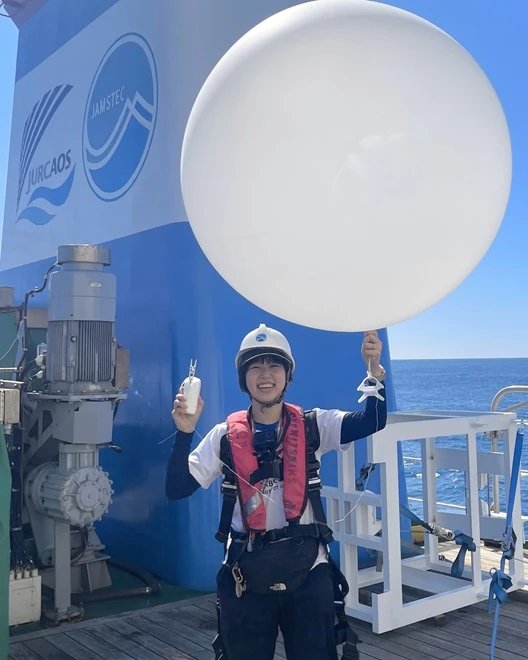
During a research cruise this July, conducted by the Japan Agency for Marine-Earth Science and Technology (JAMSTEC), Amano and her team navigated the waters roughly 250 kilometers northeast of Iwate Prefecture. In this oceanic frontal zone, where the warm Kuroshio current meets the cold Oyashio, the team discovered a dramatic “temperature cliff”—a zone where ocean temperatures shifted by 2.5 degrees Celsius over a span of just 5 to 10 kilometers.
By integrating this oceanic data with atmospheric modeling, Amano identified an emerging climate mechanism. A “north-south-tilting anticyclone” has become increasingly prevalent, altering how the atmosphere interacts with the sea. This circulation pattern weakens the flow of cold maritime air that once defined the Yamase. Simultaneously, rising water temperatures off the Sanriku coast mean that even when the northeasterly winds blow toward land, the air is no longer cooled as intensely as it was in the past.
“Yamase used to be regarded as a nuisance, but now it is helping to moderate the warming of recent years,” Amano said. “It has become a pleasant breeze.”
Amano’s scientific journey is deeply personal. Born in Miyagi Prefecture, her fascination with meteorology was sparked as an elementary school student captivated by the flavors of local rice—and the realization that a single cold summer could threaten the harvest. That childhood curiosity blossomed into a professional commitment to understanding the volatile weather of her home region.
Her research under Professor Yoshihiro Tachibana’s laboratory at Mie University aligns with the theory of “niki,” or the transition of Japan’s climate toward a two-season cycle of just extreme heat and extreme cold. By studying the Sanriku waters, Amano believes she is gaining a preview of the ocean’s state in a warming world.
Rather than viewing these changes with alarm, Amano remains focused on adaptation. As a researcher, her goal is to provide data that will help society navigate the warming climate of the next decade and beyond. Her work confirms that while the Yamase still blows, it is no longer the threat it once was—a rare piece of positive news in the ongoing climate narrative.
Disclaimer: This content is auto-generated for informational purposes only.
Source: Read Original News