






A Digital Tribute to the Click Wheel Era
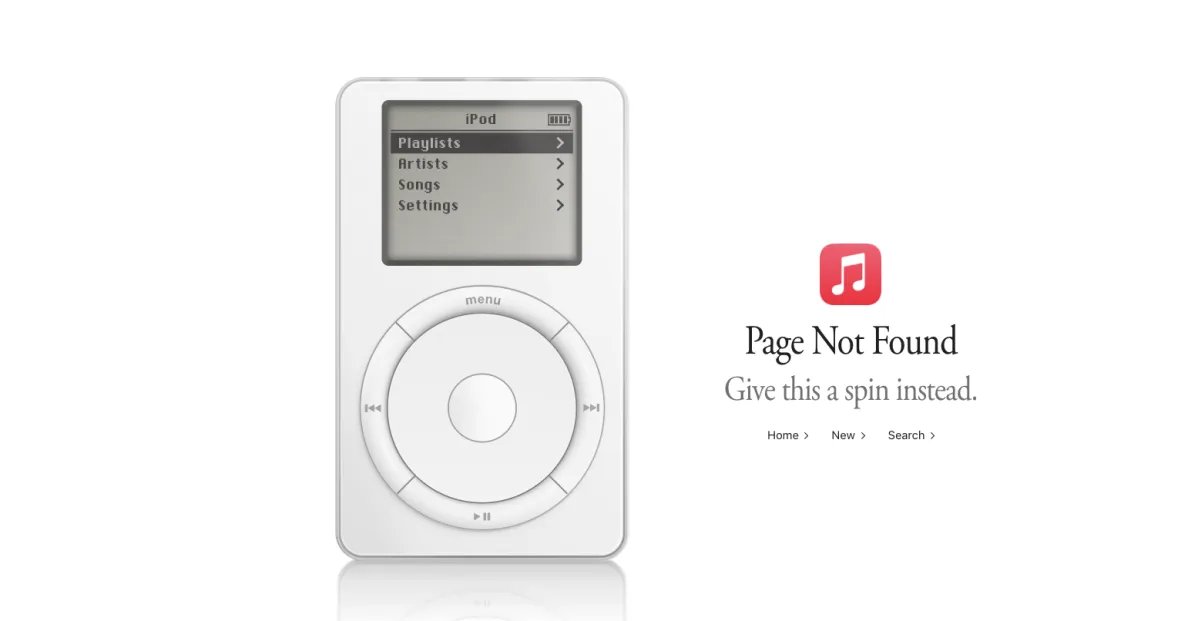
In a surprising nod to its hardware roots, Apple has embedded a functional, interactive recreation of the first-generation iPod within the error pages of its music streaming platform. Users who navigate to a non-existent URL on the Apple Music website are greeted by more than a standard 404 notification. Instead, the screen renders a high-fidelity digital representation of the device that changed the trajectory of the modern music industry. This hidden feature, which surfaced on the twenty-fifth anniversary of the iPod’s original announcement, serves as a bridge between the company’s current cloud-based ecosystem and the tactile, local-storage heritage that defined a generation.
The interface is not merely a static image. It operates as a fully functioning emulator, allowing users to navigate through menus using a simulated mechanical click wheel. The level of detail is precise, mirroring the monochrome display and the specific font weights used in the early 2000s software. By interacting with this interface, users can browse through a curated selection of tracks that capture the cultural climate of 2001. The playlist includes quintessential hits from that era, such as Gorillaz’s “Feel Good Inc.” and Coldplay’s “Viva La Vida,” providing an authentic auditory experience that complements the visual fidelity of the device.
The Technical Architecture of the Easter Egg
From a technical perspective, this interactive component demonstrates the capabilities of modern web browsers to handle complex, stateful animations using HTML5, CSS3, and JavaScript. Rather than loading a simple video or GIF, the 404 page runs a script that tracks user input—specifically the circular motion and button clicks required to operate the virtual click wheel—and updates the DOM accordingly to reflect navigation changes. This creates a responsive experience that feels remarkably similar to the original hardware’s latency and feedback loops.
The implementation of such an easter egg highlights the evolution of web development. Where early web error pages were purely utilitarian, serving only to inform the user of a dead link, this design choice turns a negative user experience into a point of engagement. By offloading the device’s state management to the browser’s internal rendering engine, Apple ensures that the interface remains performant across different screen sizes, essentially turning the 404 page into a miniature software application.
The Significance of the iPod’s 25th Anniversary
The timing of this digital installation is no coincidence. October 2026 marks exactly twenty-five years since Steve Jobs unveiled the original iPod to the public in Cupertino. At the time of its 2001 launch, the device was marketed under the promise of “1,000 songs in your pocket,” a feat made possible by the integration of a 5GB 1.8-inch hard drive. It transformed the landscape of personal electronics, moving the industry away from optical discs and cassette tapes toward a unified digital library.
For two decades, the iPod served as the primary hardware vessel for Apple’s music strategy. It provided the necessary consumer adoption that allowed the iTunes Store to flourish, eventually creating the blueprint for the App Store and the broader subscription models that dominate today. While Apple officially discontinued the final iteration of the product line, the iPod Touch, in 2022, its technological DNA persists in every modern smartphone. The decision to highlight this specific milestone suggests a deliberate effort by the company to acknowledge the foundational technology that enabled its current market position.
Use-Cases and Cultural Revival
Beyond the novelty of the 404 page, the resurgence of interest in dedicated music players points to a wider shift in consumer behavior. In recent years, a segment of the population has begun moving away from the constant connectivity of smartphones in favor of “dumb” devices or specialized hardware that limits distractions. The original iPod, once considered obsolete, has seen a revival in the secondhand market, with enthusiasts replacing aging hard drives with flash-based SD card storage and upgrading batteries to modern standards.
This digital recreation serves as a gateway for younger generations to experience the limitations and the focused utility of a dedicated portable music player. It reinforces the value of curated listening—where the absence of algorithmic recommendation engines and social media notifications forces a different kind of engagement with the music itself. For existing fans, the interactive page provides a low-friction way to revisit a familiar user interface without the need for functional hardware.
Preserving Digital Heritage Through Interactive Design
The use of an error page to preserve a defunct piece of hardware is a unique approach to digital archiving. Most legacy software and hardware designs are eventually lost to time, buried by compatibility issues and the deprecation of proprietary protocols. By coding this recreation directly into the web infrastructure of Apple Music, the company ensures that the interaction model remains accessible to anyone with a browser.
This design pattern also raises questions about how other legacy technologies might be preserved in the future. As digital interfaces continue to shift toward touch-based and gesture-controlled paradigms, the physical-to-digital translation seen here acts as a pedagogical tool. It documents the evolution of interaction design, showing how mechanical constraints like the click wheel influenced software design in ways that current flat-design interfaces do not. The result is a seamless fusion of historical appreciation and modern web development, marking a milestone for both the tech industry and the users who grew up with the device.
Disclaimer: This content is auto-generated for informational purposes only.
Source: Read Original News