









The winter months bring a unique set of domestic challenges. As the temperatures outside plummet, the struggle to get laundry dry without relying on a tumble dryer becomes a daily chore. With energy costs on the rise, many of us are looking for smarter ways to manage our household routines without watching our bills skyrocket. Drying clothes indoors might seem like a simple task, but doing it incorrectly can lead to damp walls, musty scents, and even long-term maintenance headaches.
The secret to success is not just about where you put the rack, but how you manage the moisture released by your clothes.
Master the Pre-Drying Stage
The journey to dry laundry begins long before you set up your drying rack. The more water you can remove while the clothes are still inside the washing machine, the faster they will dry once they are out. Always check your machine settings to ensure you are utilizing the highest spin speed appropriate for your fabrics. This simple step extracts a significant amount of water that would otherwise need to evaporate into your living space.
For thicker items like heavy sweaters or thick cotton towels, you can take it a step further. Lay a clean, dry bath towel flat on a surface, place your wet garment on top, and roll the towel up tightly. By applying firm pressure or stepping on the roll, you can push out a surprising amount of excess water. This manual labor cuts down the total drying time significantly and reduces the amount of humidity released into your home.
Choose the Right Room
Where you position your drying rack matters immensely. While it is tempting to spread clothes out in the living room while the television is on, this is usually a poor choice. Living areas often lack the specific ventilation needed to handle the roughly two litres of water a single load of washing releases.
Instead, look to your bathroom or utility room. These spaces are purpose-built for moisture. If you have an extractor fan, these rooms are your best bet. By keeping the door shut and the fan running, you can effectively pull the damp air outside before it has a chance to migrate into your soft furnishings or wallpaper. If you must use a spare bedroom, ensure the door remains closed and keep a window slightly cracked to provide an escape route for the moisture.
Understand the Role of Heating and Ventilation
There is a common misconception that simply cranking up the thermostat will dry your clothes faster. While warmth is helpful, heat alone does not remove water from the air. In fact, if you heat a room without providing a way for the humidity to escape, you are essentially creating a small indoor jungle, which invites mould growth.
Instead of turning up the central heating, focus on moving air. If you do not have a dehumidifier, opening a window slightly is essential to allow the saturated air to leave. If you are using a dehumidifier, however, the rules shift: keep the windows and doors closed so the machine can concentrate on pulling the water out of that specific, enclosed space. This targeted approach is far more energy-efficient than trying to heat the entire house to force evaporation.
Avoid the Radiator Trap
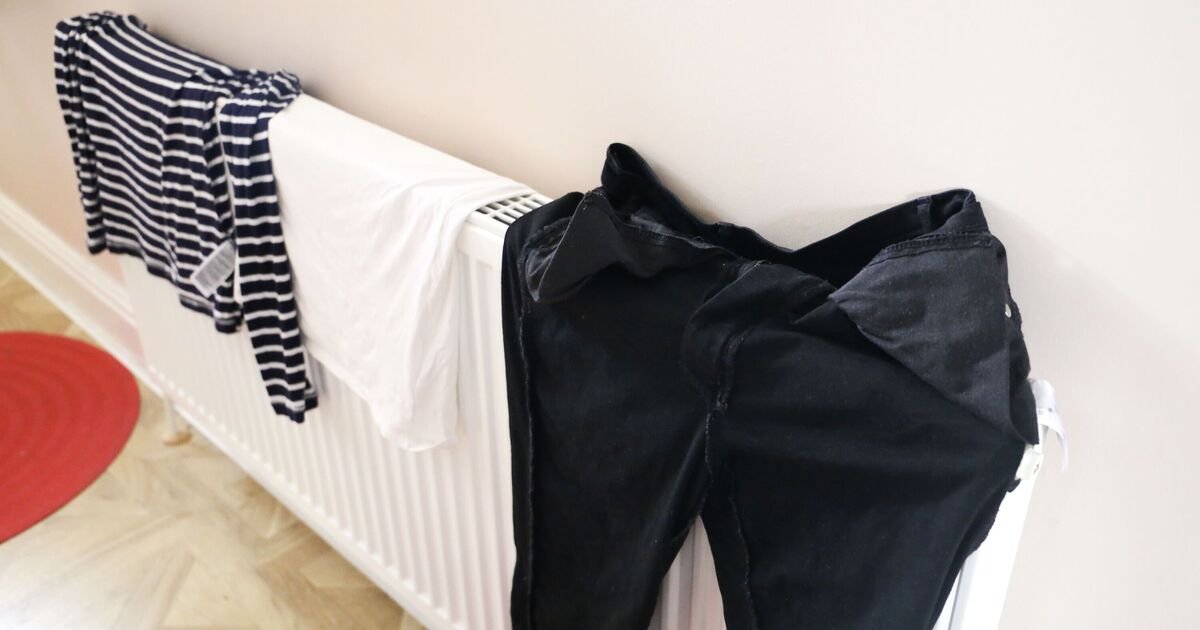
It is a classic winter habit: draping damp socks and shirts directly over hot radiators. While it feels like an efficient shortcut, experts generally advise against it. Placing wet fabric directly on a radiator blocks the heat from circulating into the room, forcing your boiler to work harder to maintain the set temperature. Furthermore, this method can cause damage to certain delicate fabrics and contribute to uneven drying.
If you want to speed up the process, place your drying rack near a heat source, but not touching it. This allows the warm air to circulate around the clothes naturally. A small fan directed toward the washing can also mimic the effect of a breeze, significantly cutting down on the hours it takes for towels and heavy jeans to crisp up.
Monitor Your Home’s Humidity
Finally, keep an eye on your environment. In the colder months, aim for a relative humidity level of around 55 percent. You do not need expensive equipment to know when the balance is off; look for telltale signs like persistent condensation on window panes or a lingering musty scent in the air. By keeping the moisture contained in one well-ventilated room and utilizing proper air circulation, you can keep your home fresh and your laundry pile manageable, all while keeping a tight grip on your energy consumption.
Disclaimer: This content is auto-generated for informational purposes only.
Source: Read Original News