







For Lois Bower-Bjornson, the cost of the global plastics trade is measured in her children’s health. Living in Washington County, Pennsylvania—a region saturated with over 6,000 gas wells—Bower-Bjornson describes a harrowing reality: her children suffering from mysterious, severe rashes and chronic, anemia-inducing nosebleeds. She places the responsibility for these local health crises at the feet of the fracking industry, including the British petrochemical giant Ineos, which is currently spearheading a massive expansion in the export of fracked ethane to Europe.
Ethane, a colorless gas extracted as a co-product of fracking, is the primary feedstock for ethylene, the fundamental building block of modern plastics. While fracking remains largely banned across Europe due to environmental and seismic concerns, European facilities continue to operate by importing processed fracked gas from the United States. New analysis from the Center for International Environmental Law (CIEL) reveals that Ineos is the primary driver of this trans-Atlantic trade, responsible for at least two-thirds of all US ethane exports.
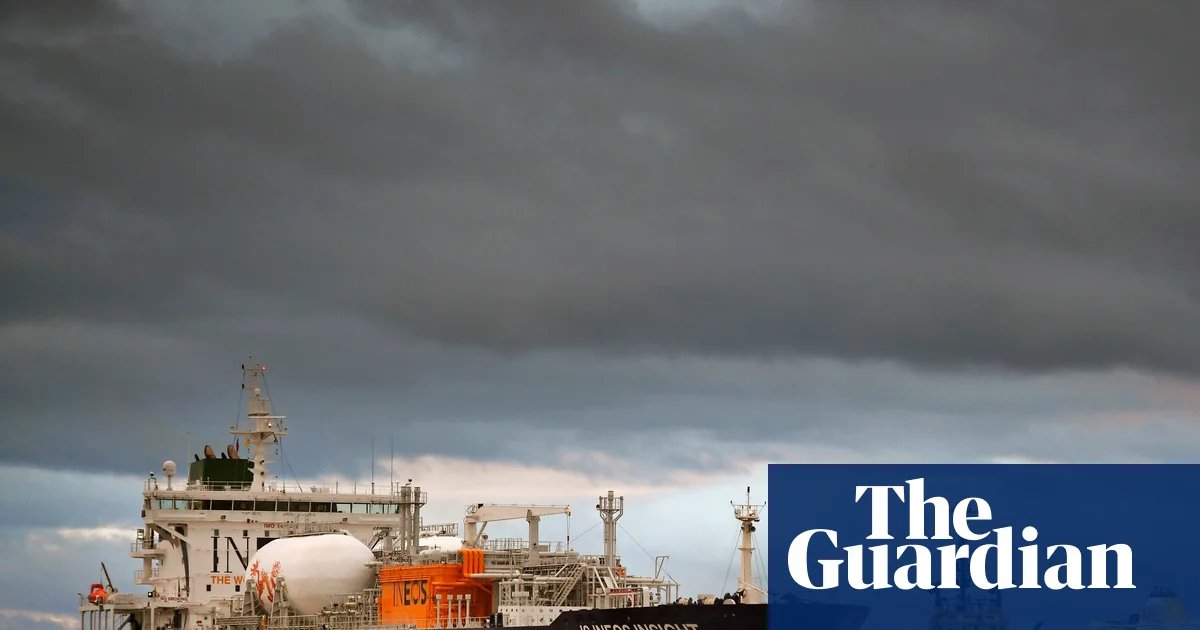
Since 2016, Ineos has utilized a fleet of specialized “dragon ships” to transport ethane to its petrochemical facilities in Norway and Scotland. Data indicates that the volume of ethane shipped by the company has surged seven-fold over the past nine years, climbing from 429 kilotonnes in 2016 to over 3,130 kilotonnes in 2025.
This supply chain currently anchors “Project One,” a controversial, multi-billion-euro plastic factory under construction in Antwerp, Belgium. The project has sparked significant legal and political tension. Environmental law firm ClientEarth and a coalition of 14 NGOs are currently challenging the project in court, arguing that Ineos failed to account for “scope 3” emissions—the climate impact generated by the upstream extraction of the gas in places like Pennsylvania. The case has recently been escalated to the EU’s highest court to determine if companies must quantify the full lifecycle climate impact of their raw materials.
The project is further complicated by the fact that it has received substantial financial backing from the British government in the form of a €700m bank guarantee. While UK Export Finance maintains that the guarantee supports jobs and remains consistent with net-zero commitments, critics argue it creates a “deep contradiction” in government policy by financing a fossil-fuel-dependent infrastructure.
Ineos defends its operations, stating it does not own the fracking wells directly and that the industry’s output is driven by independent producers rather than their purchasing decisions. “We turn that ethane into materials the world cannot do without,” an Ineos spokesperson said, citing the necessity of plastics in medical equipment, pharmaceuticals, and clean water infrastructure. The company maintains that its environmental assessments have undergone rigorous regulatory scrutiny and that closing European plants would merely shift production and associated emissions to less regulated jurisdictions.
For residents like Bower-Bjornson, who traveled to Antwerp to testify before politicians about the human cost of the industry, these justifications offer little comfort. Research has shown that children living within a mile of fracking wells face significantly higher rates of rare cancers like lymphoma, though linking specific cases to individual sites remains scientifically complex. As legal challenges mount, the debate highlights a widening rift between the demand for cheap plastic production and the environmental and social costs borne by “frontline” communities in the Appalachian shale fields.
“People in Pennsylvania are paying for the cost of this industry,” Bower-Bjornson says. “From the impact on our health, on our land, and on our air, we don’t get anything from it.”
Disclaimer: This content is auto-generated for informational purposes only.
Source: Read Original News