








LEGENDS in the world of professional sports are often defined by the mythology of their grind. We are conditioned to expect tales of midnight shooting sessions, grueling conditioning drills, and a singular, obsessive focus that borders on the ascetic. Yet, when Roger Federer—the Swiss maestro who captured 20 Grand Slam titles and dominated the tennis world for two decades—was asked to reveal the secret behind his longevity, he bypassed the clichés of “no pain, no gain.” Instead, he offered a blueprint for greatness that was shockingly, refreshingly human.
The story, recounted by Golden State Warriors head coach Steve Kerr, traces back to 2017 during a team trip to Shanghai. As Federer visited with the NBA giants, Draymond Green posed the inevitable question: How does an athlete sustain such an elite level of performance for twenty years? The room braced for a sermon on sacrifice. What they received was a lesson in balance.
## Federer’s Remarkable Career, in Perspective
Federer, recently inducted into the International Tennis Hall of Fame on August 29, remains the gold standard for sustained excellence. With 103 tour-level trophies and 310 weeks spent at the pinnacle of the world rankings—including a staggering 237 consecutive weeks—his statistics are etched into history. Most impressively, his five consecutive US Open titles between 2004 and 2008 remain an untouched benchmark in the Open Era.
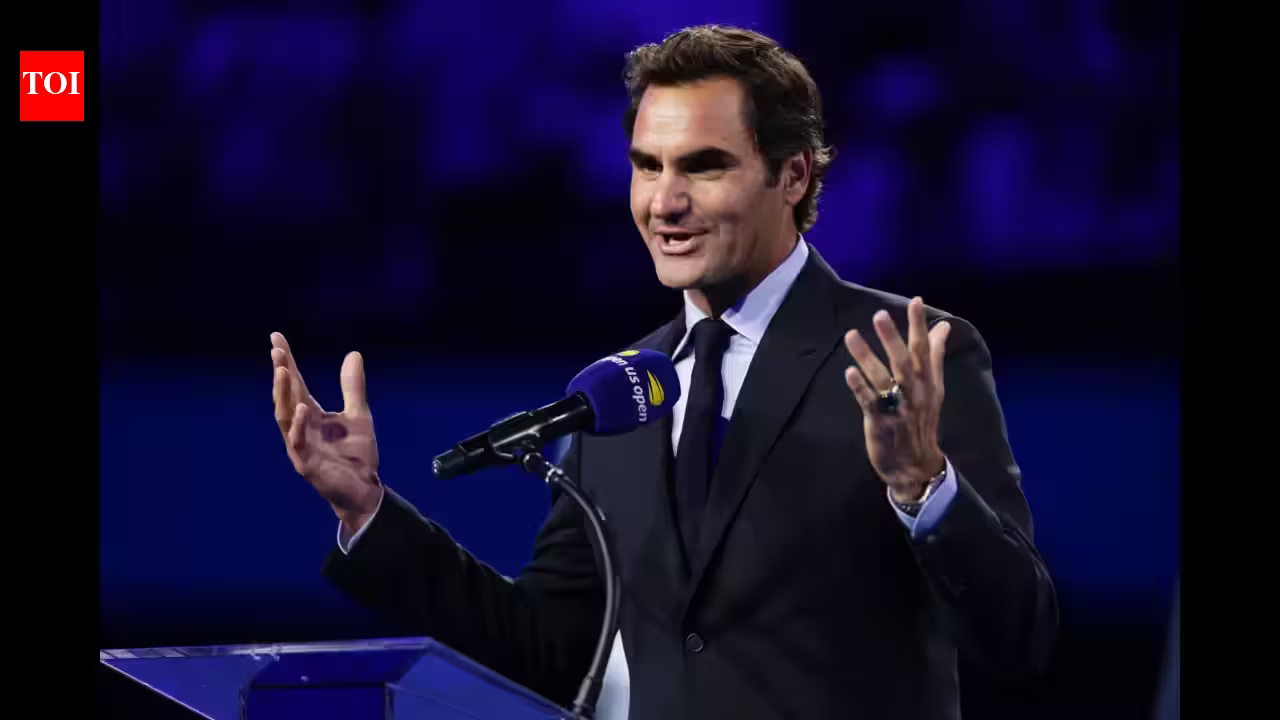
Returning to Arthur Ashe Stadium to receive his Hall of Fame ring, the tennis icon served as a reminder that records are not just the result of raw talent, but of the architecture one builds around that talent. That architecture, as Kerr discovered, is built on the foundation of a happy home.
## A Question from Draymond Green
In Shanghai, the contrast between the players’ expectations and Federer’s reality was stark. Green, known for his own intensity, was looking for the “how”—the grueling methodology of a champion. Federer’s response was, in essence, a daily schedule. He spoke of waking up to prepare breakfast for his children, the school run, and a disciplined two-hour training window designed to be efficient rather than destructive.
“I’ve figured out a really good routine where I don’t destroy my body, but I can get all the work in I need,” Federer explained. But the core of the answer wasn’t his forehand or his serve; it was the evening hours. It was the joy of cooking dinner with his wife, checking in with his children, and the simple satisfaction of hitting the pillow knowing he had lived a full, connected day.
For Kerr, the realization was profound. Federer wasn’t just managing his career; he was managing his happiness. By integrating his professional obligations into a life he genuinely loved, he removed the existential dread of the “grind.”
## Why Federer Made Kerr Think of Curry
It is this philosophy that drew a direct line in Kerr’s mind between the tennis legend and his own superstar point guard, Stephen Curry. While the sports are vastly different—one played on a clay or hard court in solitude, the other on a hardwood floor amidst a symphony of teammates—the internal mechanisms of their success are identical.
Kerr noted that both men possess a “metronome” level of consistency. To the casual observer, the fluid grace of Federer’s one-handed backhand and the dizzying speed of Curry’s release look like art. To the coach, they are the fruits of a deeply disciplined, yet deeply enjoyed, routine.
“It’s clockwork, but there’s also a sense of joy and energy within that work,” Kerr observed. “He enjoys it so much, he loves the process. I think that’s one of the things that ties all great athletes together. There’s a routine that is not only super disciplined and is really enjoyed each day.”
## The Philosophy of the “Well”
When asked about the comparison to Federer, Curry—with his signature humility—joked about the growing list of legends he’s been associated with. However, he quickly pivoted to an earnest assessment of his own longevity. Like Federer, Curry finds that his survival in a high-impact league is tied to his ability to find peace within the work.
“I love to work,” Curry said. “You kind of get lost in the sessions you have on the court in practice… because you know it’s going to lead to you being as prepared as possible for those games.”
Curry admits that the fatigue is real and the days are long, but he echoes the sentiment that success isn’t about avoiding the work; it’s about finding a way to return to the “well” repeatedly to sharpen one’s tools. That ability to evolve—to reinvent a game as the body ages and the league changes—is the hallmark of the true great.
As Federer celebrates his formal induction into the Hall of Fame and Curry continues his pursuit of further championships, the takeaway for the next generation of athletes is clear. Longevity is not a war of attrition. It is a harmonious blending of professional rigor and personal joy. It is the ability to walk off the court, into the living room, and feel that the day was, in every sense, a great one.
Disclaimer: This content is auto-generated for informational purposes only.
Source: Read Original News