







Gender Pay Gap Persists: Indian Factory Women Earn 33% Less Than Male Counterparts in FY25
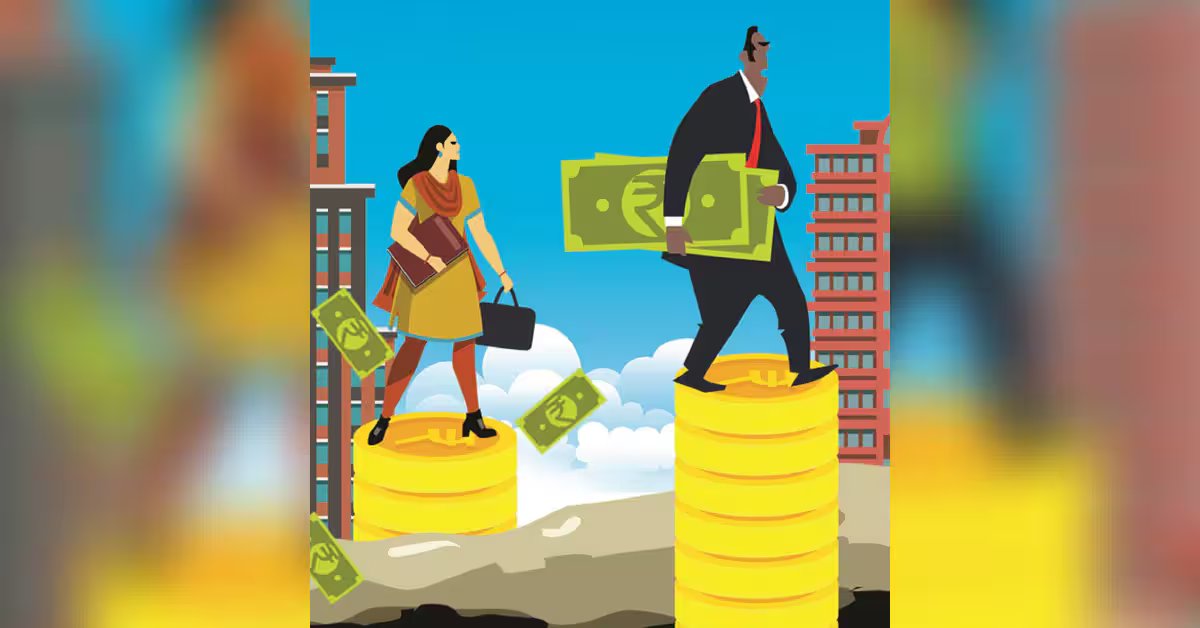
A stark divide continues to characterize India’s industrial workforce. According to the latest unit-level data from the Annual Survey of Industries (ASI) for 2024-25, women directly employed in the country’s factories earn an average of ₹587 per day—a staggering 33% lower than the ₹872 earned by their male colleagues.
The disparity is particularly alarming within establishments that employ both genders. In these shared workspaces, women receive ₹592 daily compared to the ₹925 paid to men, representing a 36% pay deficit. The data reveals that a mere 23% of factories achieve wage parity, while in more than half of all industrial units, women are paid less than 95% of the male wage.
The Scaling Disparity
The wage gap appears to widen alongside the size of the manufacturing facility. In smaller units with fewer than 50 employees, women earn 19% less than men. However, in large-scale plants with 5,000 or more workers, the gap balloons to 60%, with women earning ₹616 against a male average of ₹1,531.
Paradoxically, these larger plants boast the highest female participation, with women making up 30% of the workforce compared to only 10% in smaller units. Despite this higher representation in large-scale industry, the structural pay inequality remains significantly more pronounced.
Structural and Societal Constraints
Tanu Goyal, a senior fellow at the Indian Council for Research on International Economic Relations (ICRIER), suggests that the wage gap is deeply rooted in societal expectations and the gendered division of labor.
“Women tend to work fewer hours because most of the household work falls on them,” Goyal explained, noting that unpaid domestic labor significantly limits the time women can dedicate to their professional roles. Furthermore, mobility remains a major barrier. Concerns regarding safety, a lack of reliable transport, and family responsibilities often force female workers to depart early, preventing them from participating in night shifts or overtime—avenues that provide men with significantly higher earnings.
Beyond logistics, there is a cultural aspect to the imbalance. “There is an acceptance that you are getting paid less, and you don’t ask for more,” Goyal added. In industries like tobacco—where women comprise 71% of the direct workforce—the pay gap hits a high of 64%. Here, women are frequently relegated to low-value tasks like bidi rolling, while men are often prioritized for higher-value roles in packaging and logistics.
Geographic and Sectoral Trends
The data highlights wide regional variations in gender-based pay inequality. The widest wage disparities are observed in Jharkhand (54%), followed by Andhra Pradesh (43%) and Kerala (42%). Conversely, northern states like Punjab, Haryana, and Uttar Pradesh report narrower gaps, ranging between 13% and 15%.
While rare instances of pay parity or female-led earnings exist—such as in the repair and installation of machinery—these are typically found in sectors where women represent a negligible portion of the overall workforce (less than 6%).
As of FY25, women constitute only 18% of the 9.62 million workers directly on factory payrolls. With over 70% of Indian factories failing to employ a single woman directly, the data serves as a sobering reminder of the hurdles preventing gender equity within India’s manufacturing sector. Addressing this will require not only policy intervention but a fundamental shift in how the domestic burden is distributed and how female labor is valued on the shop floor.
Disclaimer: This content is auto-generated for informational purposes only.
Source: Read Original News