





Beyond Volumes: Reimagining India’s Rice Export Paradigm
India’s position as the world’s leading rice exporter—a title it has held firmly since 2012—is a testament to its agricultural might. With exports climbing from 17.73 million tonnes in 2020-21 to 21.57 million tonnes by 2025-26, the country effectively dictates global market trends. However, this success masks a critical policy paradox: the immense strain that high-volume exports place on India’s ecological foundation. As the nation celebrates reaching 154.02 million tonnes in total production, experts are calling for a shift in perspective, arguing that export success must be measured by the resources consumed rather than just the tonnage shipped.
The Disconnect Between Volume and Value
A deep dive into recent export data reveals a structural inefficiency. In 2025-26, India exported 6.52 million tonnes of Basmati rice, valued at $5.67 billion, while non-Basmati rice shipments reached a massive 15.04 million tonnes for a marginally higher return of $5.86 billion. This data underscores a reality where India is essentially “exporting water.” By focusing on high-volume, low-value non-Basmati exports, the country is depleting its natural capital to support global consumption patterns that offer thin financial margins.
The Hidden Cost: Virtual Water and Climate Footprint
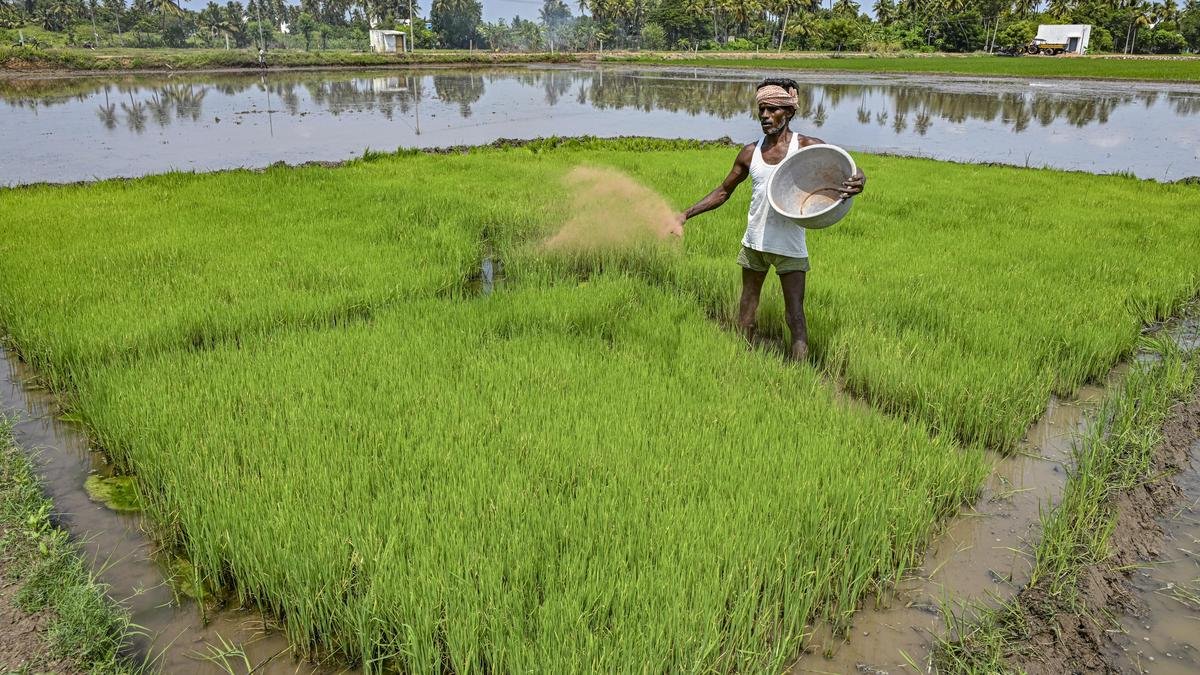
The true environmental cost of rice production is found in “virtual water”—the quantity of water embedded in the commodity during its growth. While some rice relies on rain (green water), a significant portion of India’s output, particularly in states like Punjab, Haryana, and western Uttar Pradesh, draws heavily from aquifers and rivers (blue water). This extraction is rapidly depleting critical groundwater reserves.
Beyond water scarcity, rice cultivation is a known contributor to climate change. The practice of maintaining flooded fields leads to methane emissions, while the overuse of nitrogen-based fertilizers exacerbates the carbon footprint. While sustainable techniques—such as direct-seeded rice (DSR) and alternate wetting and drying (AWD)—offer promising mitigation, their effectiveness remains highly dependent on local soil conditions and agro-climatic zones.
A New Framework for Sustainability
The path forward requires a shift from a “volume-first” to a “value-first” strategy. Policymakers must align cultivation zones with water availability, incentivizing farmers to switch to less water-intensive crops in regions facing severe groundwater stress. Instead of prioritizing the physical quantity of exports, the strategy should pivot toward branding, quality, and geographical indications to capture higher value per tonne.
To make this transition actionable, experts suggest adopting a “water-carbon-value” framework. By tracking metrics such as export value per cubic meter of blue water, farmer income per unit of water, and emissions per kilogram, India can gain a clearer understanding of its agricultural footprint.
Securing the Future
India’s global competitiveness in the rice market is indisputable, but its longevity is currently at risk. The next chapter of India’s rice economy should not be defined by how much it ships, but by how efficiently it manages its resources. By decoupling export growth from environmental degradation, India can ensure that its agricultural legacy remains resilient in a climate-constrained world. True success will be found when every drop of water and every unit of energy produces significantly higher socio-economic value for the nation’s farmers.
Disclaimer: This content is auto-generated for informational purposes only.
Source: Read Original News