







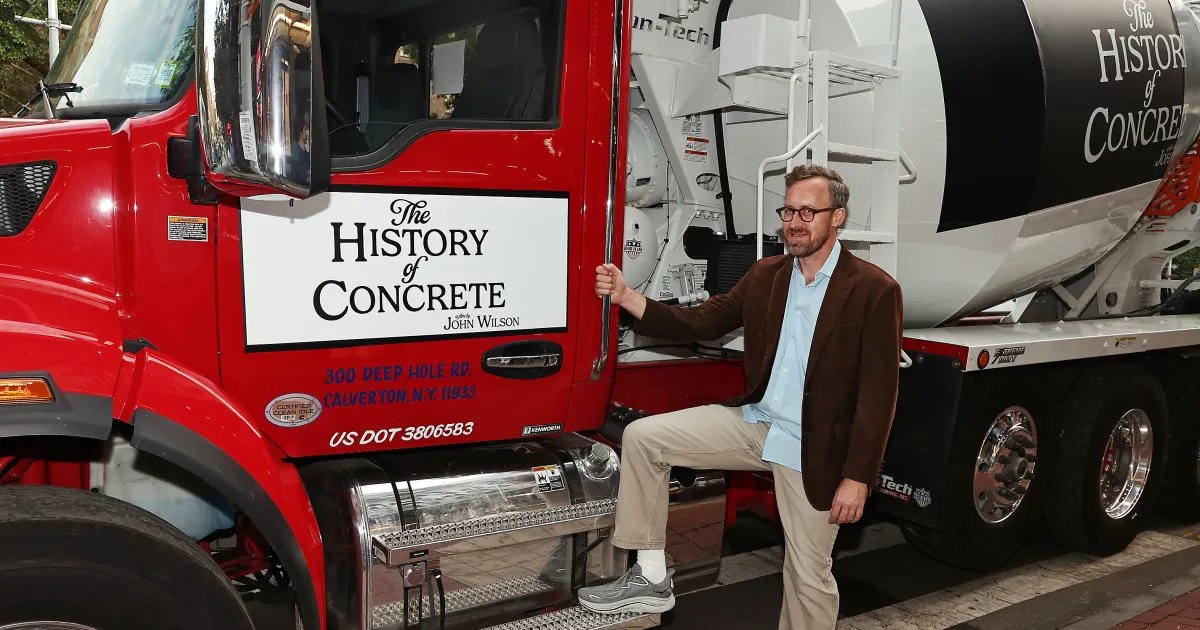
It is the most used material on Earth after water, a ubiquitous foundation of modern civilization, and a growing environmental liability. Concrete, the subject of a new feature-length documentary by filmmaker John Wilson titled The History of Concrete, is increasingly being scrutinized not just for its structural flaws, but for its massive role in the climate crisis.
While Wilson’s documentary—which adopts the whimsical, deadpan style of his HBO series How To with John Wilson—is not explicitly a climate film, it captures the mounting absurdity and danger of a world built on a crumbling, carbon-intensive foundation. Concrete is responsible for roughly 8 percent of global carbon dioxide emissions, making it the third-largest contributor to global warming. Yet, as Wilson’s lens reveals, the material’s lifespan is often frustratingly short, leaving modern cities in a state of perpetual, hazardous repair.
The filmmaker’s interest in the subject began with a personal grievance: the persistent flooding of his own apartment basement in Queens. His futile attempts to patch the leak with store-bought concrete reflect a wider urban reality. As climate change accelerates sea-level rise and triggers more intense rainfall, the dense, impermeable nature of concrete has become a major liability. It prevents stormwater from absorbing into the soil, forcing water to surge into buildings and infrastructure. When the concrete inevitably cracks—as it does with alarming frequency—it leaves these structures vulnerable to systemic failure.
The documentary highlights the fragility of our urban arteries. Experts interviewed in the film, such as former New York City traffic commissioner Sam Schwartz, point to structures like the Brooklyn Promenade, noting that many massive concrete projects were never intended to endure for more than a few decades. Today, these structures are often held together by temporary patch jobs, raising urgent questions about public safety as the climate around them continues to shift.
Beyond its structural deterioration, concrete is also an environmental driver in its own right. The material’s tendency to create “urban heat islands” can raise local temperatures by up to 7 degrees Fahrenheit, turning city pavements into life-threatening heat sinks during the summer months. Furthermore, the industry is grappling with a looming “sand crisis.” Concrete requires massive amounts of sand—a resource being consumed at a rate of 50 billion tons per year, leading to rapid coastal erosion and the destruction of delicate ecosystems.
Wilson’s film explores these heavy themes through a uniquely intimate lens, documenting everything from neighborhood protests against dust-spewing recycling plants to the strange, singular lives of people inhabiting the corners of our concrete-dominated landscapes. By focusing on the mundane, Wilson forces the viewer to confront the “intractable” nature of our dependency on the material.
As the documentary concludes, the message is clear: our built environment is in a state of crisis, yet our reliance on concrete remains deeply ingrained. While recycling initiatives and new material sciences offer glimmers of potential progress, the sheer scale of the global dependence on concrete makes significant change difficult. For the average city dweller, the film serves as a poignant reminder that while we often ignore the gray, cracked pavement beneath our feet, that infrastructure is arguably the most significant, and most vulnerable, element of our warming world. In the end, Wilson’s work succeeds in turning the banal into the profound, inviting audiences to finally pay attention to the literal foundations of their lives.
Disclaimer: This content is auto-generated for informational purposes only.
Source: Read Original News