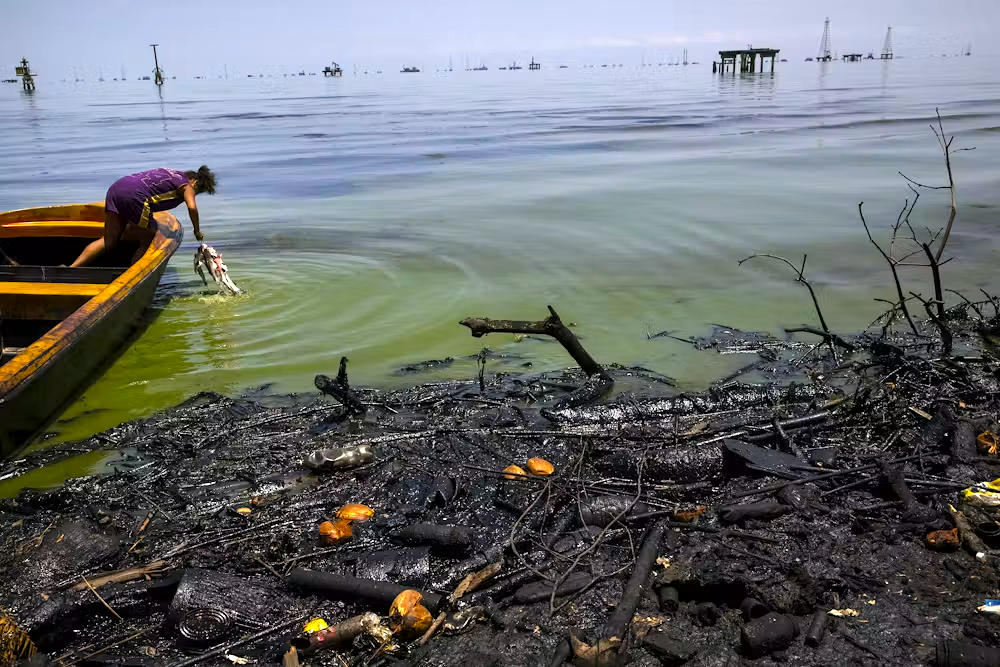










For over two centuries, the specter of “overpopulation” has loomed large over environmental discourse. When Thomas Robert Malthus published his Essay on the Principle of Population in 1798, he introduced a foundational, albeit contentious, theory: that human population growth would inevitably outstrip food production, leading to societal collapse. This Malthusian framework was later echoed in 1968 by Paul Ehrlich’s The Population Bomb, which predicted mass global famine by the 1970s and 1980s.
Yet, as we move through the mid-2020s, it has become increasingly clear that the “headcount” focus is a misplaced diagnostic. The true driver of environmental degradation is not the sheer number of people on the planet, but the intensity and nature of their consumption, alongside the energy systems that sustain them.
The reliance on population size as the primary metric for environmental stress ignores a staggering disparity in resource utilization. In many regions of the world, population growth has slowed or stabilized, yet the ecological footprint of these societies continues to expand. This is primarily due to a model of development predicated on high-energy throughput and resource-intensive lifestyles. The environmental impact of a population is better understood through the lens of the IPAT equation—Impact equals Population multiplied by Affluence and Technology—where “Affluence,” or per-capita consumption, has become the dominant variable.
Global energy demand serves as the clearest indicator of this shift. While the global population has grown, the explosion in consumption patterns—driven by industrialization, globalized trade, and a culture of disposability—has caused an exponential rise in resource extraction. The energy required to maintain modern standards of living in affluent nations far outweighs the aggregate impact of much larger populations living in less industrialized regions. When we frame the environmental crisis solely as a “too many people” problem, we inadvertently shift the burden onto marginalized populations and developing nations, while shielding the structural economic systems that prioritize infinite growth over planetary boundaries.
Furthermore, the Malthusian narrative often fails to account for human ingenuity and systemic adaptation. We have historically demonstrated the capacity to decouple growth from resource depletion through technological advancements in agriculture, renewable energy, and circular economy models. However, these advancements are often sidelined by economic policies that incentivize rapid turnover and fossil-fuel dependence. If we continue to focus on “headcounts,” we risk ignoring the urgent need to overhaul our energy grids and consumption behaviors.
Addressing environmental stress requires moving past the simplistic fear of birth rates. Real progress lies in transforming the “Affluence” variable: transitioning to sustainable energy architectures, reducing waste, and decoupling economic prosperity from environmental destruction. By shifting our attention from the number of humans to the way they consume and power their lives, we move toward a more accurate—and actionable—understanding of how to preserve our planet for future generations. The challenge is not that there are too many of us, but that the current model of human existence is pushing the Earth’s systems to a breaking point that no population control strategy alone can fix.
Disclaimer: This content is auto-generated for informational purposes only.
Source: Read Original News