






The Revolving Door of Punjab Politics: Seeking Integrity Ahead of 2027
As Punjab inches closer to the 2027 assembly elections, the state’s political landscape is once again defined by a familiar, volatile trend: the fluid movement of leaders across party lines. In this atmosphere of perpetual transition, where yesterday’s ideological rivals are tomorrow’s partners, a critical question emerges for the electorate. Beyond the theater of party hopping, where are the “Spartans” of Punjab—the leaders whose commitment to public welfare remains steadfast regardless of the flag they carry?
A State in Flux
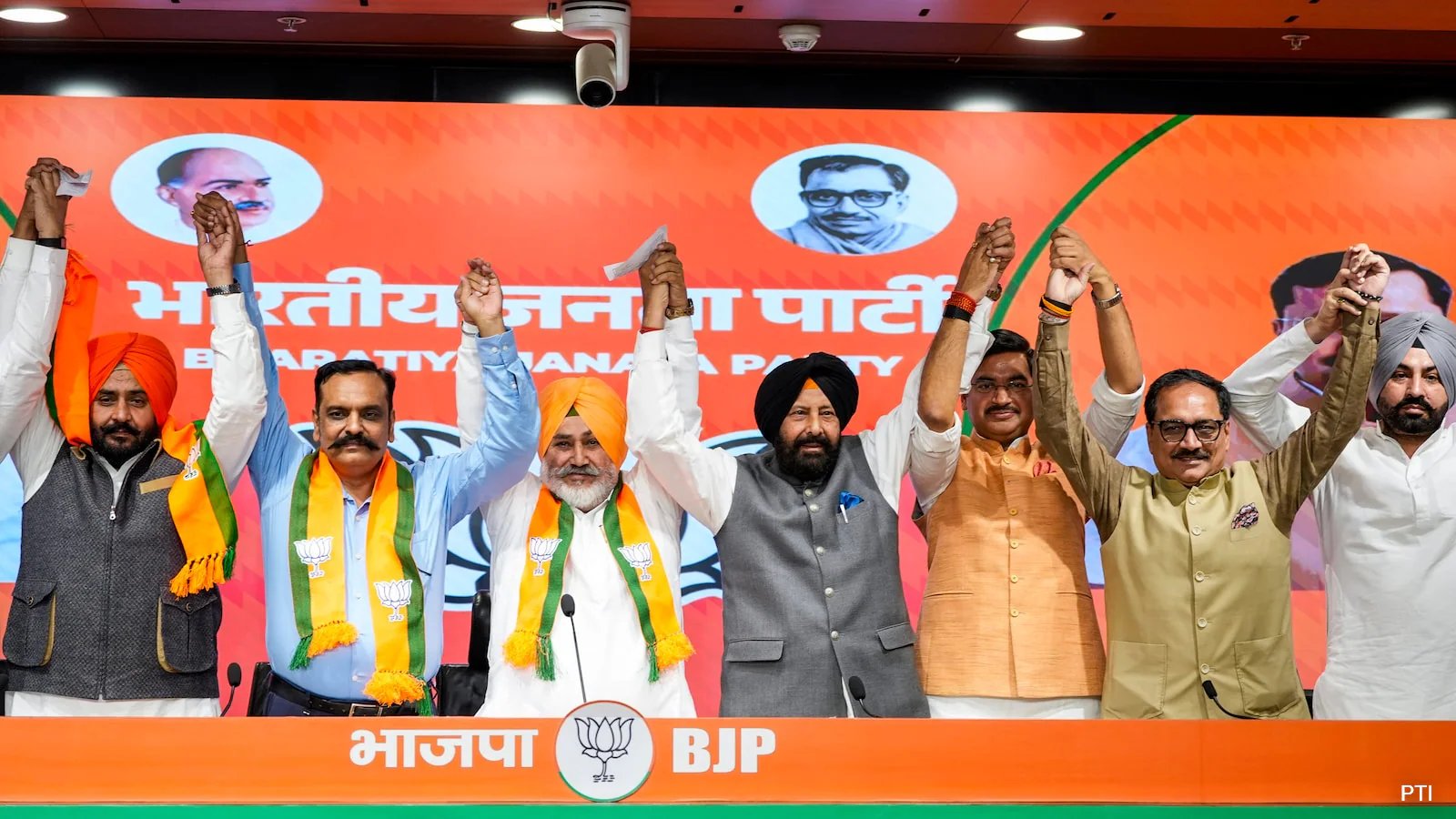
The recent, high-profile departure of three Aam Aadmi Party (AAP) legislators—Kunwar Vijay Pratap Singh, Harmeet Singh Pathanmajra, and Chetan Singh Jouramajra—to the Bharatiya Janata Party (BJP) on November 2, 2026, serves as a poignant reminder of this instability. With constituencies spanning from the Majha region to the critical Patiala belt of Malwa, these defections are clearly aimed at bolstering the BJP’s electoral footprint.
Yet, this is merely a continuation of a pattern that has left voters dizzy. The trajectory of leaders like Sushil Kumar Rinku, who moved from Congress to AAP and finally to the BJP in the span of just one year, illustrates the depth of the current crisis. When veterans like Sunil Jakhar, Manpreet Singh Badal, and Captain Amarinder Singh shift their allegiances, it prompts a cynical view of political conviction. Whether these moves are driven by policy disagreements or simple electoral arithmetic, the public is left to wonder if any enduring principles remain.
The Burden of Accountability
Switching parties is a political prerogative, but it is not a consequence-free exercise. When a leader abandons one platform for another, they carry an implicit debt to their constituents: an obligation to explain the departure.
Was there a genuine, irreconcilable breach of conscience? How do they now reconcile their new party’s policies with the stances they previously championed? If a leader spent years criticizing a party’s core tenets, they cannot simply walk through a new door and expect their past rhetoric to be forgotten. Simultaneously, the receiving party bears the responsibility of explaining why they have embraced someone they formerly cast as an opponent. A ceremonial induction cannot erase the record of a public official.
Beyond Political Arithmetic
As the 2027 polls loom, parties will undoubtedly tout their new acquisitions as evidence of growing strength. However, assembling a roster of “influential faces” does not equate to a coherent vision for Punjab. The state faces profound, systemic challenges—ranging from the stability of agriculture and water management to the urgent need for industrial employment and public service reform.
These issues cannot be solved by party hopping. Voters are not mere vote banks to be transferred from one banner to another; they are architects of the state’s future. They are increasingly looking for leaders who can move past the transient nature of political gain and articulate a roadmap that addresses the actual concerns of the common man.
Rediscovering Purpose
History in Punjab has been shaped by figures—from the discipline of the Sikh tradition to the revolutionary zeal of Kartar Singh Sarabha and Bhagat Singh—who operated from a place of unshakeable conviction. While no political era is without its complexities, the standard for leadership remains the same: purpose, conduct, and consequence.
As the state prepares for the next electoral cycle, the focus must shift from the “who” to the “why.” Every politician changing sides must face a rigorous test of their convictions, and every party must prove that its recruitment strategy actually improves the quality of governance offered to the people. Before 2027, the challenge for the voter is to identify those few, consistent voices amidst the noise. The true test of leadership will not be found in the changing of party symbols, but in the steadfastness of those who choose to put Punjab before personal advancement.
Disclaimer: This content is auto-generated for informational purposes only.
Source: Read Original News