








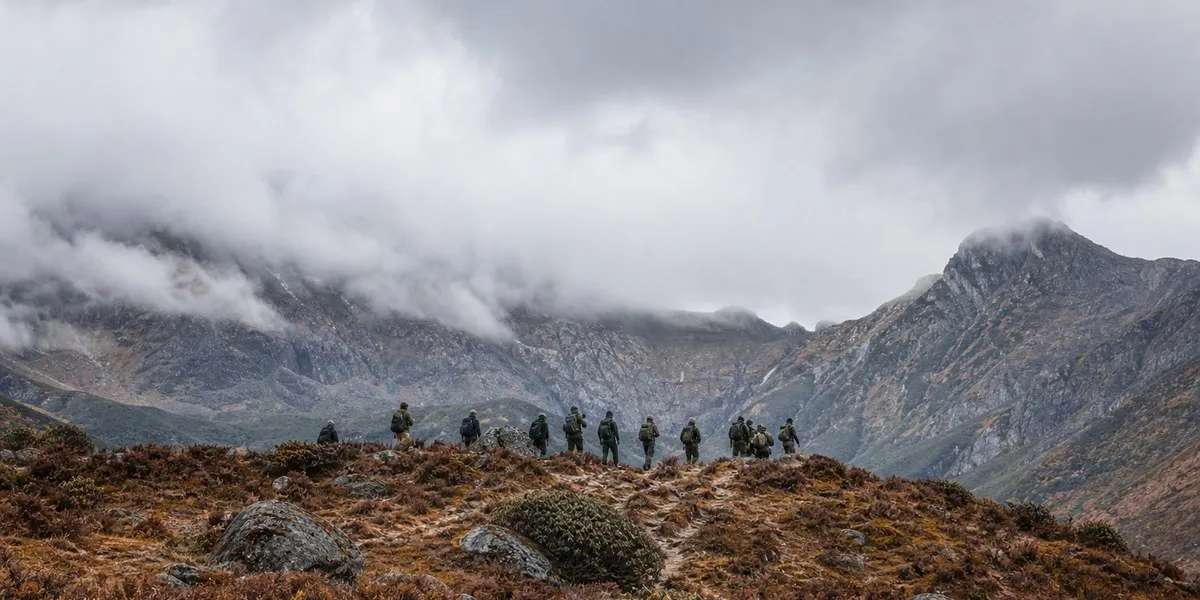
Renewed Border Standoff Reported in Arunachal Pradesh
Indian authorities have officially acknowledged a fresh series of standoffs between Indian and Chinese military personnel in the northeastern state of Arunachal Pradesh. The confrontation, which has unfolded over the past several days along the disputed de facto border, remains active according to Shatrughjit Kapoor, the director general of the Indo-Tibetan Border Police (ITBP).
While the exact nature of the contact remains obscured—with no confirmation yet of physical violence—the development marks a concerning escalation in one of the world’s most sensitive geopolitical flashpoints.
Strategic Challenges and Modernization
Director General Kapoor emphasized the mounting difficulty India faces in managing its northern frontier. He noted that the rapid modernization of the People’s Liberation Army (PLA) and significant investments in Chinese border infrastructure have shifted the security calculus. These advancements make conventional counter-measures increasingly complex for Indian forces tasked with patrolling the rugged, high-altitude terrain.
Contrasting Official Perspectives
The response from Indian leadership has been measured. Arunachal Pradesh Chief Minister Pema Khandu conceded that while violations of the Line of Actual Control (LAC) have occurred, they are not entirely unprecedented. Khandu maintained that the situation remains generally stable, framing these incidents as part of a persistent problem stemming from the lack of a properly demarcated border.
The core of the dispute remains the McMahon Line, a 1914 border agreement drawn by British colonial officials that China refuses to recognize. Beijing historically maintains that Arunachal Pradesh is a part of southern Tibet, a claim India vehemently rejects.
Indian Foreign Ministry spokesperson Randhir Jaiswal attributed the recent frictions to Chinese forces altering their long-established patrol routes. In contrast, Chinese Foreign Ministry spokesperson Guo Jiakun dismissed these allegations, insisting that the PLA was merely conducting standard operations in compliance with existing bilateral agreements between the two nations.
The Lingering “Line of Actual Control”
The LAC, a 3,488-kilometer-long stretch of territory, serves as the unofficial boundary between the two Asian giants. However, because both nations claim overlapping zones, the frontier remains a volatile space where soldiers from both sides frequently come into contact.
Former Indian ambassador to China, Gautam Bambawale, pointed out that these recurring standoffs are inevitable symptoms of an unresolved border. Without a mutually agreed-upon line, small patrols are destined to clash as they navigate terrain they both consider sovereign.
This latest tension serves as a somber reminder of the fragility of the peace in the Himalayas. The border remains a powder keg, underscored by the tragic events of June 2020 in the Galwan River valley, where a lethal clash resulted in fatalities on both sides. Despite 25 rounds of diplomatic and military negotiations since 2003, New Delhi and Beijing remain deadlocked, unable to transform the volatile LAC into a finalized, internationally recognized border. As of now, the international community continues to watch the region closely, hoping that established communication channels can prevent these localized standoffs from spiraling into a broader confrontation.
Disclaimer: This content is auto-generated for informational purposes only.
Source: Read Original News