





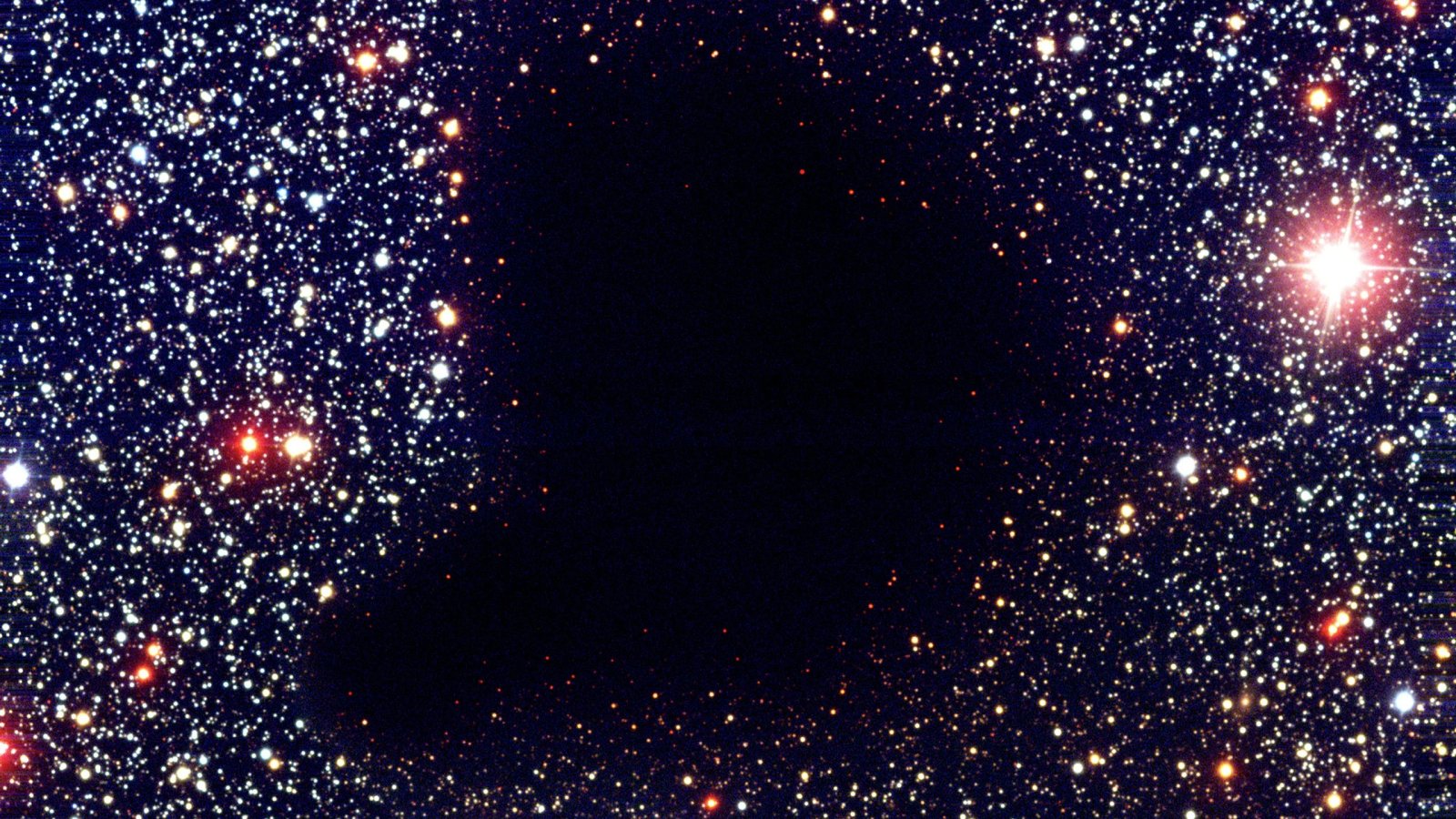
The Mystery of the Invisible Signal in the Hubble Ultra Deep Field
The Hubble Ultra Deep Field (HUDF) remains one of the most significant regions in the cosmos. Located within the southern constellation of Fornax, this seemingly empty patch of sky has been the subject of over 270 hours of observation by the Hubble Space Telescope. These efforts revealed nearly 10,000 galaxies stretching back billions of light-years. When the James Webb Space Telescope (JWST) turned its advanced infrared mirrors toward this same coordinates, astronomers expected to uncover faint structures previously hidden from view. However, the data has instead provided a profound enigma: a transient signal that defies categorization.
Using the NIRSpec (Near-Infrared Spectrograph) instrument, researchers detected a mysterious emission line at 1.6 micrometers. This signal appeared during two distinct observation windows in 2023, separated by 88 days. The anomaly is not that a signal was found, but that it exists in complete isolation. Despite rigorous inspection, there is no corresponding object visible in any prior imaging from either the Hubble or the JWST. This discovery challenges current models of deep-space observation, as a source energetic enough to produce such a clear spectral line should, by all physical accounts, be visible through standard imaging techniques.
Innovative Methodology: Multiobject Coronagraphy for Slitless Spectroscopy
To identify new objects, a team led by astrophysicist Mason Huberty of the University of Minnesota utilized a novel approach termed Multiobject Coronagraphy for Slitless Spectroscopy (MOCSS). Traditional spectroscopic surveys typically require astronomers to identify a target first and then align the instrument’s tiny shutters to capture its light. This methodology is limited by the necessity of prior knowledge regarding the target’s location.
The team inverted this process to ensure a broader search. By opening nearly all the shutters on the NIRSpec instrument—and closing only those covering known foreground objects identified in previous Hubble surveys—the researchers allowed light to enter the spectrograph from an essentially blank field. By splitting this incoming light into spectra, they searched for emission lines, which serve as chemical signatures of energetic processes. The experiment was conducted twice at different observation orientations to ensure that the detected line was not merely a mechanical glitch, an optical artifact, or a byproduct of the instrument itself. The result was a successful validation of the MOCSS technique, as they successfully identified six distant galaxies. The seventh detection, however, remains an outlier with no visual counterpart.
The Technical Challenges of Spectral Analysis
The primary obstacle in identifying this source is the inherent nature of light in an expanding universe. As light travels across cosmic distances, its wavelength is stretched—a phenomenon known as redshift. An infrared photon could represent high-energy light from a very distant object or lower-energy light from a relatively nearby source. Without multiple emission lines, it is mathematically difficult to determine the exact redshift or the physical distance of the source.
Because the signal consists of a single spectral line, researchers lack the context needed to determine what physical mechanism produced it. In typical astrophysical observations, multiple lines allow for the identification of chemical elements like hydrogen, oxygen, or ionized metals, which act as a fingerprint for the object. A single, bright line at 1.6 micrometers provides insufficient data to distinguish between several high-energy phenomena. The consistency of the signal—appearing in all four sets of combined exposures across two different dates—rules out random sensor noise, confirming that the source is an astrophysical event rather than a technical error.
Evaluating Potential Cosmic Origins
The research team evaluated four primary hypotheses, yet none provide a clean fit for the observed data. The first theory, that the signal originates from a galaxy in the early universe, is hindered by the likelihood that such light would have been obscured by the neutral hydrogen present in the intergalactic medium during that epoch. Furthermore, such a galaxy would likely have been captured in the JADES (JWST Advanced Deep Extragalactic Survey) imaging conducted in 2022.
A second possibility, a more recent galaxy, is discounted by the absence of other accompanying emission lines. A third explanation, a supernova event, similarly fails to account for the lack of secondary spectral signatures. Finally, the team considered the disruption of a star by a black hole—a tidal disruption event. While these events can produce powerful, isolated emission lines, there is currently no evidence of a host galaxy or a central mass large enough to support such an event at that specific location.
Future Implications for Deep Space Research
The inability to identify the source of this signal highlights the limits of current observational infrastructure. Because the signal is bright enough that it should have appeared in earlier, less intensive surveys, its sudden emergence—or sudden visibility—suggests a transient nature. The researchers emphasize that the object represents extreme physical conditions that remain poorly understood.
This discovery serves as a reminder that even the most well-mapped regions of the cosmos hold hidden variables. To solve the mystery, further investigation is required. Deeper and more sensitive spectroscopic observations may eventually reveal secondary lines that would allow for a definitive calculation of the source’s redshift. Until such data is gathered, this signal remains a significant, unexplained piece of the cosmic puzzle, urging the scientific community to refine its search criteria and reconsider what other phenomena may be hiding in the dark patches between the galaxies. The findings, published in The Astrophysical Journal, stand as a testament to the fact that the more deeply we look, the more complex the universe reveals itself to be.
Disclaimer: This content is auto-generated for informational purposes only.
Source: Read Original News