








Advancing Transparency in the Streaming Era
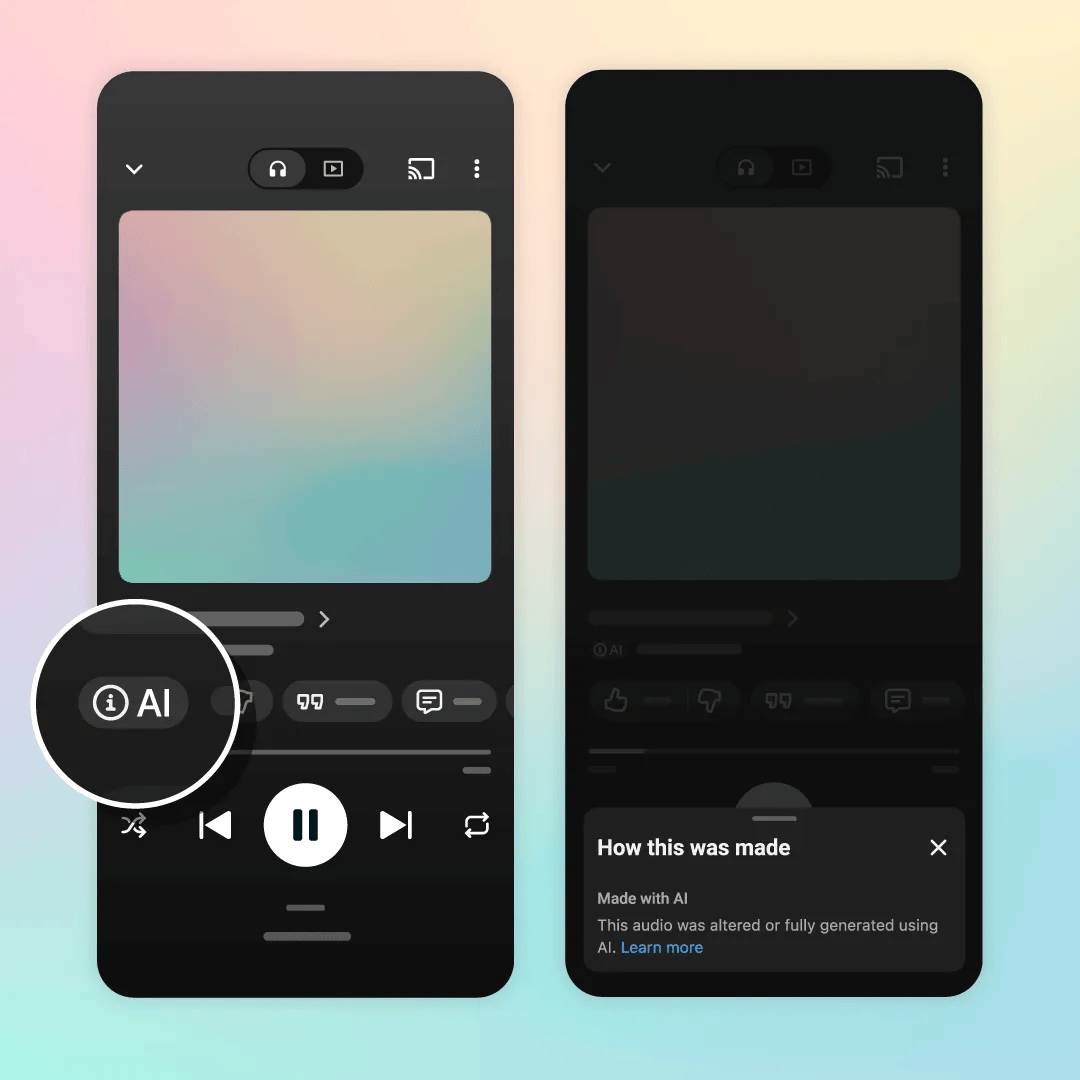
As generative artificial intelligence transforms the landscape of music production, streaming platforms are navigating a complex intersection of technological innovation and listener expectations. YouTube Music has recently taken a significant step toward industry-wide transparency by rolling out a comprehensive labeling system designed to identify tracks created with the assistance of generative AI. This initiative, which extends across both the dedicated YouTube Music platform and the primary YouTube application, ensures that listeners have clear information regarding the origin and composition of the content they consume.
The new labeling system manifests directly on the player page, providing users with a clear indicator when AI has been utilized in a track’s creation. By clicking on these labels, listeners can access specific metadata explaining the role of synthetic processes, whether the technology was used for instrumental composition, vocal synthesis, or structural arrangement. This move reflects a broader industry trend where the preservation of creative integrity is balanced against the rapid accessibility of AI-driven production tools.
The Three-Tier Classification System
To maintain consistency and accuracy, YouTube has developed a specific framework for content creators and music labels to categorize their submissions. Through a collaborative process involving various industry partners and the implementation of proprietary detection algorithms, YouTube now requires, or provides the opportunity for, tracks to be designated under one of three distinct categories: Fully Gen AI, Partly Gen AI, or No Gen AI.
The Fully Gen AI designation is reserved for content where the entirety of the musical composition and production is executed by artificial intelligence. The Partly Gen AI category captures the nuanced reality of modern production, where human artists blend AI-generated components—such as background textures, melodic loops, or synthetic harmony layers—with their own live instrumentation or original vocal performances. Finally, the No Gen AI category establishes a clear distinction for tracks that do not utilize generative models. Critically, YouTube has clarified that standard studio processing tools, including pitch-correction software like Auto-Tune, are not considered generative AI and thus fall under the No Gen AI designation. This distinction is vital for maintaining a clear boundary between standard digital audio workstations (DAW) enhancements and the new generation of synthetic creative tools.
Technological Collaboration and Detection
The efficacy of this system relies on a combination of self-reporting by creators and automated verification. By working closely with music labels and independent artists, YouTube has fostered an environment of accountability. When a user uploads content, the platform prompts them to declare the extent of AI involvement. This is supported by detection tools designed to identify synthetic characteristics within audio files, helping to maintain the integrity of the data.
While other platforms have adopted restrictive measures, YouTube is prioritizing disclosure. Rather than applying punitive filters, the company is positioning itself as a platform that facilitates transparency. This approach acknowledges that AI has become an essential part of the modern production toolkit. By labeling tracks rather than banning them, YouTube allows creators to experiment with new sounds while maintaining a transparent relationship with their audience.
Industry-Wide Response and Competitive Context
YouTube Music is not alone in its endeavor to regulate the influx of AI-generated content. The streaming industry is currently undergoing a systemic transition as platforms grapple with the massive volume of synthetic music. Data from industry peers, such as Deezer, has highlighted the scale of this shift, with some services reporting that a substantial portion of daily uploads consists of fully AI-generated tracks.
Other major players are implementing their own distinct strategies. Apple Music is preparing to introduce “Made With AI” tags to its platform, while Spotify has integrated AI labels alongside aggressive filtering mechanisms intended to mitigate music spam—a common byproduct of low-effort, AI-generated uploads. Platforms like TIDAL have taken a more interventionist approach, restricting monetization for content identified as entirely AI-generated and allowing users to actively filter such music from their listening experiences. By contrast, YouTube’s framework is focused on providing the user with context, enabling them to make informed decisions about the media they consume without necessarily removing AI-assisted tracks from the ecosystem.
The Future of AI in Creative Expression
The implementation of these labels signals a shift in how we perceive the role of the creator. YouTube itself has been a leader in exploring the potential of these technologies, most notably through its “Dream Track” experiment. This tool allows select creators to generate soundtracks featuring AI-synthesized versions of participating artists’ voices, showcasing a future where human artists collaborate with their own digital counterparts.
As AI models become more sophisticated, the line between human-performed and machine-generated music will continue to blur. The impact of these labels will be felt most strongly in how listeners value and engage with music. When a listener understands that a track was created in collaboration with a generative model, it changes the context of the listening experience. For some, it may diminish the perceived authenticity of the work, while for others, it may highlight the innovative use of technology in music production.
Ultimately, YouTube’s labeling system serves as a foundational step in building trust. As the digital music landscape continues to evolve, these transparency measures will likely become a standard feature across all media platforms, ensuring that the human element of music remains at the forefront of the listening experience, even in an era of unprecedented machine contribution. By establishing clear definitions and providing accessible information, YouTube is setting a precedent that respects both the artist’s desire to innovate and the listener’s right to clarity.
Disclaimer: This content is auto-generated for informational purposes only.
Source: Read Original News