








The Strategic Pivot: From Development Autonomy to Corporate Mandates
The evolution of modern game development is often characterized by the tension between creative vision and bottom-line fiscal responsibility. Jeff Kaplan, the former game director for Overwatch, recently provided a candid look into the internal shifts at Blizzard Entertainment that preceded his 2021 departure. According to Kaplan, the transition period between 2018 and 2021 was marked by a steady erosion of creative agency, as executive-level mandates began to supersede the development team’s autonomy.
Kaplan detailed a scenario where the “revolving door” of corporate leadership introduced a culture shift that prioritized specific financial metrics over long-term project health. This environment led to the controversial decision to halt development on new content for the original Overwatch. Executives directed the team to focus exclusively on the development of a sequel, effectively forcing a years-long content drought that hampered the original game’s momentum. Kaplan characterized this period as a constant struggle to maintain the franchise’s creative identity against a management team increasingly driven by external fiscal demands.
The Anatomy of a Premature Announcement
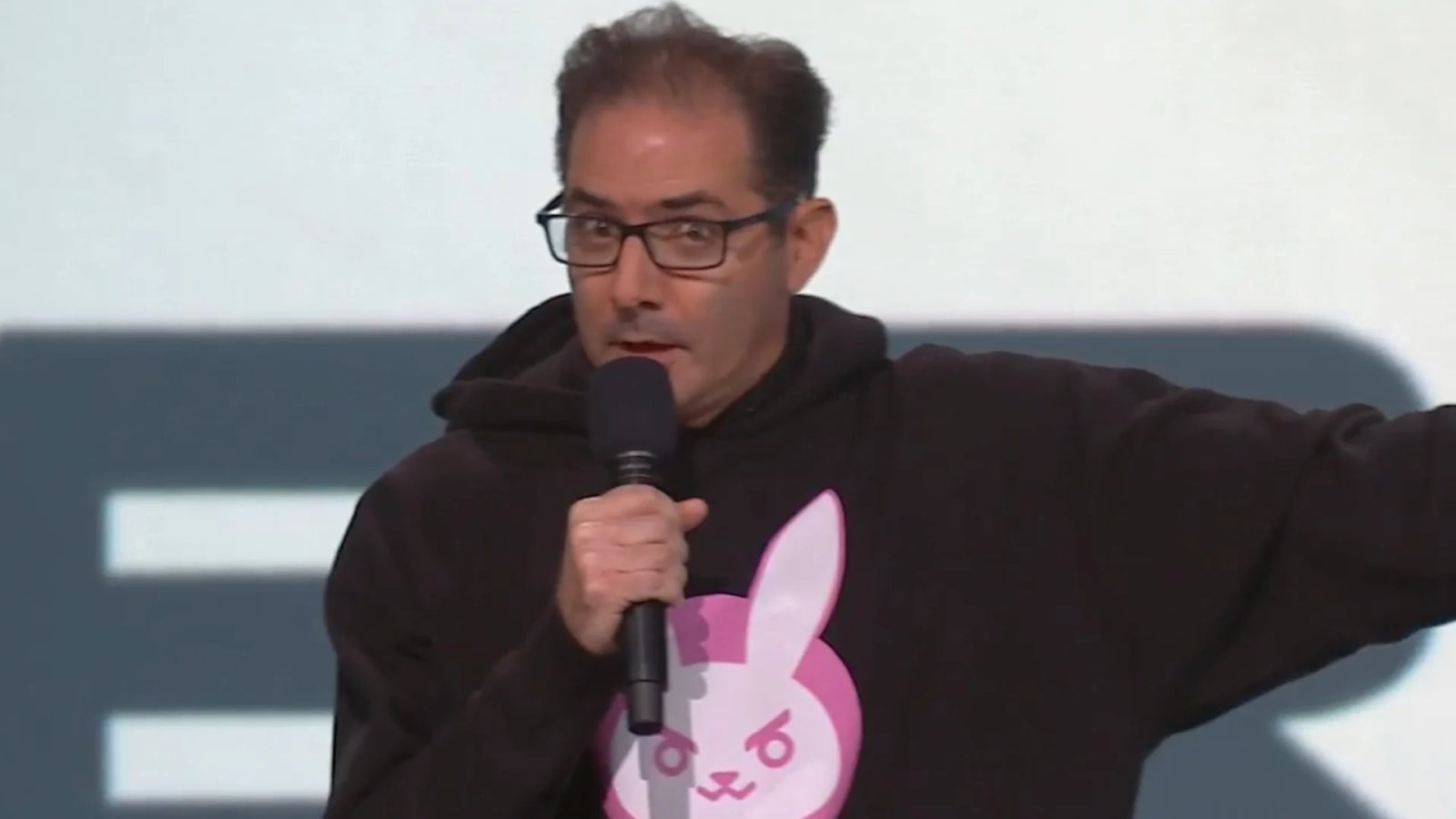
One of the most revealing aspects of Kaplan’s account concerns the high-pressure environment surrounding the 2019 BlizzCon announcement of Overwatch 2. At the time, the project was presented as a significant expansion, featuring a comprehensive story campaign, cooperative player-versus-environment (PvE) missions, and a unified competitive ecosystem. However, Kaplan admitted that these promises were made while the internal development team still lacked a clear definition of what the game’s core mechanics or long-term business model would ultimately be.
From a technical and project management perspective, announcing a product in such an undefined state is widely considered a failure of scope control. By committing to specific features before they were fully conceptualized or vetted, the leadership created a technical debt that proved impossible to reconcile in later stages. This disconnect between public marketing promises and internal development realities is arguably why many of the features showcased in 2019 failed to materialize in the final version of the game.
The BlizzCon 2019 Competitive Conflict
The decision to unveil both Overwatch 2 and Diablo IV simultaneously at BlizzCon 2019 served as a point of contention between the creative lead and the executive team. Kaplan described the simultaneous reveal as an act of “corporate posturing,” intended to reassure stakeholders that the company remained an industry leader. In his view, this move actively undermined the success of both titles by denying them the dedicated focus and space required to effectively communicate their specific value propositions to the player base.
This situation highlights the perils of utilizing product launches as instruments of corporate branding rather than focusing on the individual project’s development cycle. By forcing both teams to compete for internal and external attention, the executive leadership compromised the launch narratives of two of their most significant intellectual properties. For a project as complex as a hero-shooter sequel, the lack of a singular, focused launch narrative contributed to the confusion that followed the game’s release.
Defining the Loss of Creative Agency
Kaplan’s departure underscores a common crisis in the gaming industry: the loss of agency among creative directors when corporations shift from product-led to finance-led governance. In his interview, Kaplan noted that prior to 2018, he possessed the authority to define the direction of the Overwatch franchise. However, as the Influence of parent company Activision increased, this power was steadily curtailed.
The accumulation of these small, executive-driven shifts eventually resulted in an environment where the game director no longer felt ownership over the project’s direction. When developers feel their work is dictated by non-creative quotas—such as the threat of mass layoffs linked to specific profit thresholds—the quality of the work often suffers. For Kaplan, the decision to resign was the final stage in a multi-year process of losing faith in the corporate structure that prioritized short-term financial optics over the integrity of the game’s design.
Reflecting on the Legacy of Overwatch
Despite the internal conflicts that defined its middle years, the Overwatch franchise has navigated a complex transformation. Since its inception, the game has evolved through multiple iterations, expanding its roster of heroes and adjusting its competitive framework. While the original vision for a PvE-heavy experience was significantly scaled back, the title has successfully pivoted to maintain its presence in the competitive gaming market.
Kaplan, meanwhile, has moved forward with a new project at his studio, Kintsugiyama, titled The Legend of California. His decision to distance himself from the current state of Overwatch is a pragmatic measure taken to preserve his own focus and professional identity. While he acknowledges the game’s current state of progress, his transition marks a clear boundary between the era of his leadership and the current reality of the franchise. The lessons learned from the Overwatch 2 development cycle serve as a technical and managerial case study on the impact of misaligned goals and the risks associated with premature public promises in the gaming industry.
Disclaimer: This content is auto-generated for informational purposes only.
Source: Read Original News


