








TAKAMATSU — With Japan’s new foreign worker program set to launch next April, organizations across the country are scrambling to meet stringent new language requirements, yet a critical shortage of accredited educational institutions and certified teachers threatens to derail the transition.
The new “Employment for Skill Development” program, which replaces the existing Technical Intern Training Program, mandates that foreign workers achieve higher levels of Japanese proficiency to support their longer stays. Before beginning work, participants must either pass an A1-level language test or complete at least 100 hours of instruction at a government-accredited institution. An additional 100 hours of training is required to reach the A2 level once employment begins.
However, the infrastructure required to meet these mandates is virtually non-existent outside of Tokyo. Since the certification system was introduced in 2024, only three institutions nationwide have received accreditation, and all are located in the capital. For regions like Kagawa Prefecture, where local organizations are currently responsible for preparing incoming interns, the lack of local options is causing widespread alarm.
A recent government survey of 348 organizations preparing for the program revealed that over 35 percent have yet to secure a language teacher or even identify a candidate. Many organizations report confusion over how to locate qualified instructors or navigate the rigorous accreditation process.
Manabu Toyama, business division head at Cooperative Free Network in Takamatsu, which currently manages language training for interns, expressed deep frustration with the government’s rollout. “The Japanese-language education system isn’t ready, yet the requirement is being imposed anyway,” Toyama said. “It feels like the program is being launched before it’s ready, with those on the ground left to deal with it.”
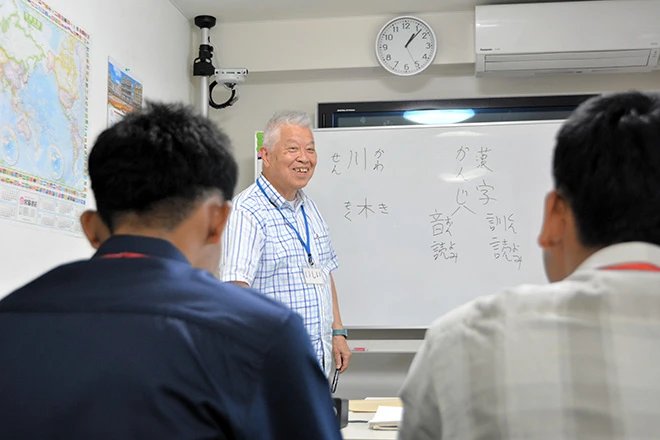
While the government has introduced a five-year transitional measure allowing classes to be taught by registered Japanese-language teachers outside of accredited institutions, finding these professionals is proving difficult. Even among local teaching groups, many qualified instructors lack the necessary experience to meet the scale of demand. Yuga Uehara, representative of the instructor group Hazumu Nihongo in Kagawa, noted that many of their qualified members are relatively new to the field, making it difficult to guarantee the quality or availability required by the new program.
The Ministry of Education is currently attempting to streamline the accreditation process through briefing sessions and online resources, noting that applications are rising. However, officials admit that many applications still fail to meet the required standards.
With less than six months remaining until the April 2027 start date, the disconnect between national policy and local reality has created a “race to get ready” that many fear will leave industries struggling with labor shortages unable to integrate their foreign workers effectively. For now, the future of the program remains in limbo, dependent on whether the government can rapidly expand a system that currently exists almost exclusively in Tokyo.
Disclaimer: This content is auto-generated for informational purposes only.
Source: Read Original News