








FLUSHING MEADOWS — As the dust settles on another electrifying US Open campaign, the trophy presentation in New York has solidified a trend that has become the definitive narrative of modern professional tennis. With Alexander Zverev hoisting the silverware yesterday, the sport has officially reached a staggering milestone: seventeen years of complete European hegemony in men’s Grand Slam singles competition.
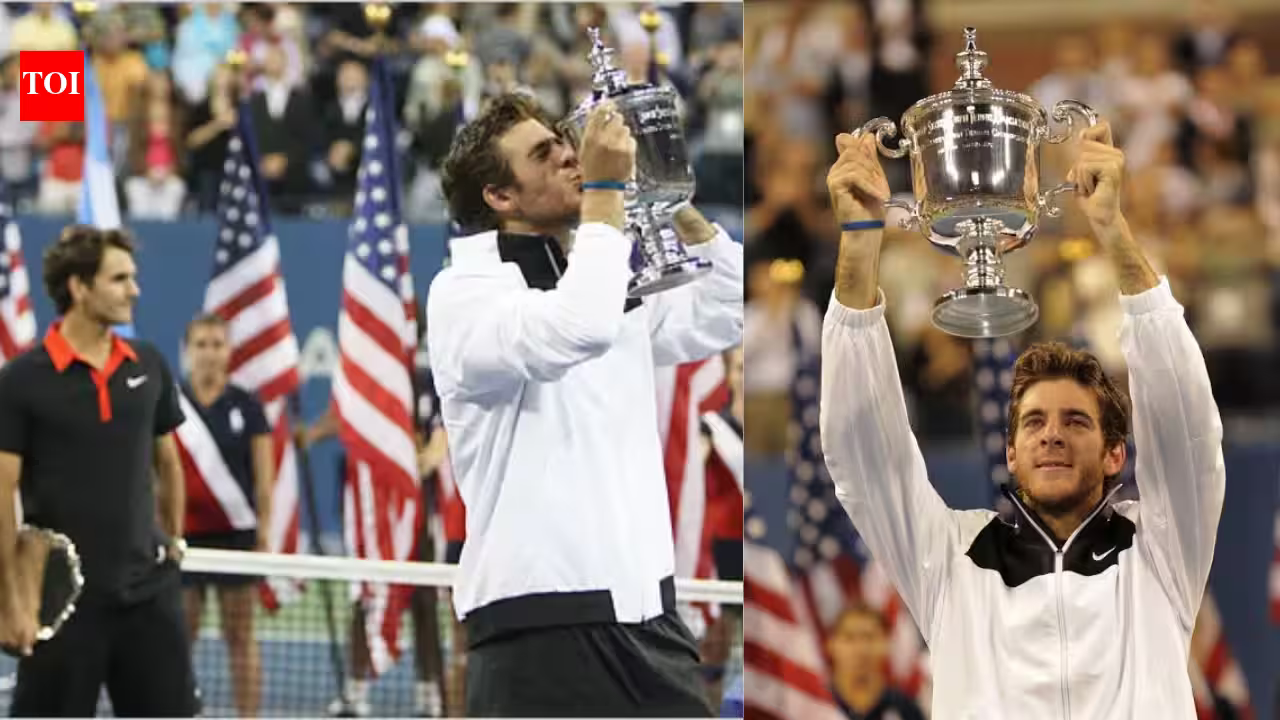
The last man to break this continental stranglehold remains Juan Martín del Potro, the “Tower of Tandil,” who famously toppled the five-time defending champion Roger Federer in an epic five-set battle at the 2009 US Open. That victory, which showcased the immense power and raw emotion of the Argentine, now feels like a relic from a different epoch. Since that sun-drenched day in Queens, the men’s game has been transformed into a European fortress, with not a single non-European player capturing one of the four major titles in the 17 years that have followed.
The Big Three and the European Monopoly
For the better part of the 2010s, the narrative of the sport was anchored by the untouchable “Big Three.” Roger Federer, Rafael Nadal, and Novak Djokovic did more than just win tournaments; they built an impenetrable wall that repelled every challenger from across the Atlantic.
Nadal turned the red clay of Roland-Garros into his own private estate, while Djokovic mastered the hard courts of Melbourne and the pristine grass of SW19. Federer, ever the elegant tactician, ensured that no era passed without his signature influence. During this period, the trophy cabinet was almost exclusively reserved for the European elite. Even when cracks appeared in the armor of the legends, the titles simply transitioned to their peers from the same continent. Andy Murray of Great Britain, Stan Wawrinka of Switzerland, Marin Čilić of Croatia, and Dominic Thiem of Austria ensured that the Grand Slam hardware never left European borders.
A Seamless Transition to a New Dynasty
There were whispers that the eventual decline of the Big Three would open the floodgates for a resurgence of international talent—a return to the days of Pete Sampras, Andre Agassi, or Guillermo Vilas. Instead, the sport witnessed the arrival of a new generation that is arguably even more dominant.
The year 2026 has served as the ultimate punctuation mark on this era. Carlos Alcaraz, the Spanish sensation, continued his meteoric rise by clinching the Australian Open, becoming the youngest man in history to complete a career Grand Slam at just 22 years of age. His relentless baseline game and tactical maturity suggest that he will remain the centerpiece of the sport for the next decade.
Not to be outdone, Italy’s Jannik Sinner has cemented his status as a grandmaster of the surface, adding a Wimbledon title to his growing collection of major accolades. Meanwhile, Alexander Zverev has enjoyed his best season to date. After breaking the seal with an emotional victory at Roland-Garros—making him the first German man to conquer Paris in the Open Era—the Hamburg native proved his consistency by sweeping to the title in New York yesterday.
The Numbers Tell a Relentless Story
The statistics provided by the last seventeen years of play are as stark as they are undeniable. Since 2010, every single men’s singles Grand Slam completed has been won by a European athlete. The only void in this timeline was the 2020 Wimbledon Championships, which was cancelled due to the global COVID-19 pandemic.
This dominance extends beyond just the names on the trophies; it reflects a systemic consolidation of coaching, infrastructure, and tour presence across the European continent. While tennis has historically been a global pursuit—producing legends from South Africa to the United States and Argentina—the current competitive ecosystem has created an environment where the “Big Three” model has been replicated and scaled by national federations across Europe.
Can the Cycle Be Broken?
As the tour turns its attention toward the next season, the burning question remains: who is capable of crossing the divide? History suggests that the current European cohort is not merely talented, but deeply entrenched. With the world rankings currently dominated by the likes of Alcaraz, Sinner, and Zverev, the path to a non-European champion appears more treacherous than ever.
The sport of tennis has always thrived on the clash of styles and the diversity of national origins. While the quality of the current era—defined by the extreme athleticism and technical perfection of the European leaders—is undeniably high, the global fan base is left waiting for a new challenger to emerge from the rest of the world.
For now, the record books remain frozen in 2009, standing as a testament to the last time the world beat Europe. Until a challenger from the Americas, Asia, or Oceania can solve the tactical riddles posed by the current European guard, the Grand Slam circuit will continue to feel like a continental championship held on a global stage.
Disclaimer: This content is auto-generated for informational purposes only.
Source: Read Original News