






The Evolution of the Do Engine
The concept of a digital assistant has long been defined by its ability to answer questions, but the original vision for Siri was centered on execution. Founders Dag Kittlaus and Adam Cheyer, alongside Tom Gruber, conceptualized Siri at the Stanford Research Institute as a “do engine”—a system designed not just to retrieve web links, but to complete complex tasks for the user. While Siri became a household name following Apple’s 2010 acquisition, its functionality largely stagnated, remaining restricted to elementary tasks like setting timers or initiating playback.
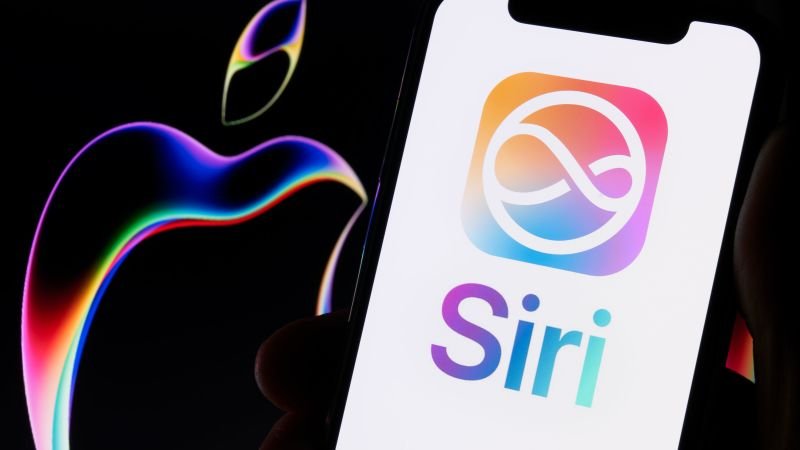
With the upcoming rollout of the revamped Siri in iOS 27, Apple is attempting to realize that original vision. This overhaul shifts the assistant from a voice-command utility to a contextual intelligence layer. By leveraging advanced artificial intelligence, the new Siri is designed to analyze screen content, interact directly with third-party applications, and synthesize data across a user’s entire digital ecosystem, including calendar entries, messages, and document repositories.
Technical Capabilities and Screen Awareness
The core technical shift in the new Siri is its ability to understand and operate within the user’s visual interface. Previous iterations of digital assistants operated in silos, unable to “see” the data displayed in other applications. The updated Siri utilizes on-screen analysis to provide context-aware assistance. For example, if a user receives a text message containing a band recommendation or a dentist appointment, the AI can cross-reference that information with the user’s music library or calendar without manual input.
This capability extends to cross-app operability. Testing indicates that the assistant can extract data—such as a recipe shared on social media—and migrate that information to a dedicated storage app or notes folder automatically. This multistep functionality relies on Large Language Models (LLMs) that allow the software to interpret nuanced, multi-part commands that previously would have required the user to navigate through multiple interfaces manually.
Privacy-Centric AI Architecture
Apple’s approach to this expansion is heavily grounded in the concept of Private Cloud Compute. Because the processing requirements for modern generative AI exceed the local hardware capabilities of a mobile device, Apple has developed an infrastructure that offloads heavy computation while maintaining data isolation.
When a task is too computationally intensive for local processing, the system transmits only the data strictly necessary for that specific action to secure servers. This architecture extends to Apple’s integration with Google’s Gemini, ensuring that even when third-party models are utilized, the user’s personal data remains compartmentalized. This focus on privacy is the primary mechanism by which Apple intends to differentiate its service from competitors, addressing consumer apprehension regarding the centralizing of personal information in AI training sets.
Shifting Dynamics in the App Ecosystem
The transition toward agent-based AI introduces a potential structural conflict for the software industry. If AI assistants can effectively perform actions—such as booking rides, ordering meals, or managing reservations—within an OS-level interface, the necessity for users to engage directly with individual third-party apps diminishes.
While Apple claims that the new Siri is compatible with over 300,000 applications, this represents only a fraction of the millions of offerings in the App Store. Developers and businesses may find this shift disruptive, as it forces them to surrender the user experience to the operating system’s AI layer. When an AI agent redefines the interaction flow between a user and a service, it obscures the branding and distinct features of that service. This creates a friction point between platform owners, who seek to consolidate user attention, and app developers, who rely on direct engagement to remain relevant.
The Competitive Landscape
Apple faces significant pressure to catch up in the AI space. While the company has long prioritized internal development and specific product cycles, the rapid maturation of platforms like ChatGPT and the deep integration of AI tools within Android devices have changed consumer expectations. Competitors like Google and Samsung have already implemented features that allow for visual search and contextual suggestions, positioning their software as an active participant in the user’s daily workflow.
The success of the new Siri will depend on whether it can move beyond its reputation as a simple utility. For years, the industry has struggled to produce an assistant that truly acts as an agent rather than a command interface. As the technological barriers to understanding natural, complex human language fall, the race is now focused on integration. Apple is banking on the ubiquity of its hardware and its established privacy framework to capture the lead, aiming to transform the iPhone from a collection of isolated apps into a cohesive, proactive assistant. Whether this finally delivers the “do engine” promised fifteen years ago remains the definitive question for the next generation of mobile software.
Disclaimer: This content is auto-generated for informational purposes only.
Source: Read Original News