


Navigating the Evolving Landscape of Climate Disclosures: Automation as a Business Imperative
[CITY, STATE] – [Date] – Climate disclosures and Environmental, Health, and Safety (EHS&S) reporting have rapidly transformed from voluntary initiatives into critical business functions. Organizations globally are facing increasing pressure from regulators, investors, customers, and other stakeholders to provide precise, transparent, and defensible climate-related data. However, many companies continue to rely on manual processes for data collection and management, leading to significant inefficiencies, blind spots, and accountability challenges that are only exacerbated by the ever-evolving regulatory landscape.
Chelsea Scalia, Sustainability and Health & Safety Project Manager at ERA-EHS Software Solutions, highlights this pressing issue. "Organizations face growing expectations from regulators, investors, customers, and other stakeholders to provide climate-related data that is accurate, transparent, and defensible. Yet many companies continue to rely on manual processes for collecting and managing that data, creating inefficiencies, blind spots, and accountability challenges," she states.
The Shifting Sands of Regulation
The transition from voluntary to mandatory climate disclosures is now undeniable. In the United States, California’s SB 253 stands out as a pivotal development. This legislation mandates public and private companies operating in California, and meeting specific revenue thresholds, to begin reporting Scope 1 and Scope 2 greenhouse gas (GHG) emissions in 2026, with Scope 3 reporting requirements following in 2027. Compliance necessitates meticulous documentation of calculation methodologies, source data, organizational boundaries, and materiality determinations.
Across the Atlantic, the European Union’s Corporate Sustainability Reporting Directive (CSRD) remains the cornerstone of regional climate disclosure. While the 2026 CSRD Omnibus update offers some flexibility in scope and timelines, applicable organizations must still adhere to stringent requirements for materiality assessments and the precise definition and measurement of resource flows.
The message is clear: reporting requirements are becoming more comprehensive and subject to intense scrutiny. For many businesses, the primary hurdle is no longer understanding what needs to be reported, but rather managing the complex processes required to collect, validate, and govern the underlying data.
When Climate Reporting Becomes a Process Problem
The proliferation of sustainability reporting requirements across various jurisdictions and programs means businesses can no longer afford to operate without a modern solution. The core challenge lies in the decentralized nature of data, scattered across utility providers, facilities, suppliers, procurement systems, and operational teams. Consolidating, validating, and transforming this disparate information into reliable disclosures is where many organizations falter.
Sustainability teams frequently dedicate significant time to manual data collection, chasing requests, reconciling spreadsheets, validating calculations, and locating documentation. A 2024 PwC survey revealed that a staggering 90% of companies reporting under the CSRD are still relying on spreadsheets for their sustainability reporting obligations. This approach, while perhaps viable for limited reporting requirements, is unsustainable and unscalable in today’s environment.
Reliance on manual processes fosters common challenges:
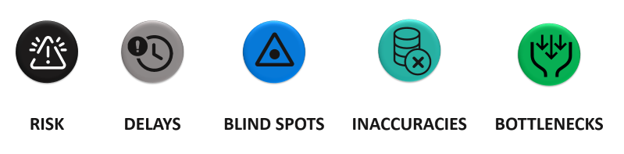
- Increased Risk: Data inconsistency, incompleteness, or outdated information.
- Reporting Delays: Critical tasks buried in inboxes or dependent on overstretched resources.
- Limited Visibility: Information dispersed across multiple systems, files, and stakeholders.
- Data Inaccuracies: Errors arising from manual collection and entry of information from utility bills and emissions records.
- Process Bottlenecks: Hindering sustainability data collection, validation, and reporting activities.
As Scalia emphasizes, "When something falls behind schedule, organizations often assume they have a people problem. In reality, they usually have a process problem." Even high-performing teams will struggle when faced with increasingly complex reporting obligations managed through outdated workflows.
Automation: Reshaping the Reporting Landscape
Automation is not about replacing human capital but rather empowering it. Effective automation strategies eliminate repetitive administrative tasks, allowing employees to focus on critical analysis, informed decision-making, and continuous improvement.
In climate reporting, automation can empower organizations to:
- Gather information from diverse data sources efficiently.
- Validate data rigorously before calculations.
- Standardize reporting workflows for consistency.
- Route tasks to the appropriate individuals seamlessly.
- Maintain comprehensive documentation for audits and assurance.
- Track progress and ownership in real-time.

By leveraging automation, teams can shift their focus from correcting avoidable errors to understanding data insights and identifying opportunities for improvement. Managers gain enhanced visibility into reporting progress, enabling proactive bottleneck resolution. The outcome is not merely improved efficiency, but a significant increase in confidence in the reporting process itself.
Immediate Value in Utility Data Management
One of the most compelling examples of automation’s impact is in utility data management. Many organizations process thousands, even tens of thousands, of utility bills annually. These records are fundamental for greenhouse gas inventories and sustainability reporting, yet their collection and entry are often manual.
Consider an ERA-EHS Software Solutions client who processes approximately 50,000 utility bills annually. At an estimated 10 minutes per bill, this equates to over 8,300 hours of administrative effort each year – the equivalent of roughly four full-time employees dedicated solely to utility data. Automation drastically reduces this time commitment.
Automating utility data collection allows information to be captured directly from the source, standardized, validated, and made available for reporting without extensive manual intervention. Beyond substantial time savings, automation addresses a critical challenge: data quality. A Deloitte survey of U.S. business leaders found that 57% identified data quality as their leading ESG data challenge, with 88% ranking it among their top three. Automation mitigates these issues by applying validation rules that identify missing information, incorrect units, duplicate records, and unusual values before they impact reporting results.
Building Accountability into the Process
A frequently overlooked benefit of automation is its ability to strengthen accountability. Many reporting challenges stem from unclear ownership, manual reminder systems, and limited visibility into task completion.
Automation transforms this dynamic. Tasks can be directly assigned, automated reminders ensure timely progress, and approval workflows guarantee proper review and oversight. Dashboards provide real-time visibility into reporting status and outstanding activities. Organizations maintain a clear, auditable record of who completed specific tasks, when they were completed, and what information was submitted. Accountability is thus embedded within the process, rather than a constant pursuit for managers. This level of documentation and governance is invaluable during audits and assurance engagements, demonstrating the integrity and traceability of climate data.
Preparing for the Future
As the climate disclosure landscape continues its rapid evolution, organizations can no longer afford to be held back by inefficient and unreliable processes. The strategic imperative is clear: centralize data, automate repetitive tasks, and fortify accountability. By embracing these changes, businesses can not only enhance their current reporting capabilities but also cultivate the flexibility and resilience needed to adapt to future requirements.
Chelsea Scalia is a Sustainability and Health & Safety Project Manager at ERA-EHS Software Solutions. ERA-EHS provides a full range of software solutions for sustainability disclosure and reporting, environmental compliance, and health and safety, utilized by a diverse clientele, including Fortune 100 and Fortune 500 companies.