









A Land of 100,000 Welcomes, But One Iconic Gate Remains Locked
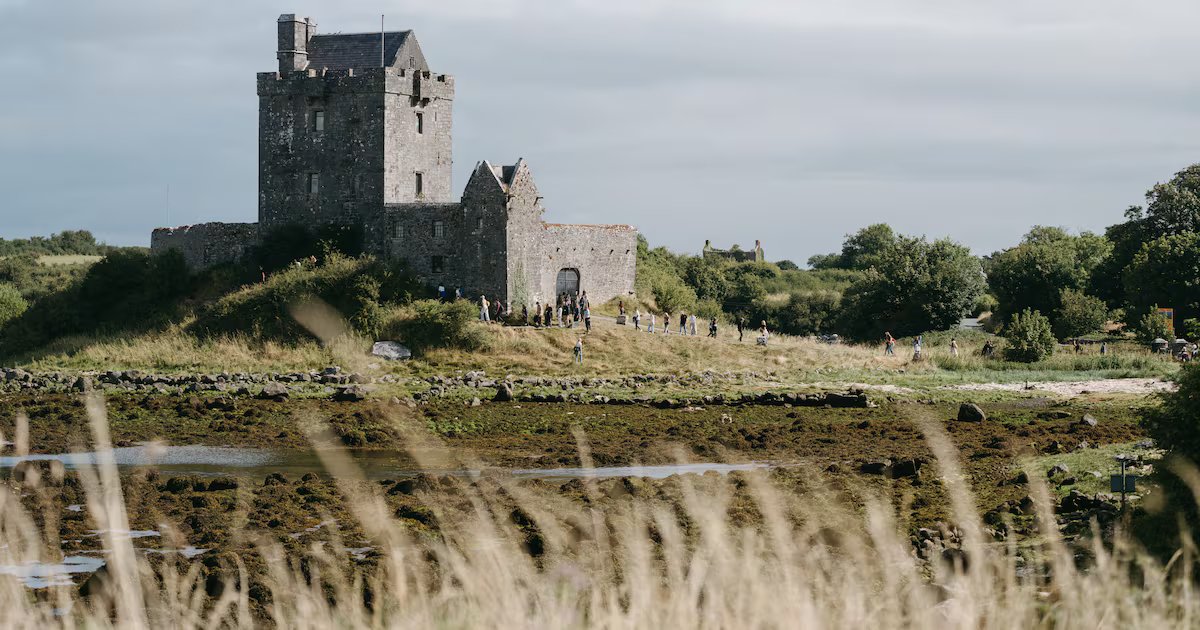
KINVARA, Co Galway — The tourists arrive as they have for decades: in lumbering motorcoaches that seem far too wide for the winding coastal roads of the west of Ireland. Armed with smartphones, they flock to the edge of Galway Bay, eager to capture the image of Dunguaire Castle—a 16th-century tower house that serves as the quintessential postcard of Irish history.
Yet, despite its photogenic allure, the castle grounds are silent. A stark sign hangs on the entrance gate, shattering the myth of the “land of 100,000 welcomes”: “Castle & grounds closed to the public.”
For the residents of Kinvara, the closure is more than just a logistical frustration; it is a symbol of bureaucratic stagnation. Fran O’Reilly, a retired researcher and active member of the grassroots group “Save Kinvara Castle,” has become a familiar fixture at the site. Armed with a QR code that links to a pre-written letter of complaint addressed to government officials, she spends her mornings educating baffled visitors about the political deadlock that shuttered the gates in 2023.
“People come from around the world to see this,” O’Reilly explains to a group of French tourists. “About three years ago, there was a dispute over money. Instead of fixing the problem, they just locked the door.”
A Bureaucratic Bog
The impasse stems from a failed transfer of ownership. Previously managed by the Shannon Airport Group, the site was intended to be handed over to local authorities as part of a regional divestment strategy. While other sites, such as Bunratty and King John’s Castle, were successfully transitioned to local council management, the deal for Dunguaire collapsed into a “bureaucratic bog.”
Galway County Council has maintained that it lacks the “financial capacity” to take ownership of the monument, citing a requirement for approximately €5.2 million in restoration funds—a bill they argue the central government must foot.
The Shannon Airport Group, when pressed for comment, offered little clarity, stating that “relevant parties are actively exploring options” and that it would be “inappropriate to comment further.”
Echoes of History
The frustration is deeply felt because Dunguaire is not merely a tourism asset; it is a cornerstone of the region’s identity. Built around 1510 by the O’Hynes clan, the 75-foot tower has witnessed centuries of transformation, from the horrors of the Great Hunger to the literary brilliance of the Celtic Revival.
In the 1920s, the castle served as a salon for poets like Oliver St John Gogarty, and later, it was meticulously restored by the eccentric Lady Ampthill. For half a century, it flourished as a venue for medieval banquets and historical tours.
Today, the scene is vastly different. The vibrant buzz of tourists has been replaced by the impatient idling of bus engines, while the structure itself—and the Dunguaire Castle tourism potential it represents—sits in a state of growing decay.
The Cost of Inaction
Local officials are becoming increasingly vocal about the missed economic opportunities. “We’re going all over the world promoting Ireland and how wonderful we are,” said Councillor Geraldine Donohue. “And yet we can’t get together €5 million to open one of the most iconic, most photographed castles in the world. We’re not asking you to build the castle. It’s built!”
For now, the campaign to reopen the site continues, with over 2,400 supporters from 50 countries joining the petition to pressure the Department of Housing, Local Government and Heritage into action.
As the afternoon sun hits the grey stone of the tower, visitors linger for a final photo at the iron gate before returning to their buses, bound for the Cliffs of Moher. Behind them, the fort of the seventh-century king remains a stone-silent witness, not to the passing of time, but to the stubborn inaction of the present.