








The Rise of Micro-Hardware and Focused Reading
In an era dominated by high-powered smartphones and tablets that compete aggressively for constant user attention, a small, unassuming device has emerged as a surprising contender for the most impactful piece of consumer hardware in recent memory. The Xteink X3, a credit-card-sized e-reader, stands in stark contrast to the trend of oversized screens and complex, bloated operating systems. While it lacks the refinement of premium industry giants, its simplicity has struck a chord with users looking for a way to regain focus and incorporate more reading into their daily routines.
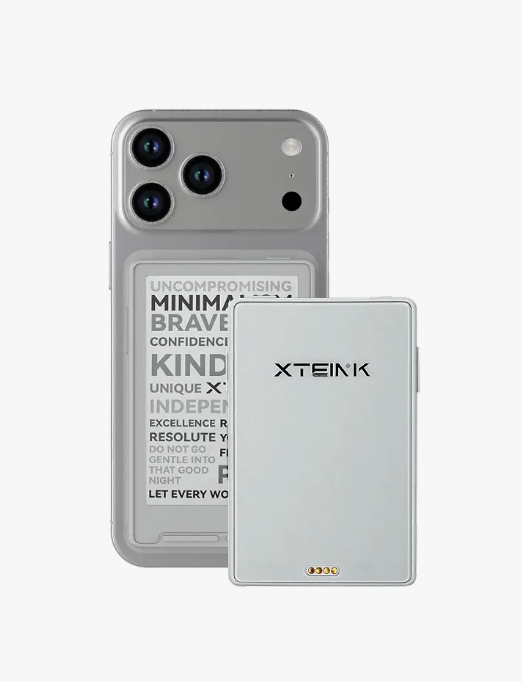
Measuring roughly the size of a standard payment card, the X3 is designed to magnetically attach to the back of a smartphone. This proximity is critical to its success; it serves as a physical prompt, replacing the reflexive impulse to check social media or news feeds with an immediate opportunity to consume text. By limiting the screen size to display only a paragraph or two at a time, the device mimics the rapid, addictive progression of short-form video, yet does so through the medium of literature rather than algorithmic distraction.
Technical Limitations as a Design Philosophy
From a hardware specification standpoint, the Xteink X3 is undeniably bare-bones. It lacks a backlight, a touch screen interface, and the seamless cloud-syncing ecosystems that define modern e-readers like the Kindle or Kobo. The device relies on a low-power E-ink display, which is naturally reflective and requires ambient light to be legible. This lack of features, however, is precisely what makes the hardware effective as a tool for singular focus.
The internal architecture is intentionally restrictive. There are no notifications, no intrusive advertisements, and no multi-tasking capabilities. The absence of a touch interface means navigation is handled through physical controls, which provides a tactile interaction that is often missing from modern glass-pane devices. While the software experience can be described as clunky, this lack of sophistication ensures that the device does not attempt to be a substitute for a smartphone. It performs one task—displaying text—with total efficiency, thereby lowering the friction between the user and their reading material.
The Emergence of the Modding Community
One of the most compelling aspects of the Xteink X3 is the community that has gathered around its shortcomings. Because the device is inexpensive and lacks the restrictive software “walled gardens” of larger corporations, a subculture of tech enthusiasts has begun to transform the hardware. By applying custom firmware, users are expanding the utility of the X3 far beyond its intended design.
These enthusiasts have successfully integrated support for various library applications, allowing for offline access to vast collections of literature that the stock device cannot natively handle. Furthermore, the small form factor has inspired a wave of 3D-printed accessories, including custom mounts, protective cases, and ergonomics-focused attachments that make the device easier to handle during extended sessions. This DIY approach signals a return to a philosophy where users own their hardware and possess the agency to adapt it to their personal requirements, rather than relying on a manufacturer to provide software updates or official feature sets.
Addressing the Crisis of Digital Attention
The widespread appeal of the X3 highlights a growing dissatisfaction with the state of current mobile technology. Today’s flagship smartphones are significantly more powerful and thinner than those of a decade ago, yet many users report feeling that this technological progress has resulted in a loss of utility. The persistent nature of digital notifications and the design of modern operating systems to maximize screen time have created a environment of constant interruption.
The Xteink X3 acts as a corrective measure for this digital fatigue. By intentionally choosing a “dumber” device for specific tasks, users are finding ways to lower their total daily screen time on intensive devices like the iPhone. Early adopters report reducing their reliance on social media platforms by nearly half an hour each day simply by keeping the X3 accessible. This represents a significant shift in how people view their relationship with hardware, favoring intentional, low-distraction tools over high-performance systems that require endless management and attention.
The Future of Niche Hardware Innovation
The success of the Xteink X3 suggests that the future of innovation may not lie in bigger screens or more powerful processors, but in specialized, single-purpose hardware. While it is made by a relatively unknown company and relies on simplistic components, its market performance proves that there is a significant segment of consumers willing to forgo luxury for genuine functionality.
As the tech industry continues to pivot toward complex, generative AI-integrated systems, the X3 stands as a reminder that simple, reliable, and modifiable hardware remains highly desirable. It is a piece of technology that respects the user’s intent rather than attempting to hijack it. If the trajectory of the X3 persists, it could influence a new class of “micro-gadgets” designed to support specific human activities—like reading, writing, or task management—without the overhead of the modern, distracted digital experience. For those exhausted by the weight of their current devices, the Xteink X3 provides a clear path forward: a return to the basics of human-machine interaction.
Disclaimer: This content is auto-generated for informational purposes only.
Source: Read Original News