







Governance Tensions within the Tata Conglomerate
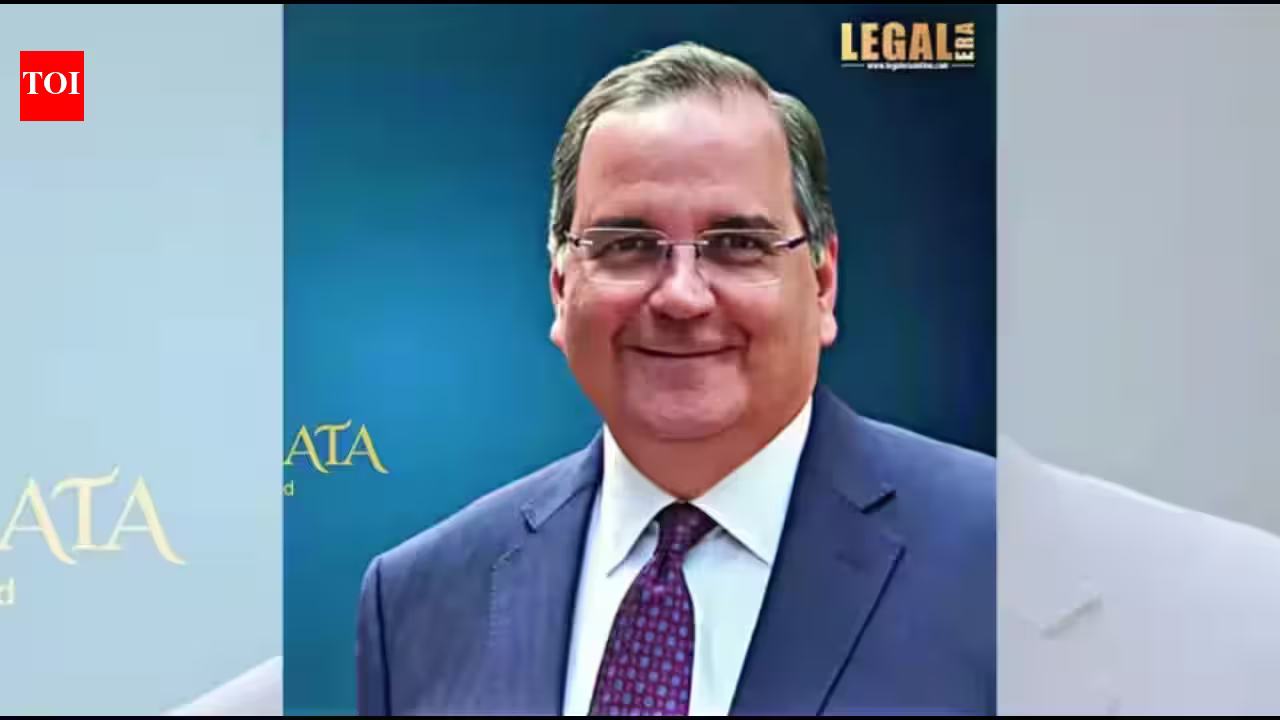
The resignation of Darius Khambata from the boards of the Sir Dorabji Tata Trust (SDTT) and the Sir Ratan Tata Trust (SRTT) marks a significant inflection point in the governance of India’s most influential philanthropic-corporate nexus. Khambata, a prominent senior advocate and a staunch ally of chairman Noel Tata, cited a deepening rift between the leadership of Tata Trusts and N Chandrasekaran, the chairman of Tata Sons. This departure is not merely an administrative transition; it underscores the precarious balance of power within an entity that acts as the primary shareholder of the Tata Group.
At the heart of this conflict lies the fundamental question of how the Tata Trusts—the philanthropic heart of the group—should interact with the operational arm, Tata Sons. The Trusts hold a majority stake in Tata Sons, a structure that effectively dictates the strategic trajectory of the entire conglomerate. When the alignment between the two entities fractures, it creates a systemic risk to the group’s governance. Khambata’s assertion that “independence comes at a cost” reflects the difficulty of maintaining a fiduciary duty to the Trusts while navigating the high-stakes corporate environment of Tata Sons.
The Strategic Conflict over Listing and Liquidity
A primary point of contention highlighted in Khambata’s correspondence is the potential listing of Tata Sons on public stock exchanges. Khambata has emerged as a vocal opponent of such a move, characterizing it as an “existential” threat to the Trusts. His argument rests on the belief that the current structure provides the necessary insulation for the Trusts to pursue philanthropic goals without the short-term pressures of public market scrutiny.
The discourse surrounding the potential listing also involves the Shapoorji Pallonji Group, a minority shareholder seeking liquidity. Khambata’s opposition to a public listing, even as a mechanism to provide liquidity for minority stakeholders, demonstrates the defensive posture adopted by certain trustees to preserve the sanctity of the current shareholding arrangement. Furthermore, his critique of the engagement between Tata Sons and the Reserve Bank of India regarding deregistration suggests a lack of consensus on how to resolve the group’s complex capital structure. For Indian corporate observers, this internal friction is a reminder that even the most established business houses face profound challenges when transitioning from traditional family-trust oversight to modern, transparent corporate governance.
The Role of Nominee Directors and Fiduciary Duties
Khambata’s tenure and subsequent exit have brought the role of “nominee directors” into sharp focus. Under the articles of association of Tata Sons, the Trusts possess specific rights to nominate directors to the board. However, the dual role of these individuals—serving as a trustee of the philanthropic entity while simultaneously acting as a board member for the corporate giant—has created a conflict of interest that is increasingly difficult to manage.
Khambata has argued that a nominee director cannot act against the interests of the Trusts simply by invoking a duty to the company. This interpretation of fiduciary duty is critical, especially in the wake of the Supreme Court ruling in the Tata Sons versus Cyrus Mistry matter, which affirmed the special rights and responsibilities of the Trusts. The friction between board members regarding the reappointment of nominee directors suggests that the boardroom is no longer a site of unanimous agreement, but a theater of power struggles. As board members move away from a culture of consensus, the effectiveness of the current governance model faces a rigorous test.
Institutional Impact and the Changing Boardroom Landscape
The departure of Khambata leaves the boards of both the SDTT and the SRTT significantly narrowed, particularly at a time when the Maharashtra Charity Commissioner has restricted board restructuring at the SRTT due to ongoing investigations. This regulatory oversight limits the ability of the Trusts to replenish their boards, potentially stalling decision-making at a critical juncture.
For the Tata Group, which occupies a unique position in the Indian economy, the current instability carries broader implications. The “sad events” mentioned by Khambata, including the September 17 boardroom disputes, have drawn attention to the internal mechanics of a group that represents a substantial portion of India’s GDP. When board-level decisions regarding the reappointment of leadership are met with opposition, it risks creating public uncertainty. Investors, regulators, and other stakeholders are closely watching these developments to see if the group can reconcile these differences before they manifest in tangible operational or strategic disruptions.
A Legacy of Independence and the Road Ahead
Khambata’s exit is a stark reminder that professional governance in the context of private trusts is rarely straightforward. By emphasizing that his votes were vindicated by later events—specifically the misalignment of other directors who initially opposed a listing only to later favor it—Khambata has framed his departure as a matter of integrity. His refusal to seek reappointment, despite being encouraged to stay, suggests a breakdown in the deliberative processes that once characterized the Tata boardroom.
As the Tata Trusts move forward, they face the challenge of reconciling the differing visions of the group’s future. One vision favors deeper integration and public accountability through market listing, while the other prioritizes the preservation of the current trust-centric structure as a “national treasure.” The ability of the leadership to bridge this divide will be the defining theme for the Tata conglomerate in the coming years. Whether this leads to a reconciliation or a continued fracturing of the board remains to be seen, but the events of recent months have undoubtedly changed the trajectory of one of India’s most storied business institutions. The reliance on legacy structures is clearly being challenged by contemporary realities, and the upcoming period will require both diplomacy and institutional reform to restore the stability required to lead a global corporate empire.
Disclaimer: This content is auto-generated for informational purposes only.
Source: Read Original News