






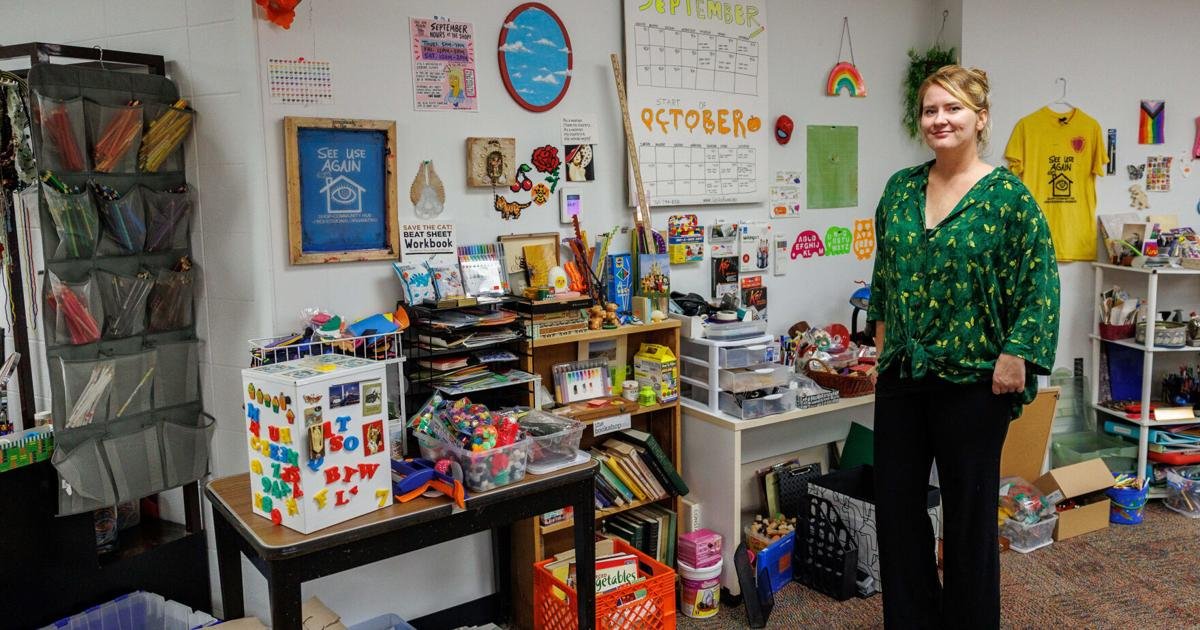
In an era dominated by rapid consumption and digital clutter, one local entrepreneur is championing a sustainable approach to life management. Meg McDonald, the founder of See Use Again, believes that the true path to mental clarity lies in the mindful reorganization and creative reuse of our physical possessions. By shifting the focus from accumulation to circulation, her business—which now operates out of Urbana’s Brookens Center—aims to combat the environmental and psychological strain caused by the constant cycle of buying and discarding.
Redefining Sustainability Through Circular Commerce
The ethos behind See Use Again directly challenges the “big-box” culture where seasonal trends often lead to massive waste. McDonald argues that modern consumers are pressured to constantly acquire new products, despite a surplus of high-quality goods already in existence. Her shop acts as a hub for items that would otherwise end up in landfills, accepting donations ranging from art and office supplies to mobility aids and vinyl records.
This model is part of a growing movement of creative reuse stores emerging across the country. These businesses provide a necessary alternative to overwhelmed traditional thrift shops, offering a curated experience that prioritizes the utility of an item over the speed of retail turnover. By offering professional organization services alongside retail, McDonald assists clients in assessing what they truly need, ensuring that the “clutter” of the past becomes the functional tools of someone else’s future.
Tech-Integrated Community Spaces and Mental Well-being
Beyond its retail operations, See Use Again serves as a “third space”—a communal area where individuals can connect without the pressure to spend money. In the wake of post-pandemic social isolation, McDonald emphasizes the importance of in-person community engagement. Her shop hosts workshops led by local artists who utilize at least 70% reclaimed materials, blending creativity with environmental stewardship.
The business also leverages a practical “library” model for mobility aids like crutches and wheelchairs, which can be rented or purchased. This service addresses a common pain point in the modern economy: the burden of storage for temporary medical needs. By removing the financial and spatial anxiety associated with these items, McDonald provides a streamlined, human-centric solution that mirrors the efficiency of modern tech-based sharing platforms while keeping the experience grounded in a physical, community-focused environment.
Regional Business Shifts and Market Updates
The Champaign-Urbana area is seeing significant movement within its local business landscape beyond sustainability initiatives. Notable changes include:
- Pekara Bakery & Bistro: The staple establishment has successfully transitioned to its new location at 500 N. Walnut St. in Champaign, now offering its full menu to patrons.
- Dutch Bros. Coffee: The expanding coffee chain continues its regional growth with a new drive-thru location on N. Neil St., repurposing a site previously occupied by a national restaurant chain.
- Sooie Bros. Bar-B-Que Joint: After a protracted legal battle with the Champaign-Urbana Public Health District regarding health safety compliance and refrigeration equipment, the popular barbecue spot has officially reopened its doors on W. Kirby Ave.
- Moon Glo Bar and Grill: In Danville, the iconic family-owned business, operational since 1962, has been placed on the market. Owner Phil Adams is stepping away to retire, marking the end of a long-standing chapter for the local landmark.
As these businesses navigate the evolving retail and hospitality climate, the underlying trend remains clear: whether through sustainable reuse, renewed culinary ventures, or property turnover, the local economy continues to prioritize community resilience and physical accessibility.
Disclaimer: This content is auto-generated for informational purposes only.
Source: Read Original News