








Christchurch—The Hagley Oval, with its green-tinged surface and biting breeze, is a cathedral of discipline. It is a venue that demands the gritty, old-school virtues of patience, leaves, and the occasional ugly defensive block. Yet, when Rishabh Pant walks to the middle, the stadium is no longer a place for methodical test cricket; it becomes a stage for high-stakes theater.
Saturday’s play in the ongoing Test series against New Zealand was yet another chapter in the captivating, often infuriating saga of Indian cricket’s most unpredictable superstar. With India in dire need of a stabilizing partnership between Pant and KL Rahul, the wicketkeeper-batter chose not to graft, but to ignite. And in doing so, he sparked the age-old debate: is Pant’s “natural game” a match-winning asset or a strategic liability?
The Art of the Reckless
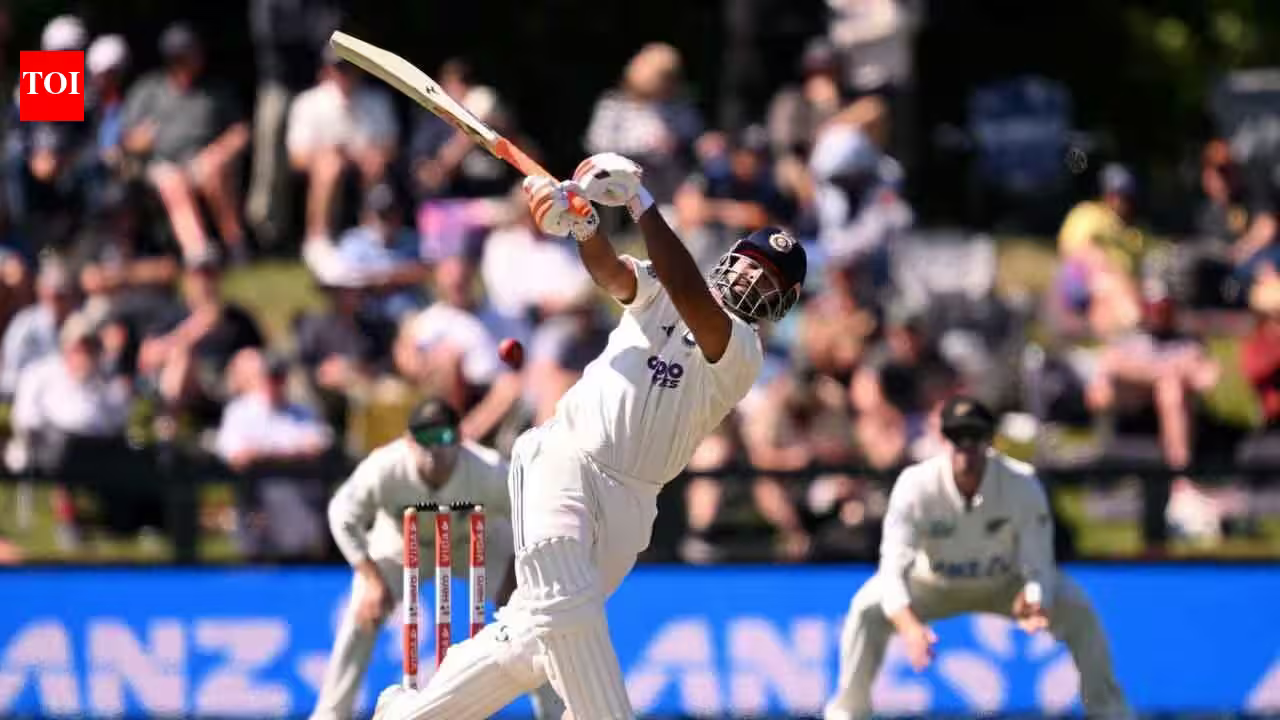
Pant’s innings began with the kind of audacity that makes spectators jump out of their seats. Facing Jacob Duffy—a bowler who had been shell-shocked throughout the series—Pant didn’t wait for the new ball to lose its shine. He charged, he swatted, and he deposited the ball over long-on for a six. It was a statement of intent: I am in control of this bowler, not the other way around.
Duffy, however, had done his homework. The New Zealander understood the psychological warfare Pant employs. “When Rishabh is coming down the track and having a swing, you can’t get stressed,” Duffy noted after the day’s play. “It’s about not letting him hit you off your length. Sometimes when players do that, the bowler reacts, which is exactly what the batter wants.”
In this high-stakes chess match, Pant blinked. The aggression that initially unsettled Duffy eventually became his undoing, and India was once again left looking for a partnership that simply didn’t materialize.
The “Inbuilt” Paradox
The frustration for Indian fans—and the management—is that they know exactly what they are missing. When he chooses to, Pant possesses a defensive technique that is as sound as it is elegant. Legendary opener Sunil Gavaskar, a man who built a career on the back of impeccable forward defense, has often marveled at the time Pant has to play fast bowling.
“It’s in his game. It’s a temperament thing,” Gavaskar explained to Sony Sports Network. “No amount of telling him anything is going to work. We’ve just got to bear with it. When he hits the ball out of the middle, it’ll go. And there will be occasions when he’ll get out like this.”
Gavaskar’s assessment cuts to the core of the issue: asking Rishabh Pant to become a defensive anchor is like asking a lion to graze. It is antithetical to his nature. But that does not stop the debate from raging, especially when India finds itself in precarious positions, such as the recent outings in Melbourne, Guwahati, and Leeds.
The Sword and the Shield
Former New Zealand wicketkeeper Ian Smith, a man who knows a thing or two about the pressures of the lower-middle order, offered a more sobering perspective. “You live by the sword, die by the sword,” Smith remarked. “Every now and then it’s going to work for you and you’ll be praised… but when he gets out, he’s got to be prepared to accept criticism, particularly when your side’s in trouble.”
This is the price of the “Pant License.” The same swagger that brings a helpless bowler to his knees is the same ego that sees a wicket fall at the most inopportune moment. India’s spin bowling coach, Sairaj Bahutule, maintained a supportive stance, emphasizing that Pant’s positive approach is what allows him to take the game away from the opposition.
“He’s a unique player,” Bahutule said. “There is sometimes a pattern to his play where he takes his chances. Sometimes it works for him, sometimes it doesn’t.”
The Unrepentant Walk
As the sun dipped behind the stands at Hagley Oval, Pant’s walk back to the pavilion was telling. It was the same swift, swagger-laden gait he uses when he hits a match-winning boundary. There was no bowed head, no visible hand-wringing over the missed opportunity to build a partnership.
Is it a cop-out to call it his “natural game”? Perhaps. History is full of great players—Faf du Plessis and AB de Villiers among them—who were capable of putting their ego aside to shut up shop for the sake of the team. But Pant is not du Plessis, and he is not de Villiers. He is a singular talent who occupies a space in the game where the line between genius and recklessness is almost invisible.
For now, India must accept the deal they have made. They will continue to receive the astonishing one-handed swipes and the audacious, demoralizing counter-attacks. But they must also accept that on any given day, the sword will turn against its master. As Ian Smith mused, “I don’t think he’s going to stop, is he?”
Looking at the way Pant carried himself off the field on Saturday, the answer seems clear: No. Never.
Disclaimer: This content is auto-generated for informational purposes only.
Source: Read Original News