







Global Authorities on High Alert as ‘Monstrous’ El Niño Approaches Record Intensity
As the Pacific Ocean prepares to discharge a massive accumulation of heat, climate scientists and global officials are sounding the alarm: the world is entering uncharted territory with an El Niño event that is tracking to be the strongest in over a millennium.
U.N. Secretary-General António Guterres issued a stark warning this week, stating that the planet is in “uncharted waters” as global temperatures prepare to surge. With the scientific community closely monitoring the situation, governments from Los Angeles to Britain are already urging residents to stock up on essentials and prepare for what experts describe as a “tumultuous” period of climate extremes.
Daniel Swain, a prominent weather and climate research scientist at UCLA’s Institute of the Environment and Sustainability, explains the phenomenon as a “recharge oscillator”—a battery that has been overcharging due to human-induced global warming.
“The tropical oceans are a big heat sink,” Swain said in a recent interview. “El Niño is the ocean system discharging a full battery. We’re going into extreme territory with this one, and the battery is getting larger and refilling more quickly with global warming.”
While El Niño is a natural, cyclical event, the current version is being super-charged by the excess energy stored in the Pacific. According to data published in the journal Science, the current event is already rivaling the record-breaking intensity of the 1997-1998 cycle. However, Swain notes that modern measurement tools, such as the new Relative Oceanic Niño Index (RONI), reveal a climate system that is moving beyond historical norms.
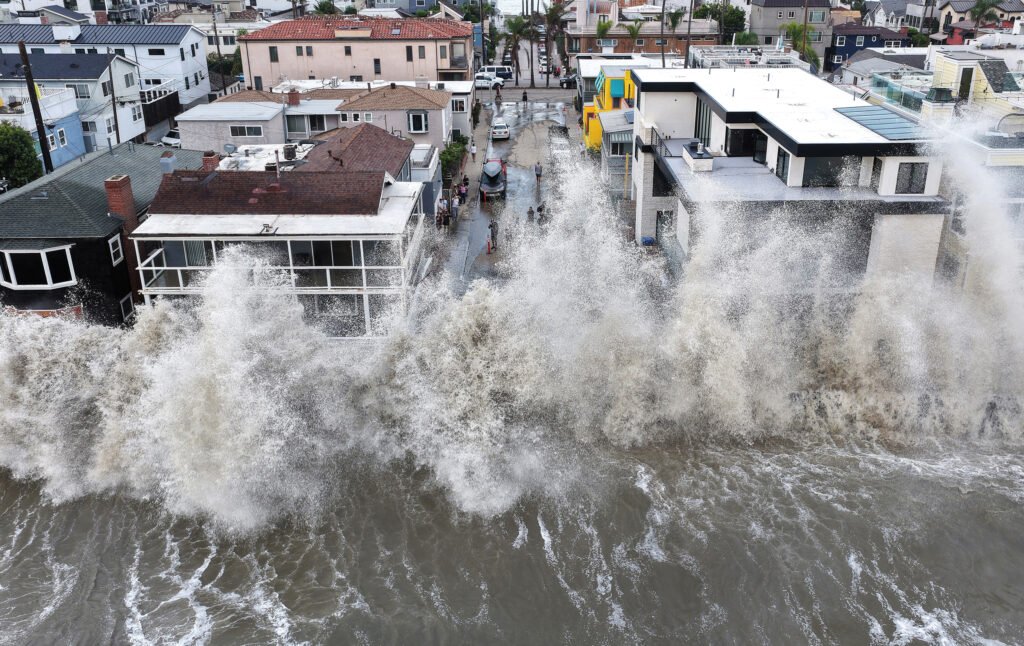
The consequences for California are particularly dire. Swain, a lifelong Californian and founder of the research site Weather West, warns that the primary concern is not just rainfall, but a sudden, significant increase in coastal flooding.
“The number one concern I have this winter is for people who live on the coast of California, because this record-breaking El Niño will double the amount of sea-level rise we’ve seen from climate change overnight,” Swain said. He estimates that on top of existing sea-level rise, this event could add another foot of elevation by December, coinciding with “king tides” and an increased likelihood of powerful winter storms.
For residents in low-lying areas—including those surrounding the San Francisco Bay and coastal neighborhoods—this could mean widespread inundation of infrastructure, including major highways and tech corridors, that were built to handle lower thresholds.
Beyond the coast, the outlook suggests a season of volatile extremes. While the added precipitation may offer a temporary reprieve for some drought-stricken regions, Swain cautioned that it will not solve long-term water crises in areas like the Colorado River Basin. Instead, the year ahead is expected to provide a harrowing preview of a world consistently operating above the 1.5-degree Celsius warming threshold, characterized by more intense cycles of both flooding and drought.
“This year is going to be tumultuous,” Swain concluded. “It’ll give us a taste of what well above 1.5 degrees looks like.”
Disclaimer: This content is auto-generated for informational purposes only.
Source: Read Original News